
Part of The Future of MSK at Work: Clinical Insights Series
Pain is one of the most common workplace health challenges, but it is also one of the most misunderstood.
Two employees can both say they have back pain. On paper, they may look similar: same body area, same broad symptom, same request for support. But the reasons behind that pain may be completely different.
One person may need support with strength or mobility. Another may be affected by poor sleep, stress, previous injury, low confidence with movement, or a work setup that is making symptoms harder to manage. Someone else may be navigating life-stage changes, a long-term condition, or months of uncertainty around their symptoms.
This is why pain support cannot be one-size-fits-all.
At the British Pain Society’s Annual Scientific Meeting, one phrase stood out: “My pain is not your pain.” It captures something important: pain is deeply individual. It is shaped not only by the body, but also by the nervous system, environment, beliefs, previous experiences and the support someone receives.
For employers, this matters. If pain is personal, workplace MSK support needs to be personal too.
Pain is not just about where it hurts
A common mistake in MSK support is to start and stop with pain location.
Back pain leads to back exercises. Neck pain leads to neck stretches. Shoulder pain leads to posture advice. Sometimes that may help. But often, it is too shallow.
Pain location tells us where someone feels discomfort. It does not always explain why that pain is happening, what is keeping it going, or what support will help that person act earlier.
The International Association for the Study of Pain defines pain as a personal experience influenced by biological, psychological and social factors. In practical terms, pain can be shaped by strength, mobility, workload, stress, sleep, confidence, beliefs, previous experiences and the environment around someone.
That does not mean pain is “all in someone’s head”. It means pain is more complex than a single symptom or body part. When support only focuses on the symptom, it can miss the person.
Scalable pain education matters
One recurring theme from the British Pain Society was the need to improve people’s understanding of pain. The notes highlighted that pain management should be holistic, and that inconsistent messages from clinicians, services or support pathways can leave people confused about what to do next.
In the workplace, this often shows up as uncertainty.
Should someone keep working? Stop moving? Request equipment? Speak to occupational health? Wait and see?
Clear, practical pain education can help. Not by overwhelming people with medical information, but by giving them simple, reassuring guidance that helps them understand what is happening and what they can do safely.
Pain neuroscience education has been widely studied in chronic musculoskeletal pain, with evidence suggesting it can improve pain, disability and psychosocial factors, especially when combined with broader support rather than used alone.
The goal is not just to give people information. It is to help them feel confident enough to take the next helpful step.
Behaviour change needs support
Another theme from the British Pain Society was behaviour change.
The notes described readiness to change, taking action and maintaining change. Small, supported changes were highlighted as a way to help people build momentum. Lived experience and peer support were also discussed as ways to make pain education more relatable and human.
This matters because most people do not change because they read one piece of advice. They change when the next step feels achievable, relevant and worth trying.
For employers, this is a useful reminder. MSK support should not only assess people and signpost them elsewhere. It should help people engage, understand their pain and take action in a way that feels manageable.
Confidence matters. Consistency matters. Feeling understood matters.
Personalisation is a prevention issue
Personalised MSK support is often talked about as an employee experience issue. And it is. When support feels relevant, people are more likely to trust it and engage with it.
But personalisation is also a prevention issue.
If support is too generic, people may ignore it. If it does not reflect the reasons behind their pain, it may not help them act early enough. Pain that could have been supported earlier may continue to build, affecting productivity, confidence, absence or the need for external support.
A more personalised approach gives organisations a better chance of helping people before pain escalates.
This is also reflected in clinical guidance. NICE guidance on chronic pain emphasises knowing the person as an individual, good communication, shared decision-making and supporting people to actively participate in their care.
In the workplace, this means looking beyond pain location and considering a wider picture: movement, pain history, work setup, life stage, pre-existing conditions, age, gender and other factors that may shape what support someone actually needs.
What this means for workplace MSK support
This is where more personalised MSK support becomes important.
Two people may report the same area of pain, but they should not automatically receive the same support. One person may need help building strength. Another may need mobility work. Another may need guidance around their work setup. Another may need education to reduce fear around movement.
For employers, the opportunity is to move beyond generic pathways and build support around a richer picture of each person’s MSK health: their pain history, movement, work context, confidence, lifestyle and wider health factors.
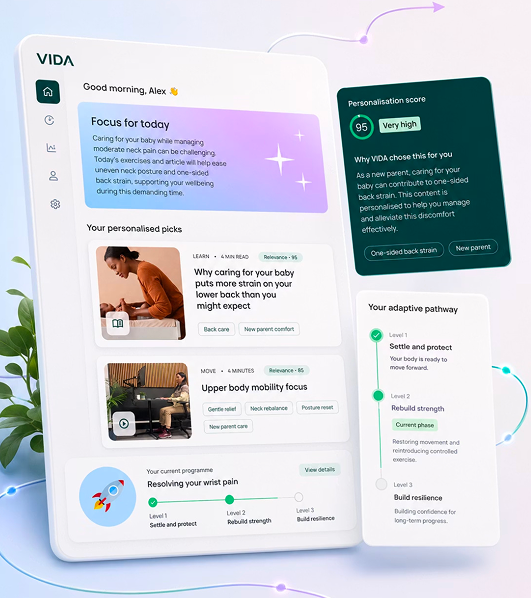
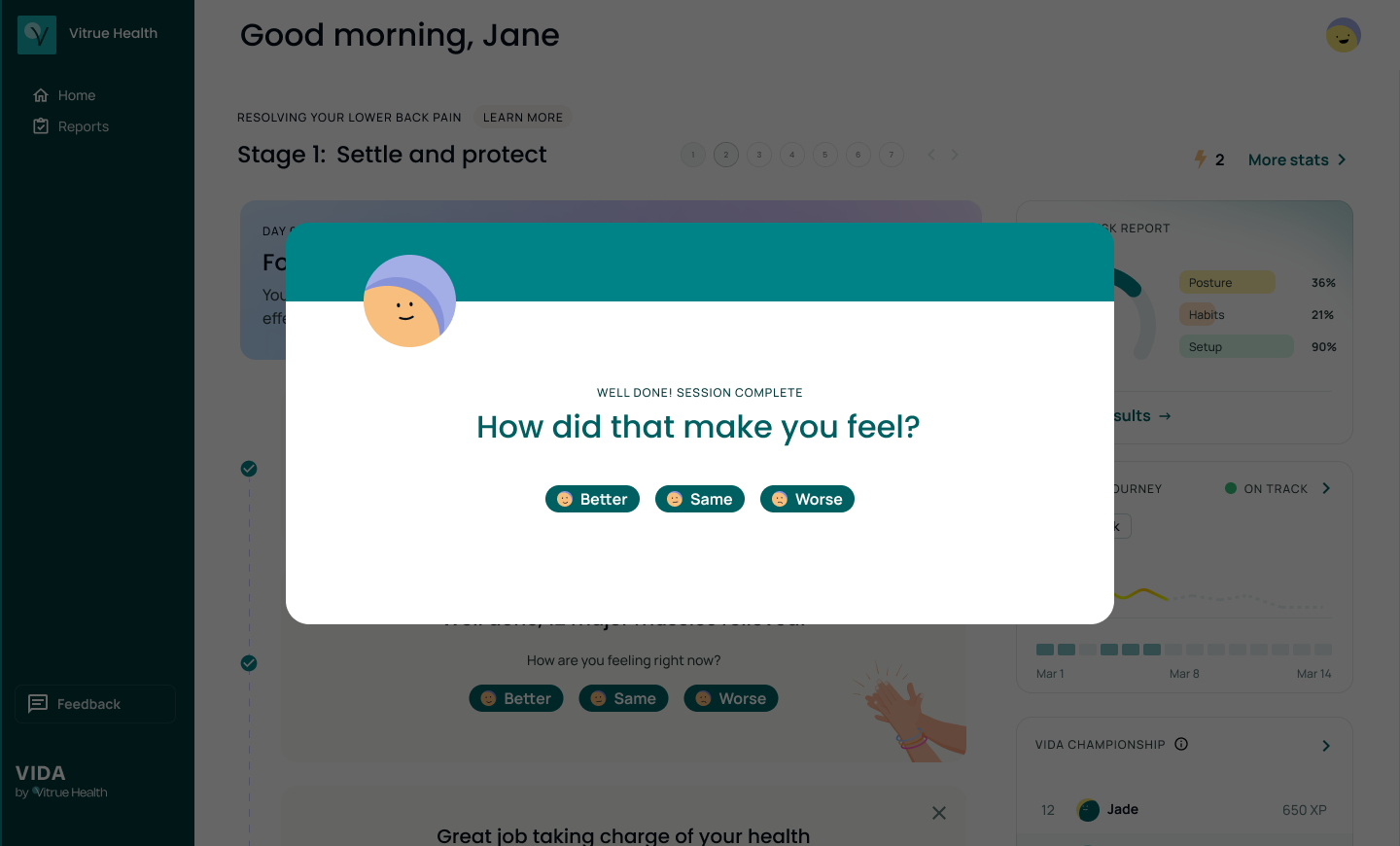
At Vitrue, this thinking is shaping the next evolution of VIDA’s personalised MSK support through VIDA Personal Pathways.
By using assessment data and clinical reasoning, VIDA Personal Pathways helps employees receive support that reflects who they are, not just where they hurt.
Pain is personal. Workplace MSK support should be too.
.gif)
References
- International Association for the Study of Pain. IASP Announces Revised Definition of Pain. 2020.
- Raja SN, Carr DB, Cohen M, et al. The revised International Association for the Study of Pain definition of pain: concepts, challenges, and compromises. Pain. 2020.
- NICE. Chronic pain: assessment and management. NICE guideline NG193. 2021.
- Cuenca-Martínez F, Suso-Martí L, Calatayud J, et al. Pain neuroscience education in patients with chronic musculoskeletal pain: an umbrella review. Frontiers in Neuroscience. 2023.
- Vitrue Health clinical conference notes from the British Pain Society 59th Annual Scientific Meeting and WCO-IOF-ESCEO.
Explore how VIDA helps organisations move earlier on MSK prevention.
Or speak to our team about building a more personalised, clinically-led MSK strategy for your workforce.
At Vitrue Health, we’re on a mission to eliminate workplace musculoskeletal (MSK) issues for millions of people.
Get in touch or book a demo today and join companies including Bupa, Estee Lauder, EBRD and Hastings Direct transforming their employee health and wellbeing with VIDA!