
Part of The Future of MSK at Work: Clinical Insights Series
At Vitrue, clinical rigour means staying close to where MSK and pain science is moving next - then bringing those evidence-based insights back into workplace prevention and product development.
That is the thinking behind The Future of MSK at Work: Clinical Insights Series.
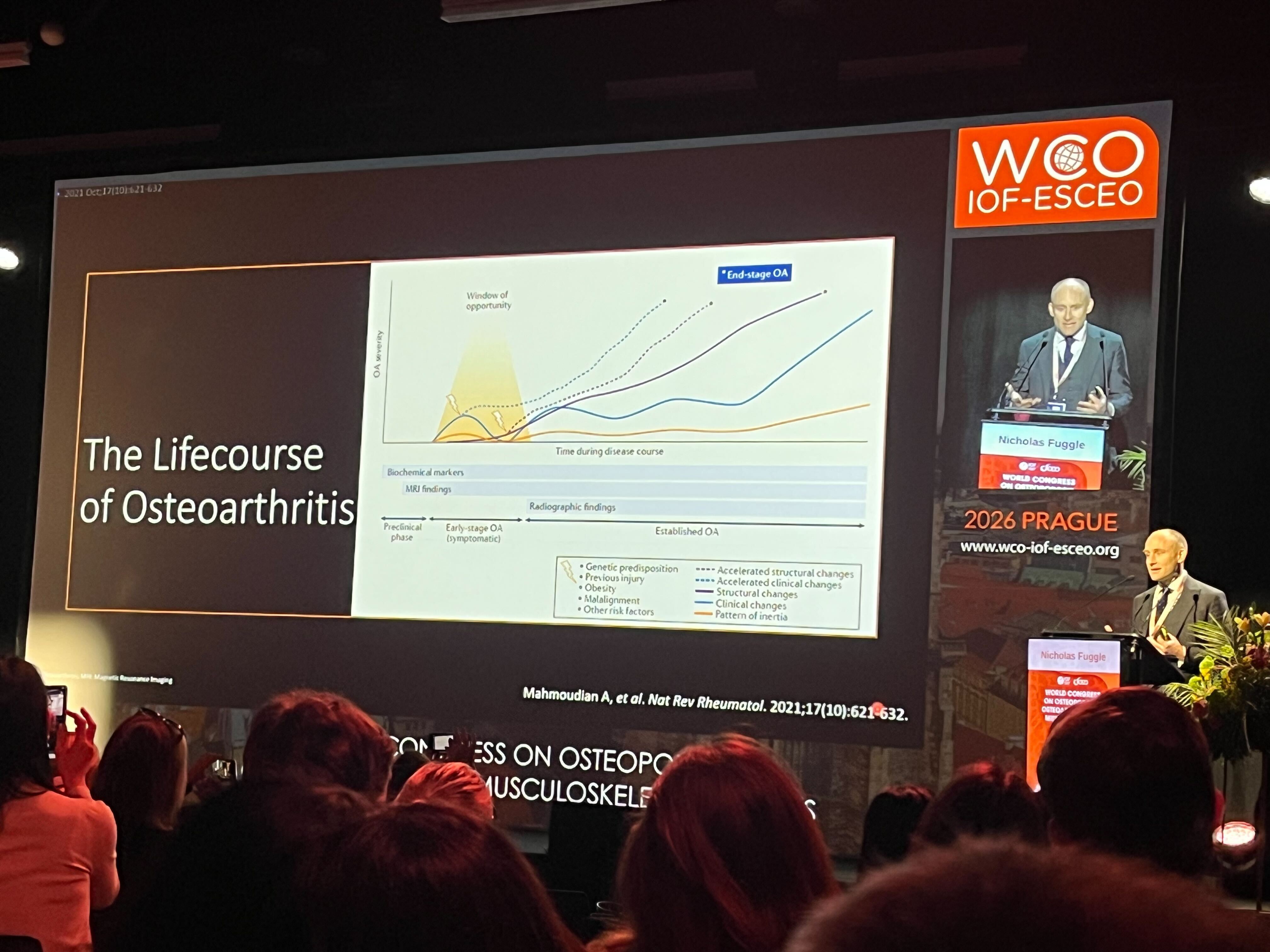
Over the past year, our clinical team has combined Vitrue’s own peer-reviewed research with learnings from leading MSK, bone health and pain science conferences, including WCO-IOF-ESCEO and the British Pain Society Annual Scientific Meeting.
One message came through clearly: workplace MSK support is moving earlier, becoming more personalised, and taking a broader view of the person behind the pain.
The next phase of workplace MSK support is not about replacing clinical care or asking employers to diagnose health conditions.
It is about helping organisations recognise risk earlier, support people more personally, and give employees practical guidance before pain becomes more severe, disruptive or costly to manage.

MSK support is moving earlier
One of the clearest shifts in MSK science is the move from reactive care to earlier detection.
Recent conference discussions covered AI-led approaches to osteoporosis detection, machine learning in osteoarthritis, and the use of functional measures to better understand ageing and MSK risk.
For employers, the lesson is not that workplaces need to diagnose clinical conditions. They do not.
The lesson is that waiting for pain to become visible is no longer enough.
People may be building risk before they raise their hand. They may have lower activity levels, reduced movement confidence, poor strength, disrupted sleep, early discomfort or other signs that they are more likely to struggle later.
A prevention-first approach means helping people earlier, before pain becomes absence, lost productivity or costly external support.
Pain is personal
Another strong theme came from the British Pain Society: pain is deeply individual.
One phrase stood out:
“My pain is not your pain.”
Two employees can both report back pain, but the reasons behind that pain may be completely different.
One person may need support with strength. Another may need mobility work. Another may be affected by stress, poor sleep, previous injury, life-stage changes, confidence with movement, or their working environment.
This is why generic MSK support often falls short.
Pain location tells us where someone feels discomfort. It does not always explain why the pain is happening, what is keeping it going, or what support would help that person act earlier.
For employers, MSK support should not be built only around body parts. It should consider the person behind the pain.
MSK is connected to the whole person
The British Pain Society also highlighted the role of lifestyle medicine, sleep, stress, behaviour change, lived experience and pain education in chronic pain management.
This reinforces an important point for employers: MSK cannot sit in a silo.
Physical pain, mental wellbeing, sleep, confidence and daily behaviour often interact. Pain may reduce activity. Lower activity can affect sleep, mood and resilience. Stress can make pain harder to manage. Fear of movement can reduce confidence.
Over time, a manageable issue can become more complex.
That does not mean employers need to solve every factor behind someone’s pain. But it does mean workplace MSK support should be clear, practical and connected to how people actually live and work.
Function matters, not just pain
Another important theme was function.
Discussions on sarcopenia and healthy ageing emphasised that muscle health is not only about muscle mass. It is also about strength, balance and physical capability.
This matters as workforces age.
If organisations only measure MSK risk by pain, they may miss people who are not yet reporting symptoms but are already losing capacity.
The future of MSK support needs to ask better questions. Not only “where does it hurt?” but also “what can this person do, what are they struggling with, and what support would help them maintain function?”
What this means for employer strategy
The clinical direction is clear: earlier detection, personalisation and prevention are becoming central to good MSK support.
For employers, this creates a strategic opportunity.
Instead of waiting for employees to enter reactive pathways, organisations can help people understand risk earlier, take small supported actions, and access support that reflects their individual needs.
This is increasingly important as workforce health becomes more complex. Ageing workforces, GLP-1 medications, changing healthcare pathways, hybrid work, stress, sleep and long-term conditions are all reshaping what good MSK support needs to look like.
A one-size-fits-all approach is unlikely to meet that challenge.
How Vitrue translates clinical insight into prevention
At Vitrue, our approach is clinically-led and evidence-informed. We believe the future of MSK support should be earlier, more personalised and built around the whole person.
That means looking beyond symptoms alone and considering a richer picture: movement, pain history, work setup, life stage, pre-existing conditions, age, gender, behaviour and functional risk.
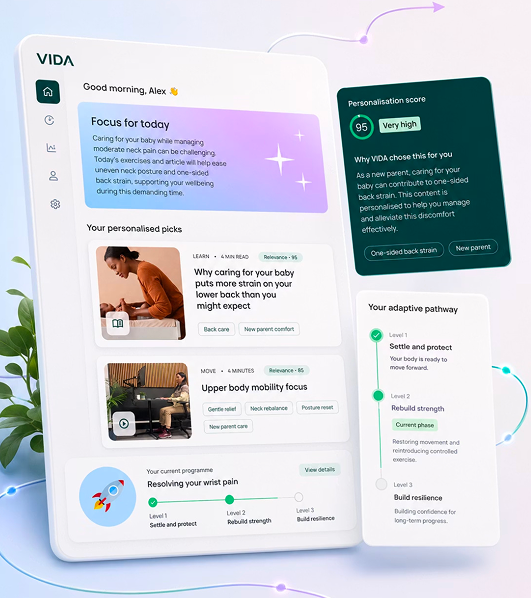
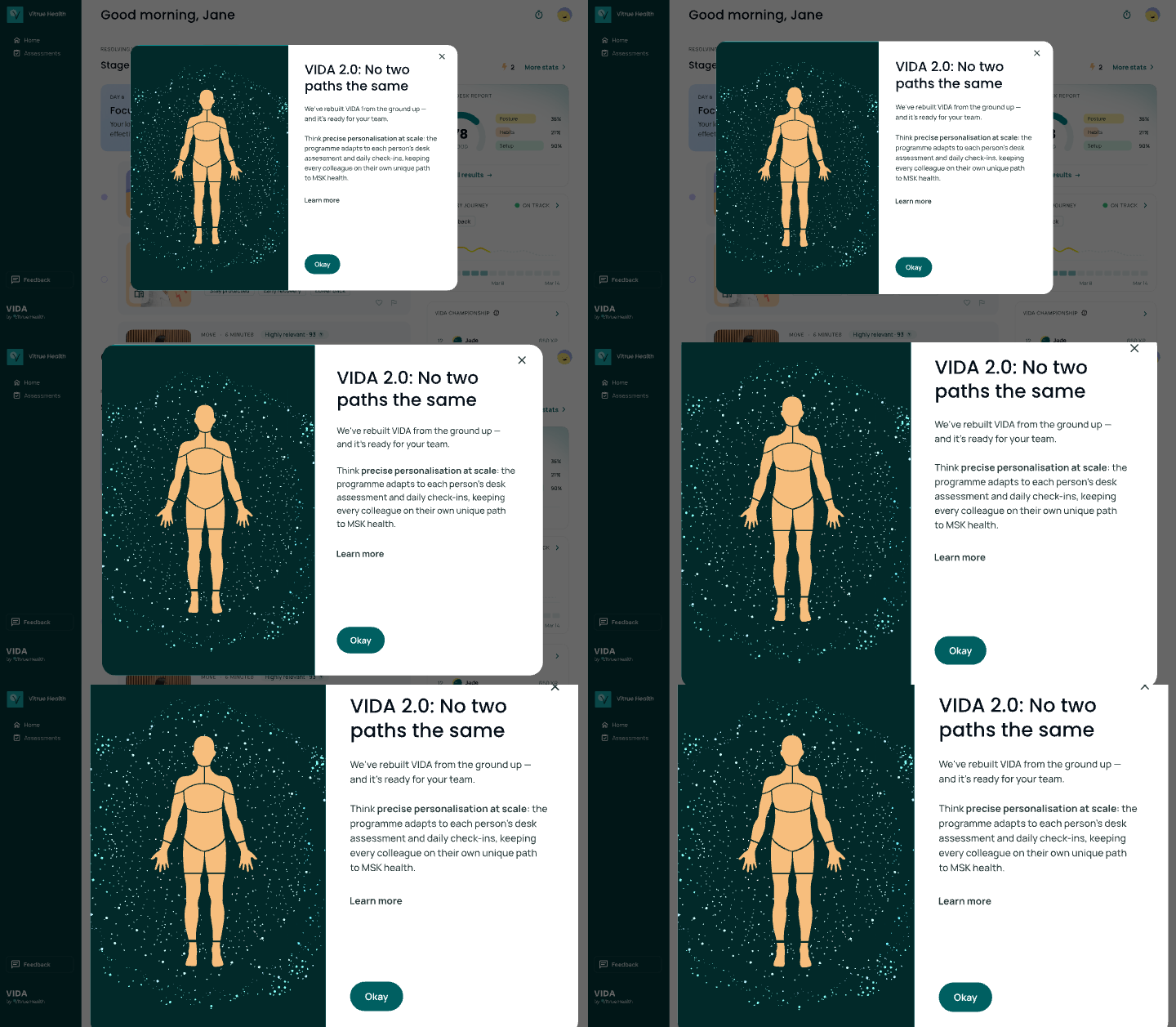
This is also the thinking behind VIDA Personal Pathways: helping employees receive support that reflects who they are, not just where they hurt.
For employers, the goal is simple: help people act earlier, before pain becomes more severe, more disruptive or more costly to manage.
The future of MSK at work is not generic.
It is personal, practical and prevention-first.
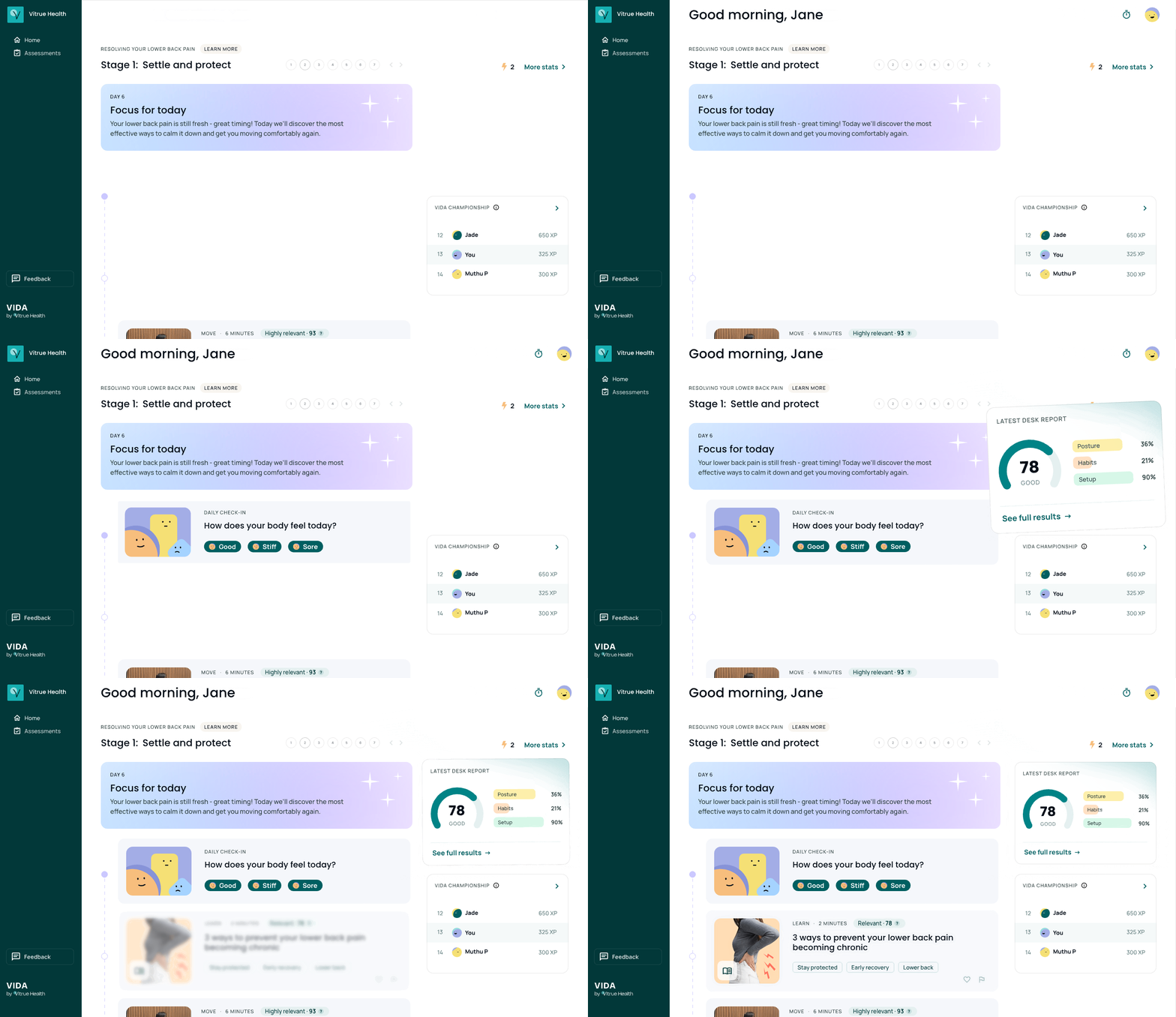
Explore how VIDA helps organisations move earlier on MSK prevention.
Or speak to our team about building a more personalised, clinically-led MSK strategy for your workforce.
At Vitrue Health, we’re on a mission to eliminate workplace musculoskeletal (MSK) issues for millions of people.
Get in touch or book a demo today and join companies including Bupa, Estee Lauder, EBRD and Hastings Direct transforming their employee health and wellbeing with VIDA!