
Key Takeaways: How to Choose UK Workplace MSK Services in 2026
- UK employers have a legal duty under DSE regulations to assess workstation risks and support employee musculoskeletal health.
- Musculoskeletal disorders account for 7.1 million working days lost annually in Great Britain, making preventative action essential.
- Vitrue Health helps employers reduce MSK pain by an average of 34% through AI-powered assessments and personalised pathways.
- Effective MSK services should combine DSE compliance, absence reduction strategies, and measurable productivity improvements.
- Choosing the right provider means evaluating clinical credibility, data analytics, and scalability for remote and hybrid teams.
What Are Workplace Musculoskeletal Health Services?
Workplace musculoskeletal (MSK) health services help employers prevent and manage conditions affecting muscles, bones, and joints. These conditions commonly include back pain, neck pain, and upper limb disorders caused by desk work, manual handling, or repetitive tasks.
For UK employers, these services typically include DSE assessments, ergonomic interventions, physiotherapy access, and pain management programmes. The goal is to reduce employee discomfort before it becomes a significant health issue or leads to absence.
Modern MSK services go beyond simple compliance checks. They use data-driven approaches to identify risk patterns, personalise support, and measure outcomes across your workforce.
Why MSK Health Matters for UK Employers in 2026
Musculoskeletal disorders remain one of the leading causes of workplace absence in Great Britain. According to HSE statistics, 7.1 million working days were lost due to musculoskeletal disorders in 2024/25. Each affected employee takes an average of 14 days off work.
The financial impact extends beyond absence costs. Presenteeism, where employees work while experiencing pain, reduces productivity and engagement. Unaddressed MSK issues can also escalate into long-term conditions requiring clinical intervention.
With hybrid and remote working now standard, employers face new challenges. Home workstations often lack proper ergonomic setup, increasing MSK risks. This makes proactive assessment and support more important than ever.
Understanding UK DSE Compliance Requirements
The Health and Safety (Display Screen Equipment) Regulations require UK employers to protect workers who habitually use screens. Your legal obligations include conducting workstation assessments, reducing identified risks, and ensuring employees take appropriate breaks.
Under these DSE regulations, you must also offer eye tests to employees who request them and fund corrective glasses needed specifically for DSE work. Training and information about safe workstation use are also mandatory.
Compliance is not just about avoiding enforcement action. Effective DSE programmes create healthier working conditions and demonstrate your commitment to employee wellbeing. Many organisations now view compliance as a foundation for broader workplace health initiatives.
What a DSE Assessment Should Include
A proper DSE assessment evaluates the entire workstation setup: chair height, screen position, keyboard and mouse placement, lighting, and the employee's posture. It should also consider individual factors like existing health conditions or pregnancy.
Assessments need to be repeated when workstations change significantly or when employees report discomfort. For hybrid workers, this means assessing both office and home setups. Traditional paper-based questionnaires often miss important postural factors that camera-based assessments can identify.
How MSK Services Reduce Workplace Absence
Effective MSK services reduce absence through early intervention. When employees receive support at the first signs of discomfort, conditions rarely progress to the point where time off becomes necessary.
NICE guidelines recommend that employers contact absent employees within four weeks and consider referrals to physiotherapy, counselling, or occupational therapy. For musculoskeletal conditions specifically, graded activity programmes and worksite assessments by qualified professionals support sustainable return to work.
Preventative approaches are even more effective. AI-powered platforms like Vitrue Health's VIDA identify MSK risks before pain develops, enabling behaviour changes that prevent problems from occurring. This proactive model shifts the focus from managing absence to preventing it entirely.
The Cost of MSK-Related Absence
Calculating the true cost of MSK absence requires looking beyond direct salary costs. Consider recruitment and training costs if absence leads to turnover, the impact on team workload when colleagues cover absences, and potential increases in private medical insurance premiums.
For a 1,000-employee organisation with average salaries, MSK-related absence and productivity loss can represent a significant annual expense. Investing in preventative services typically delivers returns through reduced healthcare costs, lower absence rates, and improved employee engagement.
Measuring Productivity Outcomes from MSK Programmes
Productivity improvements from MSK services come from reduced presenteeism, lower absence rates, and better employee engagement. Measuring these outcomes requires baseline data and ongoing tracking.
Key metrics to monitor include absence rates by cause, self-reported pain scores, assessment completion rates, and referral volumes to occupational health. More advanced analytics can identify risk hotspots by team, location, or job role.
Vitrue Health's Workplace Health Dashboard gives employers real-time visibility into workforce MSK health. This enables targeted interventions where they will have the greatest impact rather than applying uniform programmes across the organisation.
What to Look for in an MSK Service Provider
When evaluating MSK service providers, start with clinical credibility. Are assessments designed by healthcare professionals? Is the approach backed by evidence? Look for providers who can demonstrate measurable outcomes from existing clients.
Consider how the service handles your specific workforce profile. Remote teams need different support than office-based workers. Manufacturing environments have different risks than professional services. The right provider should tailor their approach to your context.
Technology capabilities matter increasingly. Modern platforms should integrate with your existing HR systems and communication tools like Teams or Slack. They should automate compliance administration and provide actionable data rather than just generating reports.
Questions to Ask Potential Providers
Before selecting a provider, ask how they measure programme effectiveness and what outcomes they guarantee. Request case studies from organisations similar to yours. Understand their approach to data security and GDPR compliance.
Clarify the implementation process and ongoing support model. Will employees need training to use the platform? How quickly can you deploy across your workforce? What happens when an employee needs clinical escalation?
How AI Is Changing Workplace MSK Support
Artificial intelligence enables more accurate, scalable MSK assessments than traditional methods. Computer vision can analyse posture through a standard webcam, identifying risks that self-reported questionnaires miss.
AI also powers personalisation at scale. Rather than giving every employee the same ergonomic advice, intelligent systems can tailor recommendations based on individual risk factors, work patterns, and pain history. This clinically-informed approach delivers better outcomes than generic guidance.
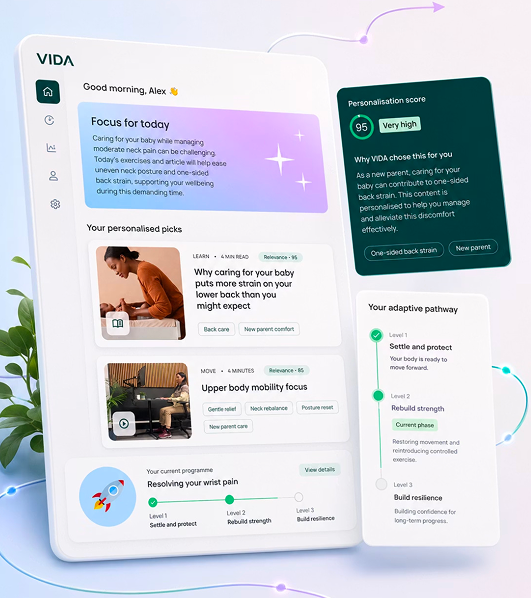
Vitrue Health uses AI originally developed for professional athletes to assess and support desk workers. Their VIDA platform combines computer vision assessment with personalised pain management pathways, delivering a 34% average reduction in MSK pain across client workforces.
Beyond the Assessment: Ongoing Employee Support
A single assessment is not enough. Effective MSK programmes support employees continuously with tailored exercises, posture reminders, and pain management resources. Integration with workplace communication tools helps embed healthy behaviours into daily routines.
Look for services that make ongoing engagement easy for employees. Quick, accessible content that fits into busy workdays achieves better uptake than lengthy training programmes. The goal is behaviour change that becomes habitual rather than a one-time compliance activity.
Supporting Remote and Hybrid Workforces
Remote work creates unique MSK challenges. Employees may lack proper chairs, desks at the right height, or separate monitors. Kitchen tables and sofas become workstations, creating sustained postural stress.
Effective remote MSK support requires assessments that work wherever employees are based. Cloud-based platforms allow employees to complete assessments from home, with recommendations tailored to their actual setup rather than an idealised office environment.
Vitrue Health's platform supports remote, hybrid, and office-based workers equally. Assessments take around five minutes and can be repeated as circumstances change. This flexibility ensures compliance and support regardless of where employees work.
Integrating MSK Services with Broader Wellbeing Programmes
MSK health should not sit in isolation from other employee wellbeing initiatives. Physical discomfort affects mental health, and stress can manifest as muscle tension and pain. An integrated approach addresses both dimensions.
Consider how MSK services connect with your employee assistance programme, mental health support, and occupational health provision. Data sharing between services, with appropriate consent and confidentiality, enables holistic support for employees with complex needs.
Many organisations fund wellbeing from compliance budgets. Since DSE compliance is mandatory, budget already exists for assessments. Modern platforms that combine compliance with prevention and personalised support deliver better value from this existing spend.
Building Your MSK Business Case
Securing investment in MSK services requires demonstrating return on investment to senior stakeholders. Start by quantifying your current MSK-related costs: absence days, occupational health referrals, private medical claims, and equipment purchases.
Model the potential savings from reduced absence and presenteeism. Factor in harder-to-quantify benefits like improved employee satisfaction, better recruitment and retention, and reduced legal risk. Compare the investment against potential costs of enforcement action or employee claims.
Pilot programmes can provide evidence specific to your organisation. Starting with a single team or location allows you to measure outcomes before committing to full deployment. Many providers offer trial periods that enable this approach.
Implementation Best Practices
Successful MSK programme implementation requires clear communication and leadership support. Employees need to understand what is expected of them and why the organisation is investing in their health. Position the programme as a benefit rather than a surveillance exercise.
Make participation as easy as possible. Assessments that take too long or require special equipment will see poor completion rates. Mobile-friendly platforms that work on any device remove barriers to engagement.
Track completion rates and follow up with employees who have not participated. Consider incentives for teams that achieve high engagement. Celebrate improvements in pain scores and other metrics to maintain momentum.
Getting Manager Buy-In
Line managers play a crucial role in MSK programme success. They set the tone for their teams and can encourage or discourage participation through their own engagement. Brief managers on the programme rationale and their role in supporting it.
Give managers visibility into team-level data so they can identify and address issues. This should not include individual employee health information, but aggregate insights about completion rates and risk patterns help managers prioritise action.
Compliance Reporting and Documentation
DSE compliance requires documentation that can withstand regulatory scrutiny. You need records showing assessments have been completed, risks identified, and actions taken. For large organisations with distributed workforces, this can create significant administrative burden.
Automated platforms eliminate manual tracking. Every assessment, recommendation, and action is logged and reportable. This makes preparing for audits straightforward and ensures nothing falls through the cracks as employees join, leave, or change roles.
Vitrue Health's compliance automation gives employers audit-ready documentation with minimal administrative effort. Dashboards show real-time compliance status across the organisation, and automated reminders ensure assessments stay current.
Addressing Gender and Life Stage Factors
MSK risk varies significantly by gender and life stage. Women experience 22% higher rates of MSK pain and 11% greater intensity than men. Pregnancy, menopause, and other life stage factors create specific ergonomic needs that generic assessments may miss.
Inclusive MSK services recognise these differences and tailor support accordingly. Assessments should ask about relevant personal circumstances so recommendations account for individual needs. This creates a more equitable approach to workplace health.
Vitrue Health offers assessments specifically designed for various MSK risks including those related to pregnancy and menopause. This inclusive approach ensures all employees receive relevant, personalised support.
Scaling MSK Support Globally
For multinational organisations, MSK services need to work across different regulatory frameworks. UK DSE regulations differ from requirements in the US, EU, and Australia. A global provider should understand these differences and ensure compliance in each jurisdiction.
Language support is essential for consistent employee experience. Assessments and educational content should be available in employees' preferred languages. This improves engagement and ensures recommendations are clearly understood.
Look for platforms that integrate with global HR systems and accommodate different working patterns and time zones. A single platform serving your entire workforce simplifies administration and enables consistent reporting across regions.
In Conclusion: Making the Right Choice for Your Organisation
Choosing workplace MSK services in 2026 means finding a provider that combines DSE compliance with genuine health outcomes. The right service will reduce absence, improve productivity, and demonstrate measurable return on investment.
Start by understanding your current MSK burden and compliance gaps. Evaluate providers based on clinical credibility, technology capabilities, and evidence of outcomes. Consider how services will work for your specific workforce profile, including remote and hybrid workers.
Vitrue Health offers UK employers a clinically validated, AI-powered approach to workplace MSK health. With automated DSE compliance, personalised pain pathways, and actionable workforce analytics, their platform helps organisations achieve better outcomes for employees and the business alike.
FAQs about Choosing UK Workplace MSK Services
What is the difference between DSE compliance and MSK services?
DSE compliance focuses specifically on display screen equipment regulations, including workstation assessments and risk reduction. MSK services encompass broader support for musculoskeletal health, including pain management, physiotherapy access, and preventative programmes.
Vitrue Health combines both in a single platform, automating DSE compliance while delivering personalised MSK prevention and support.
How often should workplace DSE assessments be completed?
DSE assessments should be completed when employees start using a new workstation, when significant changes occur to equipment or layout, or when employees report discomfort. For hybrid workers, assessments should cover both office and home setups.
Vitrue Health's AI-powered assessments take just five minutes and can be repeated as often as needed, making it practical to maintain current assessments across your workforce.
What outcomes should UK employers expect from MSK services?
Effective MSK services should deliver measurable reductions in pain scores, absence rates, and occupational health referrals. Productivity improvements from reduced presenteeism should also be trackable through employee surveys or engagement metrics.
Vitrue Health clients typically see a 34% average reduction in MSK pain, along with decreased absence and lower healthcare costs.
How can remote workers be supported with MSK services?
Remote workers need assessments that evaluate their actual home setups, not idealised office conditions. Cloud-based platforms allow employees to complete assessments from anywhere, with recommendations tailored to available equipment and space constraints.
Vitrue Health's VIDA platform supports employees wherever they work, with computer vision technology that assesses posture through any standard webcam.
Are MSK services tax-deductible for UK employers?
Workplace health and safety expenditure, including DSE compliance services, is typically tax-deductible as a business expense. Specific treatment may vary based on how services are structured and your organisation's tax arrangements.
Consult your finance team or tax adviser for guidance specific to your circumstances. Many employers fund MSK services from existing compliance or occupational health budgets.