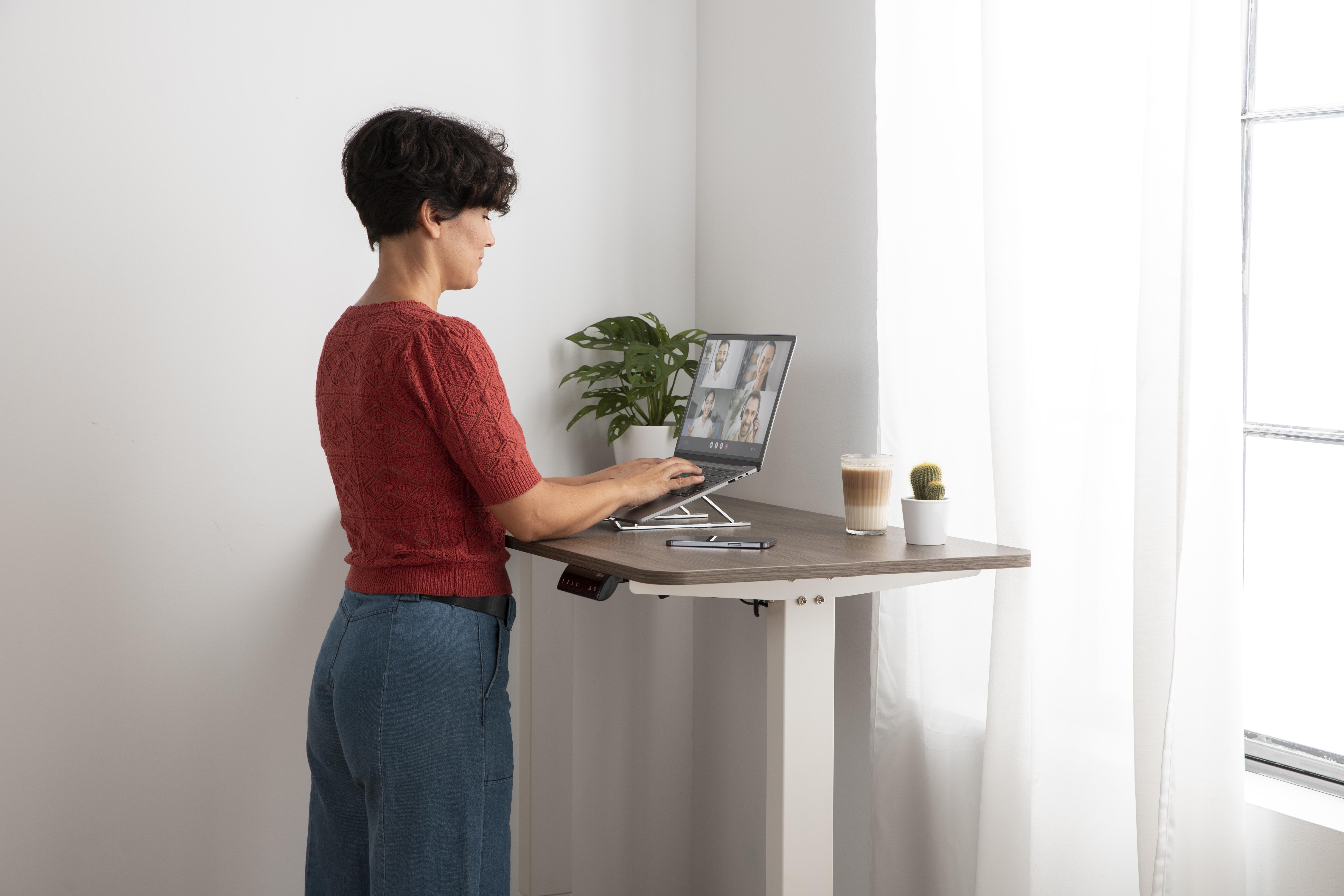

Back and neck pain are among the top reasons employees take time off work, and most of these conditions are preventable. When workplace musculoskeletal health services operate separately from occupational health programmes, employers miss the chance to address the root causes of discomfort before they escalate into chronic issues.
This guide walks you through the practical steps needed to bring MSK prevention, ergonomic assessments, and occupational health together into a single coordinated approach. You will learn how to identify integration opportunities, align your compliance requirements with employee wellbeing goals, and measure the impact of a unified programme.
Key Takeaways: How to Integrate MSK Services Into Occupational Health
- Integrating MSK services with occupational health reduces duplicate assessments and creates a single source of truth for employee wellbeing data.
- Vitrue Health combines AI-powered DSE assessments with personalised pain pathways to help employers reduce MSK pain by 34% on average.
- Clinically-informed ergonomic interventions prevent injuries before they require costly medical referrals or private medical insurance claims.
- Workforce analytics dashboards give occupational health teams visibility into distributed workspaces and emerging risk patterns across the organisation.
- A preventative approach shifts employer spending from equipment fixes and absence costs to proactive wellbeing support that keeps employees working comfortably.
What Is Workplace MSK Health Service Integration?
Workplace MSK health service integration means connecting your ergonomic assessment processes, pain management programmes, and occupational health referral pathways into one coordinated system. Rather than running DSE compliance as a separate exercise from occupational health support, integration creates a direct link between identifying risks and acting on them.
This approach removes the administrative barriers that often delay support for employees experiencing discomfort. When an ergonomic assessment flags a potential issue, the employee can immediately access relevant resources, exercises, or clinical guidance without waiting for a separate referral.
For HR managers and health and safety officers, integration also means fewer spreadsheets to maintain and clearer reporting on how workplace setup influences employee health outcomes. The Health and Safety Executive notes that people with MSK disorders usually recover completely when the problem is treated early.
Why Should Employers Prioritise MSK Integration?
MSK conditions account for a significant proportion of workplace absence across all industries. According to NHS Employers, musculoskeletal disorders including back pain, neck strains, and joint diseases are among the most common reasons for sickness absence. These conditions affect employees in every role, from desk-based workers to those in physically demanding positions.
When MSK support sits outside your occupational health programme, employees with early symptoms may not know where to turn. They might report pain to their line manager, complete a DSE self-assessment, or request equipment changes without any of these actions being connected.
Integration solves this by creating a single pathway. An employee who reports shoulder tension during a workstation assessment can be directed to targeted exercises, ergonomic adjustments, and follow-up checks through the same system. This reduces the time between identifying an issue and resolving it.
How Do You Assess Your Current MSK and Occupational Health Setup?
Before making changes, you need a clear picture of how your existing systems work and where gaps exist. Start by mapping the journey an employee takes when they experience workplace discomfort.
Consider these questions: Does your DSE assessment process capture information about existing pain or discomfort? When an employee completes an ergonomic checklist, does anyone review the results beyond basic compliance? If an employee requests an occupational health referral for back pain, can the occupational health team see their workstation setup history?
Most organisations find that their DSE compliance process and occupational health services operate independently. This creates blind spots where employees fall through the cracks or receive delayed support.
Reviewing Your DSE Compliance Process
Display Screen Equipment regulations require employers to assess workstations and reduce risks. Many employers treat this as a tick-box exercise completed once when an employee joins. Under the Health and Safety (Display Screen Equipment) Regulations 1992, employers must conduct workstation assessments and implement changes where necessary.
A modern approach treats DSE assessments as an ongoing process rather than a one-time requirement. Hybrid and remote working arrangements mean that employees may work from multiple locations, each requiring its own assessment. Hot-desking policies add another layer of complexity that static paper forms cannot address.
Vitrue Health's AI-powered DSE assessments use computer vision technology to capture and analyse employee posture, turning a compliance obligation into an opportunity to identify risks before pain develops.
Evaluating Occupational Health Referral Pathways
Review your current occupational health referral process. How long does it typically take from an employee reporting a problem to receiving specialist advice? What information does the occupational health provider receive about the employee's working conditions?
Common issues include referral delays caused by approval processes, incomplete information reaching the occupational health team, and a lack of follow-up to confirm whether recommended adjustments were implemented. Each of these gaps creates opportunities for minor discomfort to become a significant health issue.
What Are the Components of an Integrated MSK Programme?
An effective integrated programme brings together several elements that traditionally operate in isolation. Each component serves a specific purpose, but the real value comes from how they connect.
Ergonomic Risk Assessment
Risk assessment forms the foundation. This goes beyond asking employees whether their chair is adjustable. Clinically-informed assessments evaluate the whole working environment, including lighting, screen position, posture habits, and the frequency of breaks.
Computer vision technology offers a significant advancement over traditional questionnaires. By analysing an employee's actual posture during a brief webcam assessment, these tools identify specific risk factors that self-reported surveys often miss. Vitrue Health's assessment technology was originally developed for professional sports recovery and has been adapted for workplace use.
Personalised Intervention Pathways
Identifying risk is only valuable if it leads to action. Precision pathways match each employee with the specific support they need based on their assessment results. An employee with early signs of neck tension receives different guidance than someone with lower back discomfort.
These pathways should include immediate self-help resources such as stretching exercises and workspace adjustments, along with escalation routes for employees who need additional support. The Pain Coach feature within the Vitrue Health platform delivers personalised exercise programmes that employees can access on-demand.
Workforce Analytics and Reporting
Integration requires visibility. A centralised dashboard showing assessment completion rates, pain trends across teams, and common risk factors helps occupational health teams prioritise their interventions.
This data also supports conversations with senior leadership about the business case for MSK investment. When you can show that a particular team has higher-than-average pain reports and link that to their working arrangements, you can make evidence-based decisions about equipment, training, or policy changes.
Clinical Decision Support
Some employees will need clinical input. An integrated system should include pathways to physiotherapy, occupational health advice, or other clinical services. The key is ensuring that clinicians receive relevant context about the employee's working conditions, assessment history, and self-management efforts.
This context helps clinicians make more targeted recommendations and avoids the frustration of employees having to repeat their history at each touchpoint.
How Do You Build the Business Case for Integration?
Securing budget and stakeholder support requires a clear articulation of costs, benefits, and risks. Start by quantifying your current spending on MSK-related issues.
Calculating Your Current MSK Costs
Add up the obvious costs first: days lost to MSK-related absence, equipment purchases made in response to employee complaints, and fees paid to external occupational health providers. Then consider the hidden costs: productivity loss when employees work through pain, management time spent handling individual cases, and the administrative burden of maintaining compliance records.
For a typical organisation with 1,000 employees, MSK-related absence alone can represent a substantial financial impact before accounting for productivity losses. Employees experiencing pain often continue working but at reduced effectiveness.
Presenting the Return on Investment
Frame integration as a shift from reactive to preventative spending. Instead of waiting for employees to develop problems that require expensive interventions, you are investing in early identification and low-cost prevention.
Evidence from employers using integrated MSK platforms shows meaningful reductions in pain levels, occupational health referrals, and equipment requests. Vitrue Health customers report an average 34% reduction in MSK pain, which translates directly into lower absence rates and reduced healthcare claims.
What Steps Should You Follow for Implementation?
Successful implementation requires careful planning and stakeholder engagement. Rushing the process often leads to poor adoption and missed opportunities.
Step 1: Secure Leadership Sponsorship
Integration affects multiple departments including HR, health and safety, facilities, and IT. You need a senior sponsor who can coordinate across these teams and resolve conflicts when they arise. Present the business case to leadership and secure explicit commitment to the programme.
Step 2: Map Your Current State
Document every existing process that touches employee MSK health. This includes DSE assessments, equipment request procedures, occupational health referrals, absence reporting, and return-to-work protocols. Identify where information is captured, who owns each process, and where handoffs occur.
Step 3: Define Your Target Operating Model
Design the integrated process you want to achieve. Specify how information will flow between systems, who will be responsible for reviewing alerts and taking action, and how you will measure success. Consider how the process will work for different employee populations including office workers, remote employees, and those in hybrid arrangements.
Step 4: Select Technology Partners
Choose platforms that support your target operating model. Look for solutions that offer integration with your existing HR and health systems, user-friendly interfaces that encourage employee engagement, and analytics capabilities that support decision-making.
Vitrue Health's platform integrates with leading HR and learning management systems including Workday, Cornerstone, and Microsoft Teams, reducing the friction of adding another tool to your technology stack.
Step 5: Pilot and Iterate
Start with a pilot group rather than a full rollout. Choose a team or location that represents your broader workforce and is willing to provide feedback. Use the pilot to identify technical issues, refine your communication approach, and build internal case studies.
Step 6: Roll Out and Embed
Expand gradually, incorporating lessons from your pilot. Invest in communication and training to ensure employees understand what the programme offers and how to access it. Assign clear ownership for ongoing programme management and continuous improvement.
How Do You Measure Success?
Define your success metrics before launch so you can track progress objectively. Effective measurement combines leading indicators that predict future outcomes with lagging indicators that confirm results.
Leading Indicators
Assessment completion rates show whether employees are engaging with the programme. Pain level trends captured through self-reported assessments indicate whether you are catching issues early. Risk factor prevalence data from workstation assessments helps you identify systemic issues before they cause widespread problems.
Lagging Indicators
Absence rates attributed to MSK conditions provide the clearest signal of programme impact. Occupational health referral volumes indicate whether your preventative measures are reducing demand for clinical services. Private medical insurance claims related to musculoskeletal treatment reflect financial outcomes.
Establishing Baselines
Capture baseline data before making changes so you can demonstrate improvement. Work with your HR team to extract historical absence data, equipment request volumes, and occupational health referral rates. Use initial assessment results to establish a baseline pain prevalence across your workforce.
What Common Challenges Should You Anticipate?
Even well-planned implementations encounter obstacles. Understanding common challenges helps you prepare mitigation strategies.
Employee Engagement
Some employees view wellbeing programmes with scepticism, particularly if previous initiatives felt performative. Others may be reluctant to report pain for fear of being perceived as complaining or putting their role at risk.
Address this through clear communication about how information will be used and explicit commitments to confidentiality. Emphasise that the programme exists to support employees, not to create additional requirements or surveillance.
Manager Buy-In
Line managers play a critical role in encouraging participation and implementing adjustments. If managers view the programme as administrative overhead, adoption will suffer.
Provide managers with training on why MSK prevention matters and practical tools for supporting their teams. Show them how the programme reduces rather than increases their workload by streamlining the process for addressing employee needs.
System Integration
Technical integration between platforms can be more complex than anticipated. Work closely with your IT team and technology vendors to understand integration requirements early in the process. Define clear data flows and establish testing protocols before going live.
How Does Hybrid Working Affect MSK Integration?
The shift to hybrid working arrangements has fundamentally changed the ergonomic landscape. Employees who split time between office and home need support in multiple environments, and hot-desking policies mean that even office-based employees may use different workstations from day to day.
Assessing Multiple Work Environments
Traditional DSE assessments assumed a fixed workstation. Modern approaches must account for the reality that an employee might work from a home office, a kitchen table, a shared desk in the corporate office, and occasionally a co-working space or coffee shop.
Technology-enabled assessments that employees can complete on any device make it practical to assess multiple environments. The assessment itself becomes portable, following the employee rather than being tied to a specific location.
Maintaining Consistency Across Locations
Integration with occupational health becomes more important when employees work in distributed settings. The occupational health team may never visit an employee's home office, but they still need visibility into how that environment affects the employee's health.
Centralised platforms that capture assessment data regardless of where the assessment occurs solve this problem. The Vitrue Health Workplace Health Dashboard gives health and safety teams visibility into workforce wellbeing across all locations.
What Role Does Compliance Play in Integration?
Regulatory requirements create both an obligation and an opportunity. Meeting your legal duties around display screen equipment and workplace health can serve as the foundation for a broader wellbeing programme.
DSE Regulations and Beyond
The Health and Safety (Display Screen Equipment) Regulations 1992 require employers to conduct workstation risk assessments and implement measures to reduce identified risks. These regulations apply to all employees who use display screen equipment as a significant part of their work.
Compliance is the baseline, but it should not be the ceiling. An assessment process that merely confirms regulatory boxes are ticked wastes an opportunity to gather valuable data and engage employees with their own wellbeing.
Turning Compliance into Prevention
Reframe DSE compliance as the entry point to a broader prevention programme. Every compliance assessment becomes an opportunity to identify employees who could benefit from additional support, gather data about workforce-wide risk patterns, and demonstrate organisational commitment to employee health.
Vitrue Health's approach to automated DSE compliance enables employers to fund wellbeing initiatives from compliance budgets, transforming a cost centre into a strategic investment in workforce health.
How Should You Communicate With Employees?
Communication determines whether your integrated programme achieves its potential. Even the best-designed system fails if employees do not understand what is available or how to access it.
Launch Communications
Before launch, explain why the organisation is making this change and what employees can expect. Be specific about what the programme offers, how to access it, and what will happen with the information employees share. Address privacy concerns directly.
Ongoing Engagement
A single launch announcement is not enough. Build ongoing communication into your programme with regular reminders, success stories from colleagues, and updates about improvements made based on employee feedback.
Use multiple channels to reach different employee populations. Email works for some, but others respond better to intranet posts, team meeting announcements, or manager-led discussions.
In Summary: Creating a Healthier, More Productive Workforce
Integrating workplace MSK services with occupational health transforms how organisations support employee wellbeing. By connecting ergonomic assessment, pain prevention, and clinical support into a single coordinated system, employers can identify and address issues before they escalate into chronic conditions and costly absences.
The process requires careful planning, stakeholder engagement, and sustained commitment. But the outcomes justify the investment: reduced absence, lower healthcare costs, improved employee engagement, and a workforce that can perform at its best.
For organisations ready to take this step, platforms like Vitrue Health offer the technology foundation needed to make integration practical. With AI-powered assessments, personalised pain pathways, and workforce analytics built into a single platform, employers can move from fragmented compliance activities to a preventative wellbeing strategy that delivers measurable results.
FAQs About Integrating MSK Services Into Occupational Health
What is the difference between MSK services and occupational health?
MSK services focus specifically on preventing and treating musculoskeletal conditions like back and neck pain. Occupational health covers a broader range of workplace health matters including fitness-for-work assessments, health surveillance, and absence management. Vitrue Health bridges these areas by connecting ergonomic assessment with personalised support pathways.
How long does it take to implement an integrated MSK programme?
Implementation timelines vary based on organisational complexity. A pilot programme can typically launch within four to six weeks. Full rollout across a large organisation usually takes three to six months when done carefully with proper change management and stakeholder engagement.
Can small businesses benefit from MSK integration?
Yes. Small businesses often have more flexibility to implement changes quickly. The relative impact can be greater because each employee represents a larger proportion of the workforce. Cloud-based platforms like Vitrue Health make clinically-informed assessment accessible to organisations of all sizes without significant infrastructure investment.
How do you maintain employee confidentiality in an integrated system?
Integrated systems should provide different levels of data access for different roles. Line managers might see that assessments are complete without viewing individual health information. Occupational health professionals can access clinical details needed for their role. Vitrue Health maintains clear data governance with role-based access controls to protect employee privacy.
What training do managers need to support the programme?
Managers need to understand the purpose of the programme, how to encourage team participation, and what actions they can take when the system flags concerns. Training should cover having supportive conversations about workplace comfort, implementing recommended adjustments, and knowing when to involve occupational health specialists.
How does remote working change MSK service requirements?
Remote working increases the importance of employee self-assessment and creates new challenges around workspace setup. Employees working from home may lack appropriate furniture or equipment. Vitrue Health helps employers support remote workers through digital assessments that can be completed anywhere and instant personalised recommendations for improving home workstation ergonomics.