


Digital MSK screening validation
MSK Screening Validation
1 of 4Why physical activity may identify musculoskeletal dysfunction more effectively than pain alone, and what this means for earlier workplace screening.
- A validated digital screening tool identified workers with functional impairment with 93.8% specificity, without requiring a specialist assessment.
- Physical activity showed approximately twice the predictive strength of pain, suggesting that symptom-only screening may miss people with meaningful functional deficits.
Presented at the WCO–IOF–ESCEO Congress 2026 (P1595).
Presented at the King's Business School Future of Work conference 2026
Abstract accepted by EULAR (European Alliance of Associations for Rheumatology) 2026.

Pain severity and functional risk
Pain Impact: The VAS Tipping Point
2 of 4Data from 18,371 working adults show where pain becomes more likely to affect work, mental wellbeing and social functioning at the same time.
- The analysis identifies VAS 4 as an important threshold, marking the point at which pain is increasingly associated with broader functional impact.
- Risk rises progressively as pain severity increases, demonstrating a clear dose–response relationship rather than a simple pain-versus-no-pain divide.
- These findings can support earlier and more proportionate intervention decisions in working populations, before pain becomes more disruptive.
Presented at the WCO–IOF–ESCEO Congress 2026 (P1596).

Sex and gender differences in workplace pain
The Gender Pain Gap in Desk-Based Work
3 of 4Analysis of 19,439 desk-based workers quantifies differences in pain prevalence, body region and functional impact between women and men.
- The study maps where the gender pain gap is greatest and shows that equipment access alone does not explain the difference.
- Female life stage—particularly menstruation—was associated with additional pain burden that standard workplace assessments may not capture.
- At comparable pain levels, women and men did not always report the same consequences, highlighting the need for more inclusive and responsive workplace support.
Presented at the British Pain Society 59th Annual Scientific Meeting 2026.
Presented at the UCL Behavioural Change Conference 2026
Presented at the 4th World Gender and Women Studies Conference

Workplace behaviours and desk-related pain
Beyond Equipment: What Drives Desk-Related Pain?
4 of 4A cross-sectional analysis of 23,414 workplace assessments found that better overall workplace scores were associated with lower pain (ρ = −0.314, p < 0.001).
- Desk-related pain was influenced by how people worked, not only by the equipment available to them.
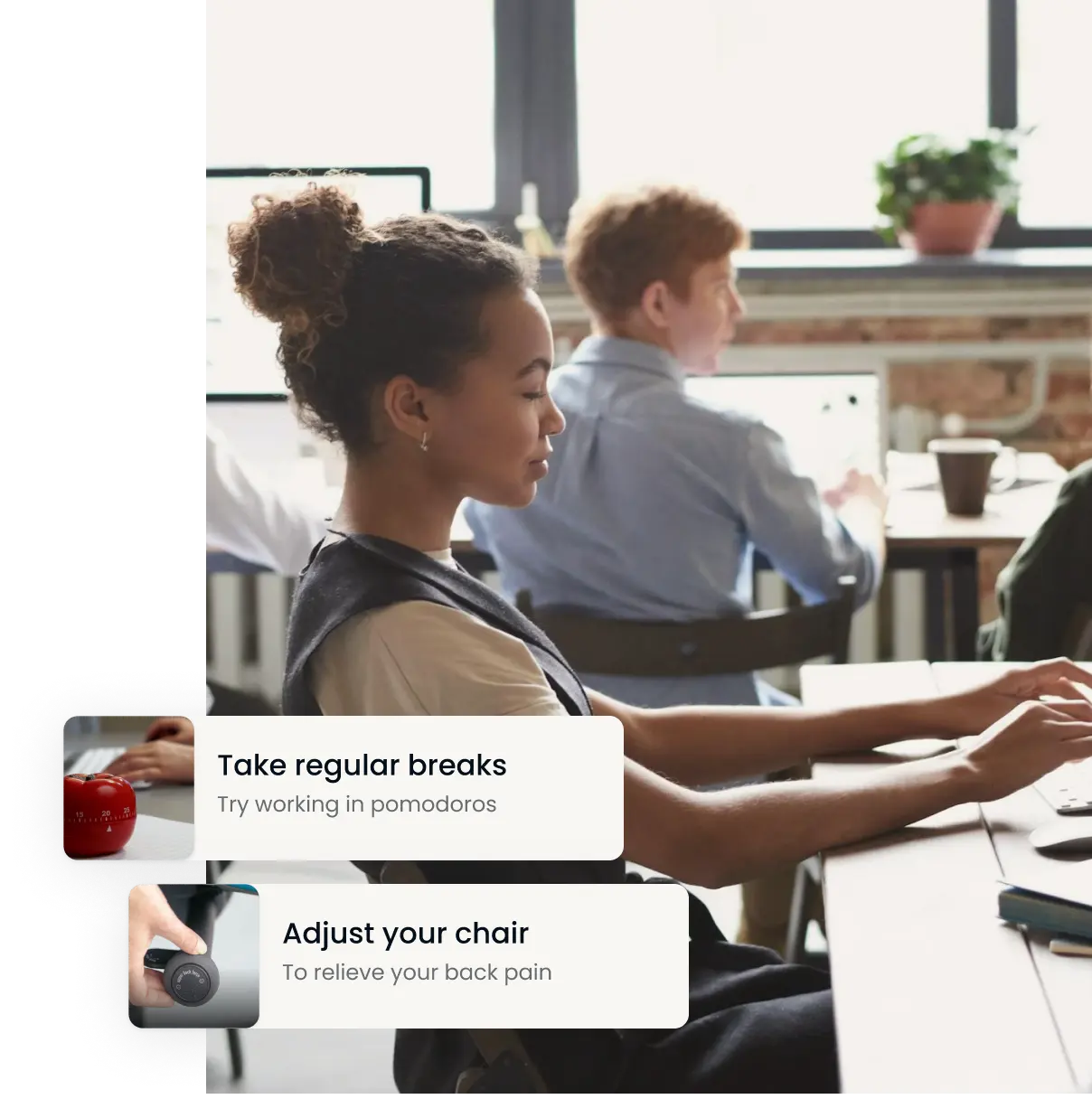
- Behavioural factors—including chair adjustment, wrist positioning and movement habits—showed stronger relationships with pain than equipment setup alone.
- The findings support a broader prevention approach combining suitable equipment with practical behaviour change and regular movement.
Presented at the Occupational Health Conference 2026 (OP3).