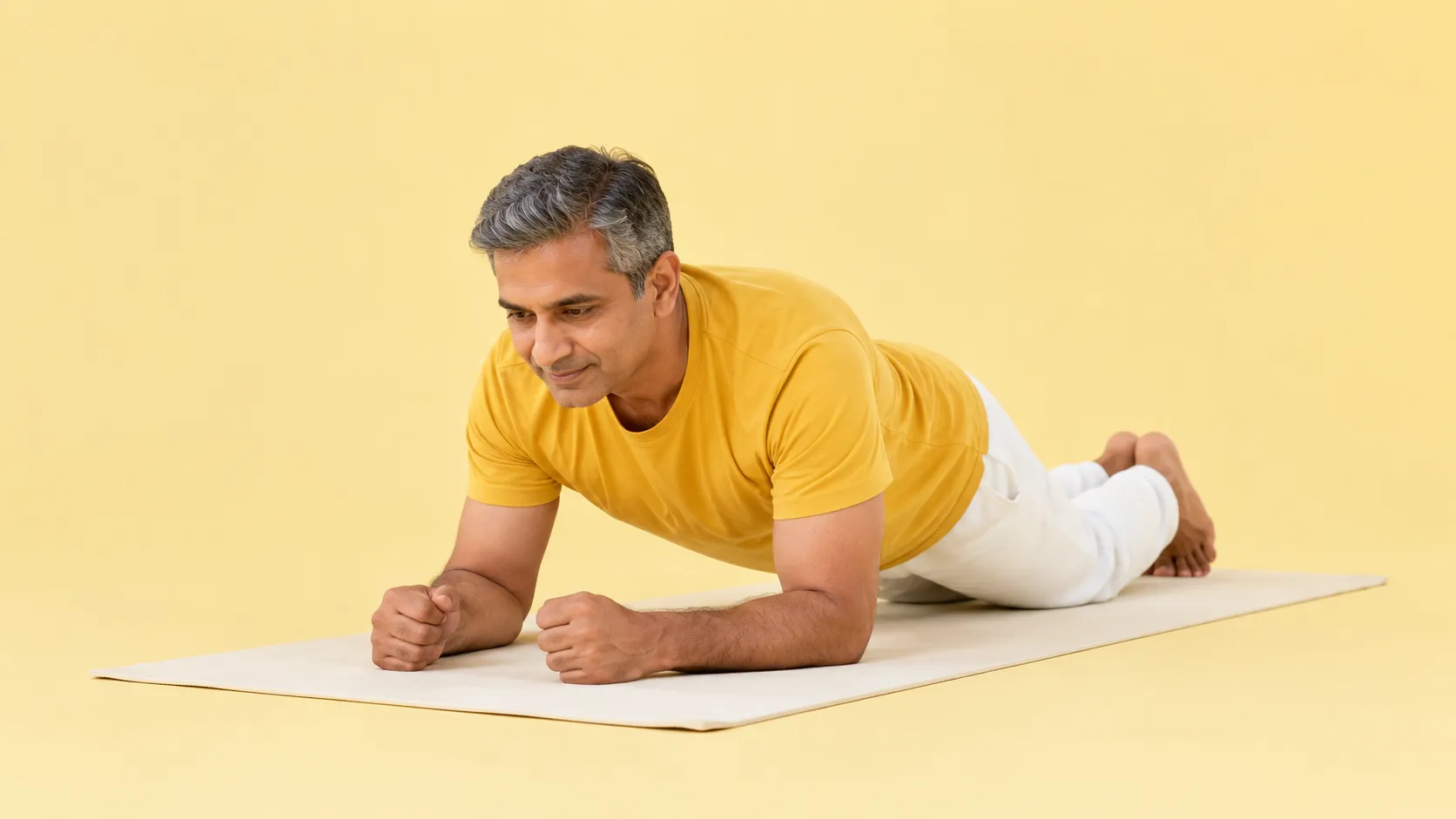
Goal: Hold a steady plank
Your plank questions answered

Dr Nicola Tik
When you can hold a plank for less than 30 seconds, a lot of questions come up. Is a knee plank cheating? Will this flatten my stomach? Why was today so much harder than yesterday? Here are honest answers to the questions many people ask at this stage.
Yes. A forearm plank on your knees works the same muscles as one on your toes. The difference is leverage. Research on plank variations shows that the longer the line from your support points to your feet, the harder your trunk muscles work. Dropping to your knees shortens that line, so the load is lighter. That makes it a smart way to build up, not a shortcut.
Planks build the strength and staying power of the muscles around your middle. They don’t burn fat from your stomach specifically. In one study, people who did abdominal exercises five days a week for six weeks built more endurance, but their stomach fat didn’t change. The benefits of planks are real, they’re just about how your body works rather than how it looks.
Your plank isn’t fixed from day to day. Sleep, stress and how busy your day has been all play a part. A large review found that even one night of poor sleep reduced exercise performance by around 7% on average, including the kind of holding effort a plank uses. A harder day is normal, not a step backwards.
Completely. Everyone starts somewhere, and holds under 30 seconds are a very common starting point. Short, steady holds are how longer ones are built.
On a day that feels harder, you could choose the knee version in the video without a second thought. You’re still training the same muscles, and you’ll keep your shape for longer.