Yoga and Pilates with wrist pain and how to keep your practice going

Dr Nicola Tik
If you practise yoga or Pilates regularly, you will know how central the hands and wrists are to so much of what both involve. When wrist pain develops, it can feel like a large portion of your practice suddenly becomes unavailable. In reality, most of it remains accessible with some thoughtful adjustments, and this article looks at how to keep moving through a flare-up without losing the thread of your practice.
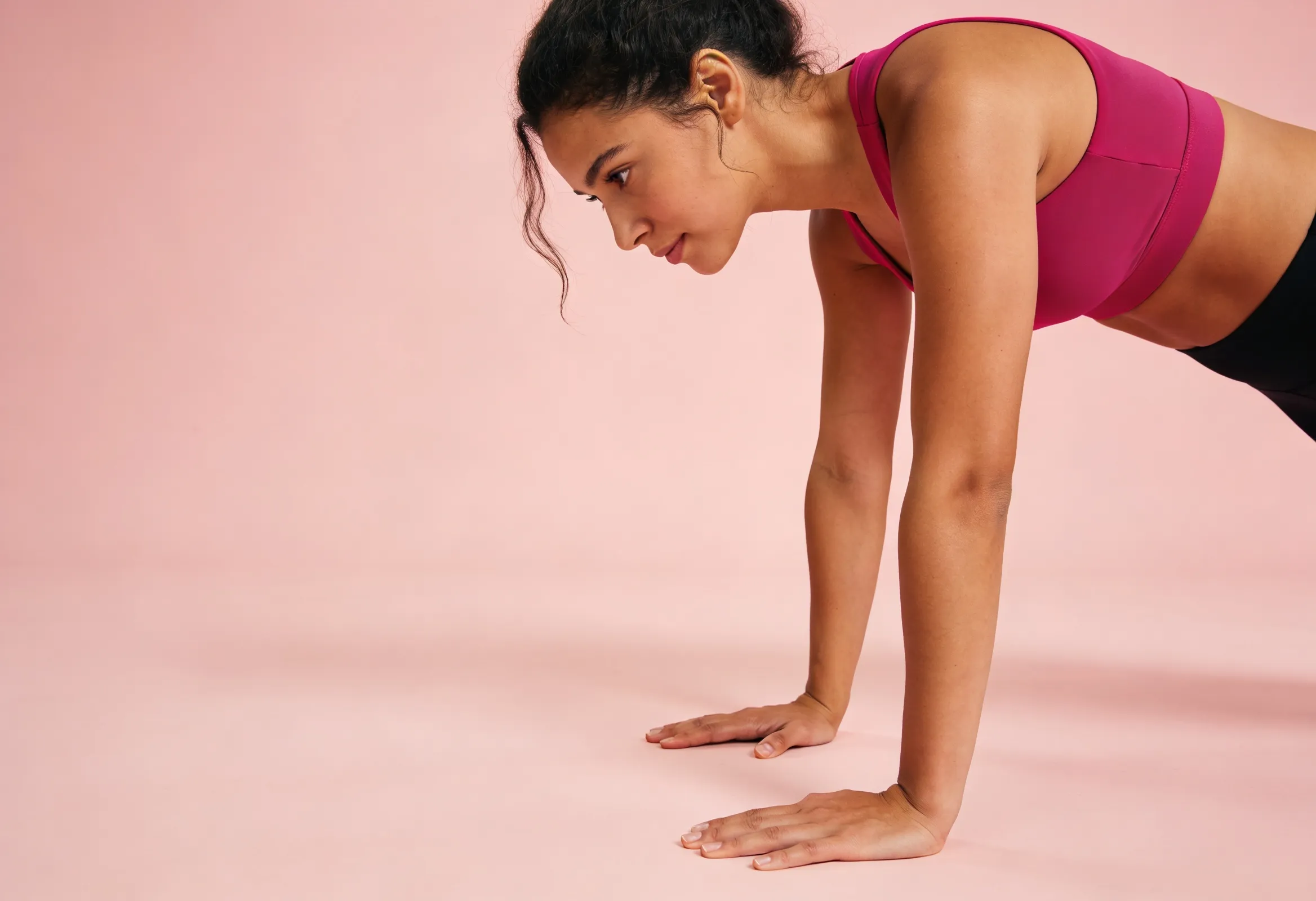
Yoga and Pilates both involve a significant amount of weight-bearing through the hands. Plank, downward dog, chaturanga, quadruped work, push-up variations, and many transitional movements all involve the wrist planted on the mat with body weight travelling through it. In a regular practice that load accumulates across a session and across the week.
The wrist is most challenged when it is extended and load-bearing at the same time. That combination, which is present in many foundational positions in both practices, places sustained demand on the joints, tendons, and the small muscles of the forearm. When the wrist is already sensitised, those positions ask more of it than it can comfortably manage.
The aim is to stay in your practice rather than step away from it. That means finding versions of familiar positions that your wrist can tolerate, rather than skipping those positions entirely.
For weight-bearing positions like plank and downward dog, a wedge or rolled mat edge under the heel of the hand reduces the degree of wrist extension required and often makes those positions immediately more comfortable. Moving to fists keeps the wrist in a more neutral position and works well across most plank and transitional movements. Forearm variations take wrist load out entirely while keeping the core and shoulder demands of the exercise intact.
In Pilates quadruped and push-up work, the same principles apply. Fists or forearms allow you to stay with the exercise and its intention without the wrist bearing load in an extended position. Letting your teacher know you are managing wrist pain means they can offer alternatives in the moment rather than you having to figure it out mid-class.
In a flowing yoga practice, reducing the number of times you pass through chaturanga in a session or dropping the knees during that transition reduces the repetitive load on the wrist considerably without disrupting the flow of the class significantly.
Standing poses, balances that do not involve the hands, seated work, and all supine and side-lying exercises remain completely unaffected by wrist pain. In both yoga and Pilates that covers a substantial proportion of a typical session. Lower body work, core work away from the hands, breathwork, and restorative practice are all available in full, which means a wrist flare-up does not need to interrupt your routine in any significant way.
Pressing actively through the whole hand and spreading the fingers wide, rather than allowing weight to sink passively into the heel of the hand, distributes load more evenly across the wrist in any position where the hand is on the mat. Many people find this adjustment alone makes familiar positions noticeably more comfortable, and it is worth bringing into your practice consistently rather than only when the wrist is sore.
The forearm muscles play a central role in supporting the wrist during weight-bearing. Building their strength and endurance gradually over time, rather than pushing through positions that are currently painful, is what allows the wrist to tolerate the full demands of a regular practice more comfortably over the longer term.
If you would like to try a guided exercise for the wrist and forearm, VIDA has a short video you can follow at your own pace.