Why your glutes are painful right now and what can help

Dr Nicola Tik
Pain in the buttock area that has come on recently can feel uncomfortable and surprisingly disruptive, particularly when sitting, walking, or getting up from a chair becomes noticeably harder than usual. Most new glute pain is the body responding to irritation or increased demand in the area rather than anything serious. This article explains what is likely going on and what you can do in the first few days to help things settle.
The gluteal region is made up of several layers of muscle that sit across the back of the pelvis and upper thigh. These muscles do a lot of work. They help you stand, walk, climb stairs, and stabilise the pelvis with every step. When this area becomes painful, it is often because the muscles have been asked to do more than they were ready for, whether from an increase in activity, a prolonged period of sitting that left them stiff and underused, or a movement that loaded them in an unfamiliar way.
The pain can be felt in different places depending on which part of the region is most irritated. Some people feel a deep ache in the centre of the buttock, others notice it more towards the outer hip, and some feel it most when sitting on a hard surface. All of these are common patterns and do not in themselves suggest anything is seriously wrong.
Gentle movement is generally more helpful than complete rest when glute pain is new. The muscles in this area respond well to being kept gently active, and prolonged sitting or lying still tends to increase stiffness and make the first movements afterwards feel more uncomfortable.
Getting up and moving briefly every 30 to 45 minutes is one of the most useful things you can do. Even a short walk around the room keeps the area gently loaded and prevents the build-up of stiffness that comes with staying in one position for too long.
At the same time, activities that place a sudden or heavy demand through the area, such as running, heavy lifting from a low position, or anything that causes a sharp increase in pain, are worth giving a wide berth for the first few days while things settle.
Warmth applied to the area for 15 to 20 minutes at a time can help the muscles relax and ease discomfort. A heat pad on a low setting or a warm shower are both good options.
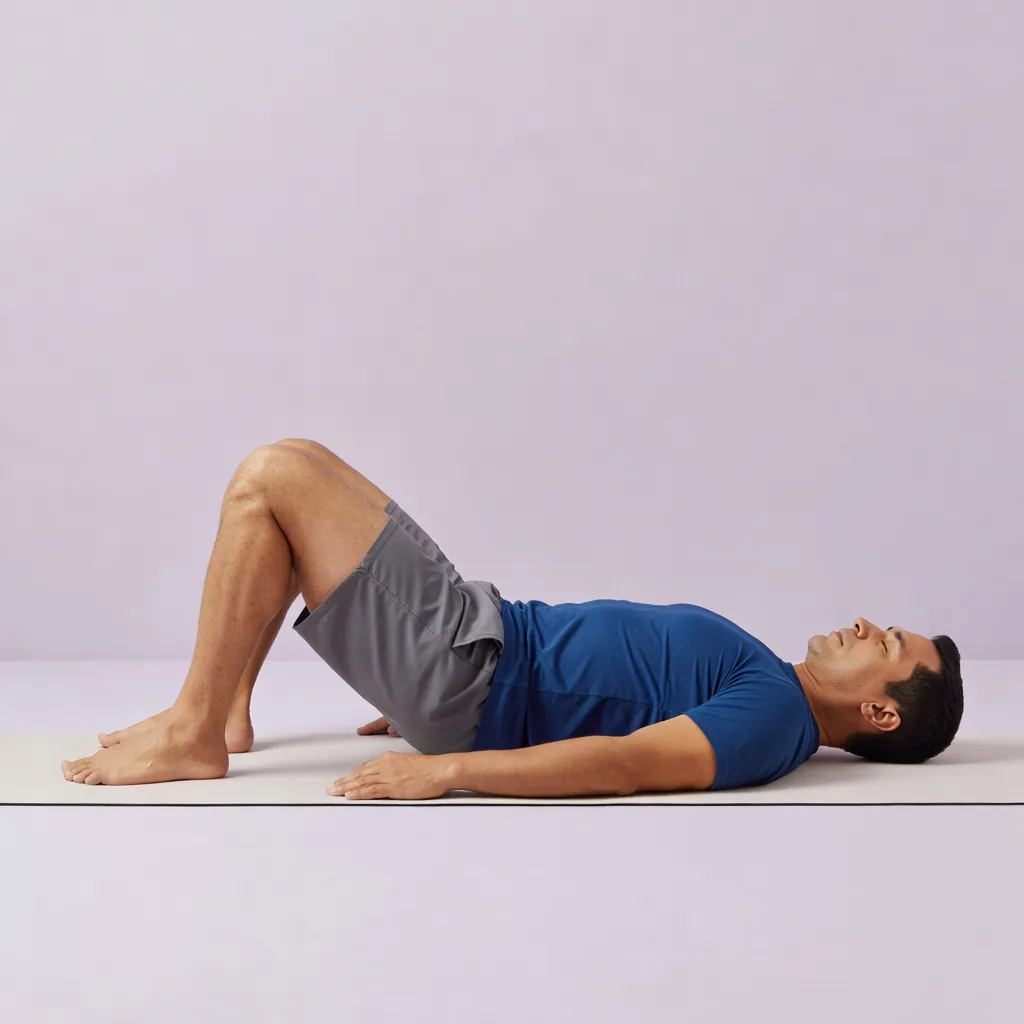
Lying on your back with your knees bent and feet flat on the floor, gently squeeze the muscles in your buttocks, hold for three to five seconds, then release. Repeat eight to ten times. This is a low-load way to keep the muscles gently engaged without placing significant demand through them.
If you would like a guided stretch to support you through this, VIDA has a short video you can follow at your own pace.
Sitting can be one of the more uncomfortable positions when the glutes are sore, particularly on hard or low surfaces. A firm seat at roughly knee height tends to feel more manageable than a low, soft sofa. If sitting is particularly uncomfortable, a small cushion under the less painful side can help distribute the load more evenly. Getting up slowly and using the armrests for support reduces the demand on the area when transitioning from sitting to standing.
Most new glute pain begins to ease within a week or two with some simple adjustments. If you notice any pain travelling down the back of the leg towards the knee or below, or any numbness or tingling in the leg, it is worth speaking to your GP or a physiotherapist.