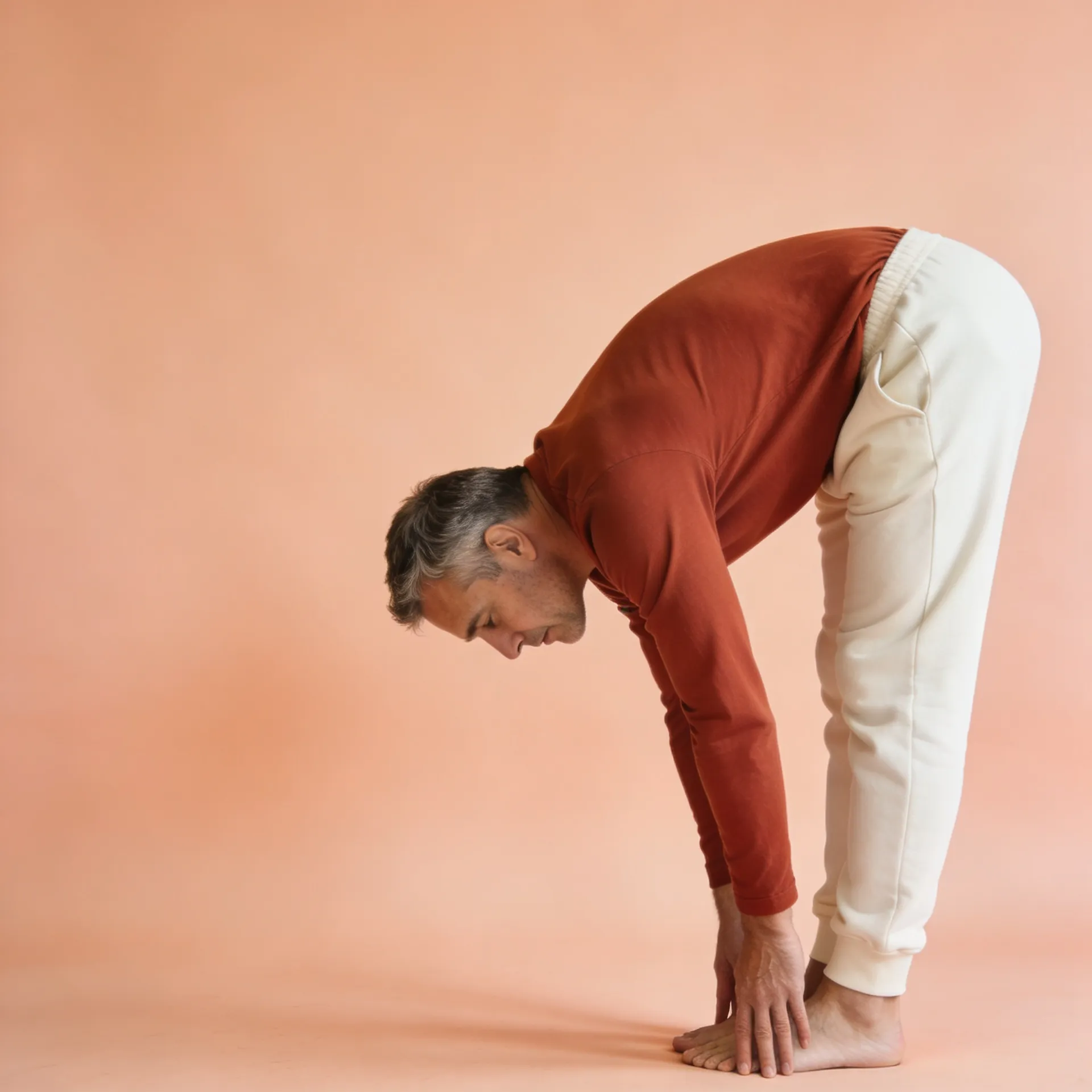
Why toe touches are harder than they look and how to change that

Dr Nicola Tik
The forward fold is one of the oldest flexibility tests going, and for good reason. The ability to reach toward the toes draws on the flexibility of the hamstrings, lower back, and calf muscles working together, and when that range is limited it tends to reflect patterns that are worth understanding and addressing. This article explains what lower body flexibility involves, why it reduces over time, and how to build it back.
Reaching toward the toes in a forward fold requires the hamstrings, the muscles along the back of the thigh, to lengthen as the trunk folds forward. It also requires some mobility through the lower back and the calves. When any of these areas is restricted, the forward fold is limited and the hands stop well short of the floor.
For most people who find this movement restricted, the hamstrings are the primary limiting factor, but the lower back and calves often contribute. Understanding that lower body flexibility is a combination of several areas rather than a single muscle group helps frame the approach to improving it, because working on the hamstrings alone tends to produce less improvement than addressing the whole posterior chain together.
Sustained sitting is the most consistent driver of reduced hamstring and lower back flexibility. When the hips are held in a flexed position for extended periods, the hamstrings adapt to that shortened position over time. The muscles do not become damaged or weaker in a meaningful sense, but they gradually lose the range they are not regularly using. For people who sit for most of the working day, this process happens steadily and often without being noticed until the restriction is significant.
Reduced activity and less varied movement compound this. Walking, climbing stairs, and general activity take the hamstrings and lower back through some of their range, but rarely through the full range that a forward fold requires. Without regular movement that challenges the full length of these muscles, the available range gradually reduces.
Lower body flexibility supports a wider range of function than the forward fold alone might suggest. The hamstrings and lower back are involved in walking, bending, lifting, and most recreational activities. When they are restricted, the body tends to compensate by loading the lower back more during bending movements and by limiting the stride length and ease of walking over time.
Research consistently links better lower body flexibility with lower rates of lower back pain, better movement quality, and greater ease with everyday tasks. Improving it tends to have a positive effect on how the back and legs feel during daily activity, not just during the test.
Like upper body flexibility, lower body flexibility responds well to regular and gentle work rather than occasional intense stretching. Working within a comfortable range and gradually extending it over time is more effective and more sustainable than pushing hard into restriction.
Gentle hamstring stretching done consistently, movements that take the lower back through a comfortable range of flexion, and calf stretching are all useful starting points. Five to ten minutes of gentle lower body mobility work done most days tends to produce noticeable improvement in range over several weeks.
Strengthening the glutes and hips alongside flexibility work supports the lower back during the movements that flexibility improvements make easier, and tends to produce more lasting results than flexibility work alone.
If you would like to try a guided stretch for the hamstrings and lower back, VIDA has a short video you can follow at your own pace.