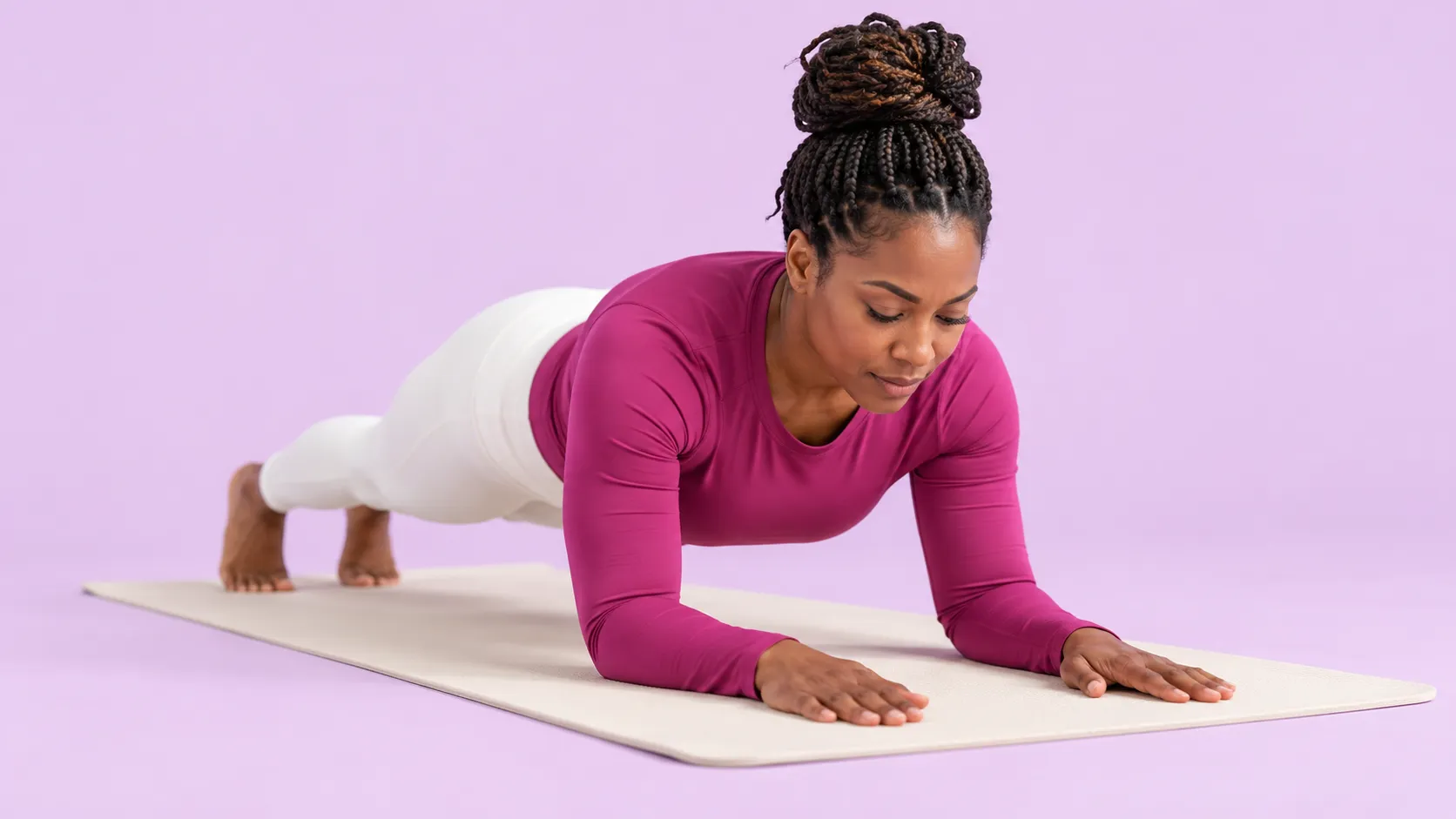
Goal: Hold a steady plank
Why the forearm plank suits sore wrists

Dr Nicola Tik
Leaning on your hands, typing all day or carrying shopping can leave your wrists feeling sore. If you’ve ever tried a plank on straight arms, you’ll know how much your wrists have to bend. The forearm plank takes your wrists out of that position, which is one reason it’s the plank used in your goal.
In a straight-arm plank, your wrists bend back at a sharp angle while carrying much of your upper body weight. For sore wrists, that combination can be uncomfortable.
In a forearm plank, your weight rests on your forearms and elbows instead. Your wrists stay in a more neutral position, without bending back. This means you can keep building trunk strength while giving your wrists a rest.
You could try:
Clenching your fists can tense your wrists and forearms. Letting your hands relax may help them feel more comfortable.
The forearm plank on your knees is a good starting point. It takes some load off your whole body while your trunk muscles still work. When it feels steady, you can move onto your toes.
Sore wrists are common for people who type or use a phone a lot. Changing position often and taking short breaks may help your wrists feel more comfortable through the day.
Shorter holds with rests are a good way to build up. A good plank comes before a long one, so stop when your form starts to slip.
During your goal video, notice whether you’re clenching your hands. If you are, try relaxing them palms down and see how your wrists feel.