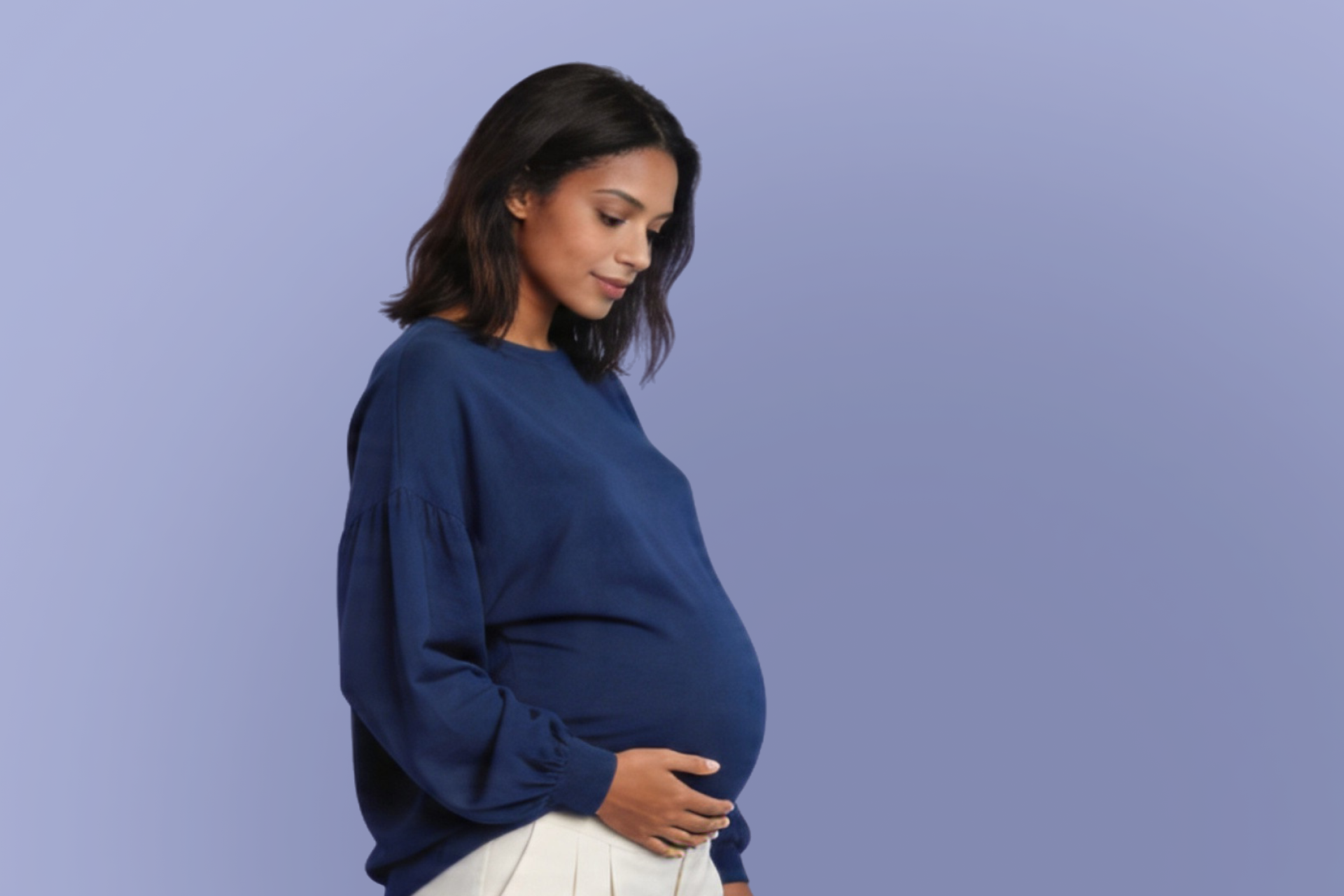
Why sitting for long periods during pregnancy puts extra load on your back and pelvis

Nicola Tik
Sitting for extended periods puts load on your lower back and pelvis at the best of times. During pregnancy, the picture is a little more complex, and understanding why can help you make sense of what your body is telling you.
Across pregnancy, your body produces a hormone called relaxin, which gradually loosens the ligaments around your pelvis in preparation for birth. This is a normal and necessary process, but it does mean the joints in your pelvis and lower back have a little less of their usual stability. At the same time, your growing bump shifts your centre of gravity forward, increasing the curve in your lower back and changing how load is distributed through your spine and hips.
When you sit for long periods, this combination creates a particular kind of strain. Your pelvis tilts and your lower back rounds or overarches depending on your position, and the muscles working to hold everything steady have to work harder than usual to do so. The result is that sustained sitting during pregnancy places a compounding load on structures that are already under greater demand.
For someone who is not pregnant, prolonged sitting is mostly a question of muscle fatigue and postural load building up over time. During pregnancy, the loosened ligaments and shifted centre of gravity mean the load lands differently and accumulates more quickly. What might feel manageable for an hour in early pregnancy can become noticeably uncomfortable by the third trimester, even if your sitting habits have not changed at all.
This is not a reason to avoid sitting. It is a useful context for why your body may be responding differently to things that felt fine before.
The most effective response is not finding the perfect sitting position and holding it. It is reducing the amount of time spent in any one position, which is where the next article in this series picks up.
In the meantime, a few small adjustments are worth trying: