Why leg cramps happen during pregnancy and what to help

Nicola Tik
Leg cramps during pregnancy are very common, particularly in the second and third trimesters. They tend to strike at night, which can make them feel more alarming than they are. Understanding why they happen can help, and there are some practical things you can do to reduce how often they occur.
The exact cause of leg cramps during pregnancy is not fully understood, but a few factors are likely to play a role. The increased weight and postural shift of pregnancy places greater demand on the muscles of the lower legs, which can make them more prone to cramping. Changes in circulation, as your body manages a significantly higher blood and fluid volume, also affect how well oxygen and nutrients reach the muscles.
Mineral balance may also be a factor. Levels of magnesium and calcium, both of which play a role in muscle function, can shift during pregnancy. Fatigue accumulated across the day, particularly after long periods of standing or walking, can also make cramps more likely overnight.
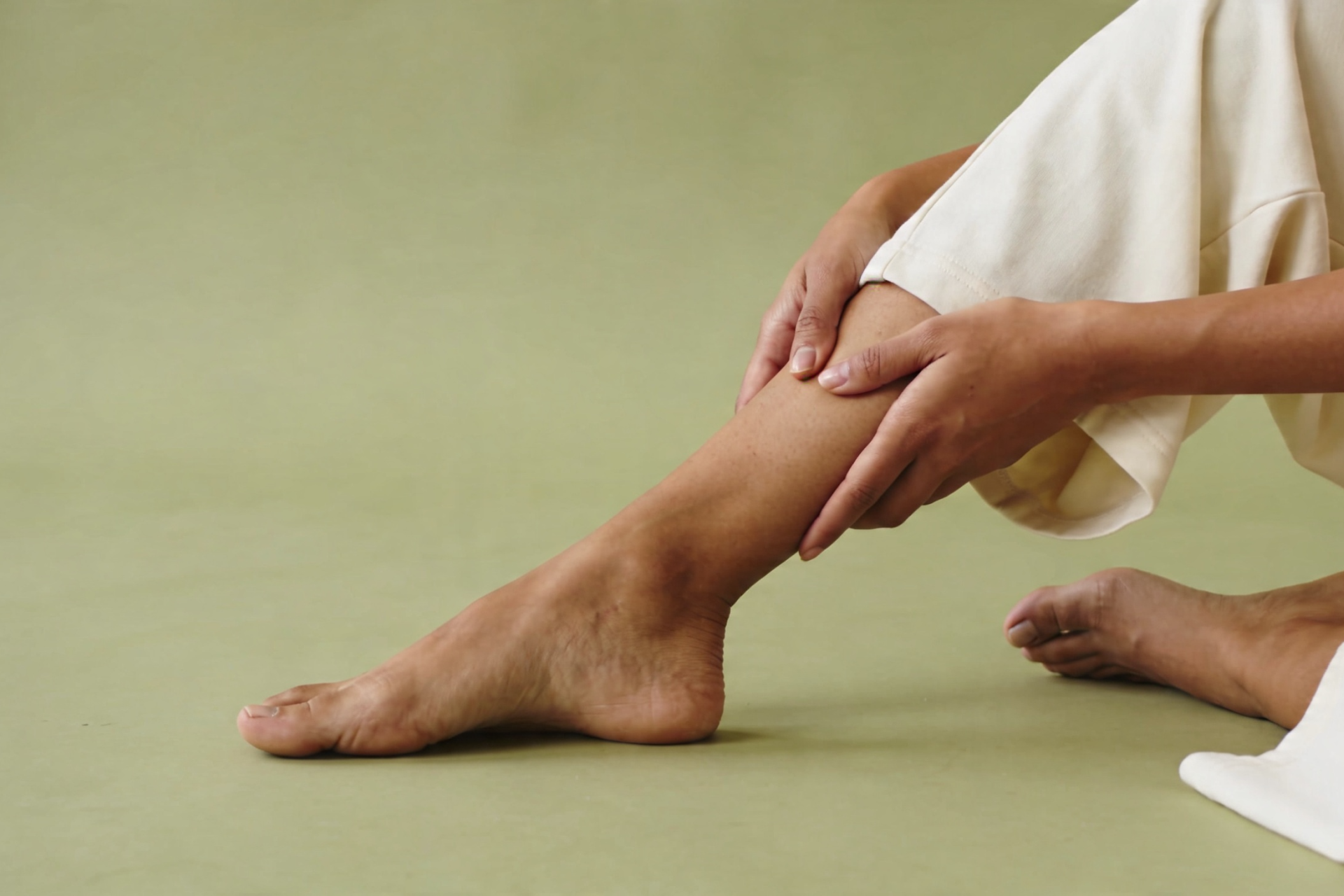
When a cramp strikes, the most effective response is to gently stretch the muscle. For a calf cramp, flex your foot upward, drawing your toes towards you, and hold the stretch until the cramp releases. This can feel uncomfortable in the moment but usually brings relief within a minute or so. Gently massaging the calf afterwards can help the muscle relax fully and reduce any residual soreness.
A little gentle movement before bed, a short walk or some slow ankle circles, can help release muscle tension that builds up across the day. Staying well hydrated throughout the day supports both muscle function and circulation, and stretching your calves gently before sleep is something many people find helpful. To do this, stand facing a wall, place your hands on it for support, and ease one heel towards the floor with a slight bend in the knee, holding for 20 to 30 seconds on each side.
One thing worth knowing: avoid pointing your toes when stretching or turning over in bed, as this can trigger a cramp in the calf. If you are concerned about your mineral intake, it is worth mentioning to your midwife at your next appointment.
Leg cramps often become more frequent as pregnancy progresses and tend to be most common in the third trimester. For most people they ease after birth. In the meantime, the habits above can make a noticeable difference to how often they occur and how quickly they settle when they do.