Why desk work hits the male body differently and what the evidence says

Dr Nicola Tik
Long hours at a desk take a physical toll on everyone. But the way that toll shows up is not identical across the board. There are reasons why men tend to experience the physical effects of desk work in particular ways, and understanding them makes it easier to know where to focus.
Sitting for extended periods reduces blood flow to the muscles, compresses the discs in the spine, and places sustained load on the neck, shoulders, and lower back. Over a working day, this accumulates gradually and often quietly. Muscles held in the same position for hours start to fatigue. Joints that are not moving lose some of their natural lubrication.
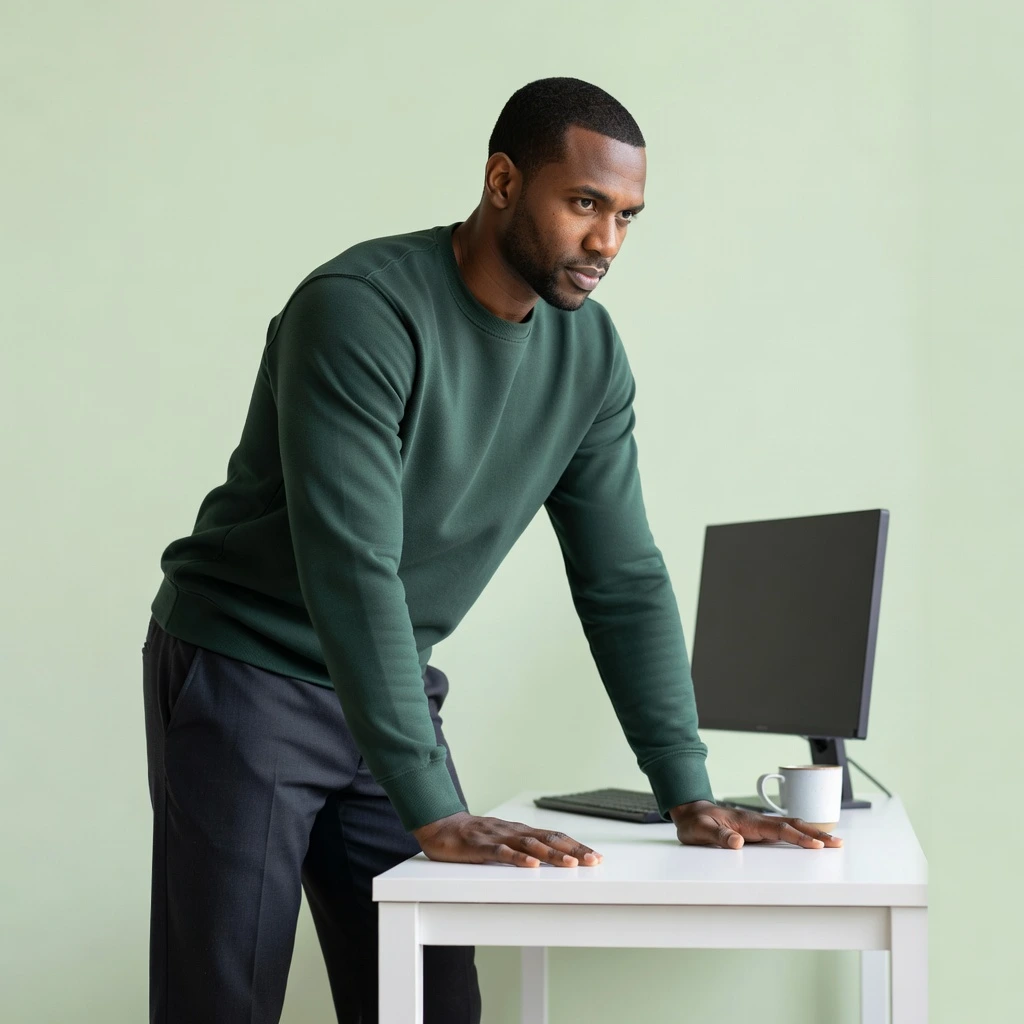
One pattern that is easy to fall into is drifting forward toward the screen as concentration deepens. This increases the load on the neck and upper back considerably. Making sure your screen is close enough and clear enough to read comfortably with your back fully supported by your chair is a simple adjustment that makes a real difference.
Men and women are both affected by desk work, but the pattern of where and how discomfort builds tends to differ.
On average, men have greater muscle mass, particularly in the upper body. This can be protective in some respects, but it also means the neck, shoulders, and upper back are carrying more load through the working day. Heavier muscles require more oxygen and blood flow to sustain, which makes them more susceptible to fatigue during prolonged static work, the kind of low-effort, high-duration effort that desk work demands.
Research also suggests that men are more likely to underreport discomfort and to delay seeking support when pain develops. This means that by the time neck, back, or shoulder pain becomes noticeable, it has often been building for longer than it might have in someone who responded to early signals. Lower back pain in particular tends to present later and be more established by the time it is addressed.
Cardiovascular health is another part of the picture. Evidence consistently links prolonged sitting to poorer cardiovascular outcomes, and men face a higher baseline risk in this area. This does not make desk work dangerous, but it does make regular movement through the day more important, not just for MSK health but for the whole system.
Lower back pain is the most commonly reported MSK complaint among male desk workers. The lumbar spine, the lower section of the back, takes significant load during sitting, particularly when the position is sustained for long periods or when the back is not fully supported.
The neck and upper back are also commonly affected, particularly in people who spend long periods looking at screens. Tension in these areas can contribute to headaches, disrupted sleep, and a general sense of physical heaviness by the end of the day.
Hip flexors, the muscles at the front of the hips that hold the legs in a seated position, are another area worth paying attention to. Prolonged sitting keeps these muscles in a shortened position for hours at a time, which can contribute to lower back discomfort and affect how the body feels during activity outside of work.
The research is consistent on a few points. Regular movement through the working day reduces the physical load of sustained sitting more effectively than any single adjustment to setup or equipment. Short breaks, even standing up briefly every hour, maintain blood flow and reduce spinal compression over time.
Building and maintaining strength in the muscles that support the back, hips, and shoulders makes the body more resilient to the demands of desk work. This does not require an intensive programme. Consistent moderate activity spread across the week is what the evidence supports, not occasional large efforts.
Paying attention to early signals matters too. Discomfort that is addressed when it is mild tends to settle more readily than pain that has been present for weeks or months.
If you would like to try some guided movement to support your body through the working day, VIDA has exercises you can follow at your own pace.