Why balance changes after menopause and what to do about it

Dr Nicola Tik
If you have noticed that your balance feels less reliable since menopause, there is a straightforward reason for it. This article explains what is happening and how to keep your balance sharp and your confidence high.
Balance relies on three systems working together: your vision, the sensors in your inner ear, and the feedback your muscles and joints send to your brain about where your body is in space. Oestrogen plays a role in maintaining all three. As oestrogen levels decline after menopause, each of these systems can become a little less precise, and the result is that balance feels less automatic than it used to.
Changes in muscle mass and bone density that occur around menopause also contribute. Stronger muscles respond more quickly to balance challenges, so a gradual reduction in muscle mass means the body has a little less to draw on when it needs to correct itself quickly.
Good balance is one of the most useful physical qualities to maintain as you get older. It underpins confidence in everyday movement, from walking on uneven ground to managing stairs, and it reduces the risk of falls over the long term. The good news is that balance responds well to practice at any age.
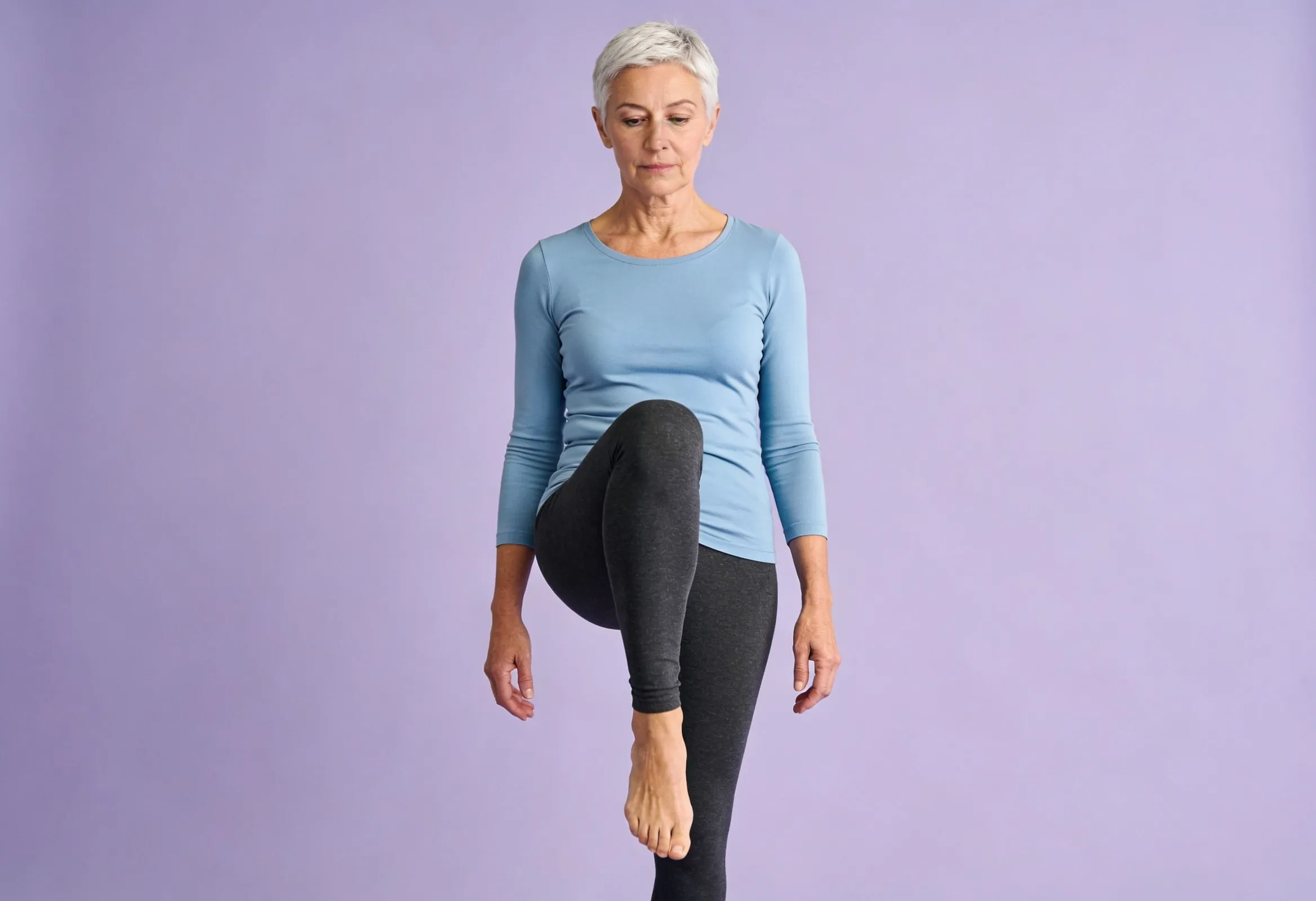
You do not need specialist equipment or a gym. Standing on one leg while you are waiting for the kettle to boil, walking heel to toe along a line on the floor, or standing up from a chair without using your hands are all effective starting points.
The key is consistency rather than intensity. A few minutes of balance practice most days is more useful than an occasional longer session. As things improve, you can make the challenge slightly greater by closing your eyes briefly during a one-leg stand, or standing on a slightly uneven surface like a folded towel.
Strength work for the legs, particularly the muscles around the ankles, knees, and hips, supports balance significantly. Slow sit-to-stand exercises done a few times a day are a simple and practical way to build this.