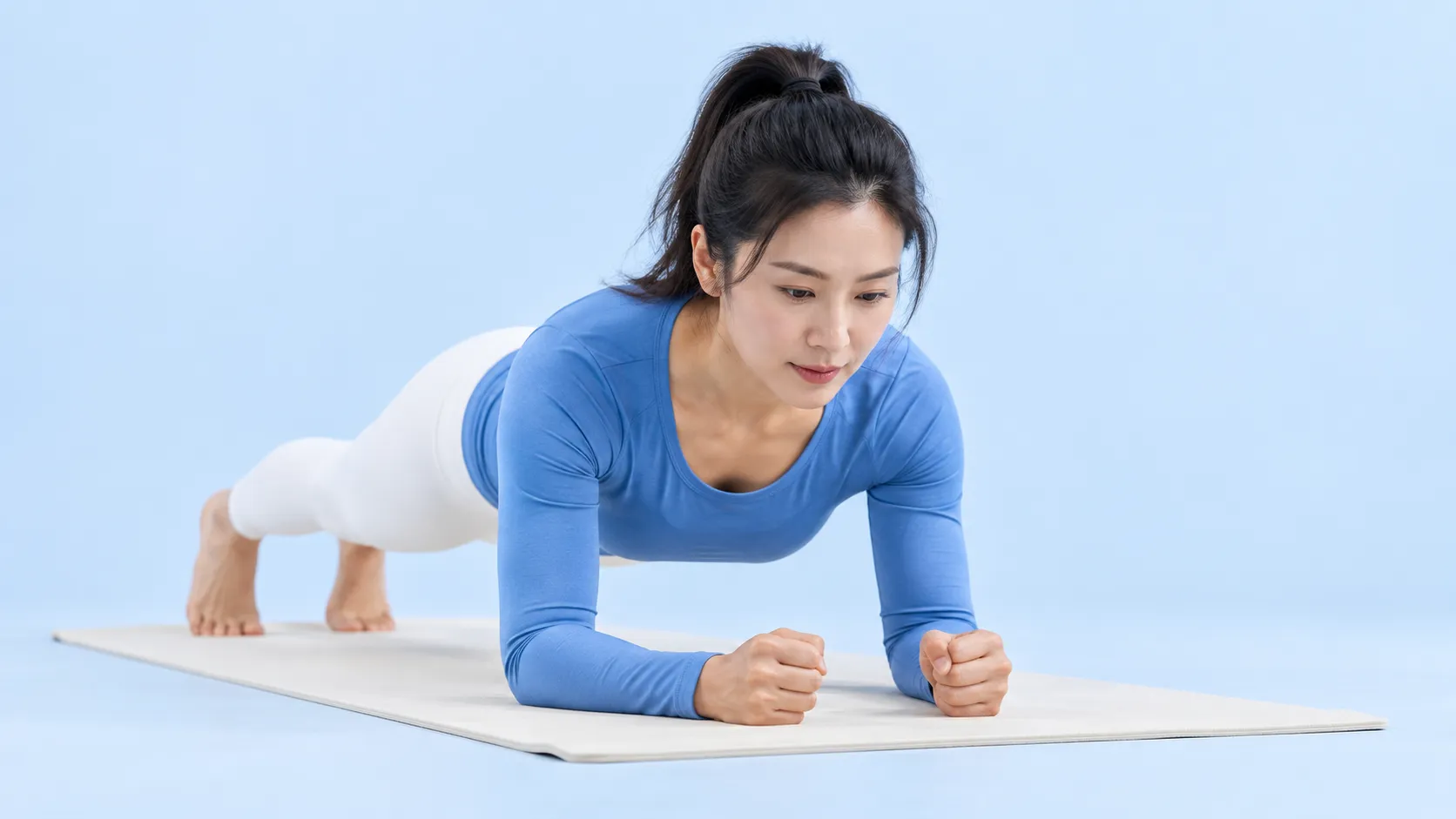
Goal: Hold a steady plank
Where you should feel your plank

Dr Nicola Tik
Partway through a plank, you might notice it’s your shoulders or thighs burning, not just your stomach. That can make you wonder if you’re doing it right. Usually you are. A plank is a whole-body hold, and knowing where the effort should sit helps you tell a good plank from one that’s drifting.
Your stomach and the muscles around your sides should feel firm and working. This is the main job of the plank, keeping your trunk steady so it doesn’t sag towards the floor.
Your shoulders hold up a lot of your body weight, so feeling them work is normal. What matters is how they work. If your chest sinks down between your shoulder blades, your shoulders end up hanging rather than holding. Gently pushing the floor away with your forearms brings the muscles around your shoulder blades into play. Research on similar push-away movements shows these muscles become very active in this position.
Your bottom and thighs keep each end of your body firm, so your middle doesn’t sag. Your glutes, the muscles in your bottom, hold your hips level and help stop your lower back dipping. Your thighs keep your legs straight and solid, so your weight is shared along your whole body. Research suggests that squeezing your glutes in a plank can also make your stomach muscles work harder.
Your lower back shouldn’t ache or pinch. If it does, that’s usually a sign your hips have dropped and the effort has moved away from your middle. Drop to your knees or rest, then reset.
In each plank in the video, you could try gently pressing the floor away with your forearms, as if making a little space between your shoulder blades. Notice how your shoulders feel steadier and less like they’re hanging.