What to do when your lower back or pelvic pain flares with your period

Nicola Tik
Lower back and pelvic pain during your period can range from a dull background ache to something that genuinely gets in the way. This article covers practical things you can try to help it settle, and how to manage activity when pain is at its peak.
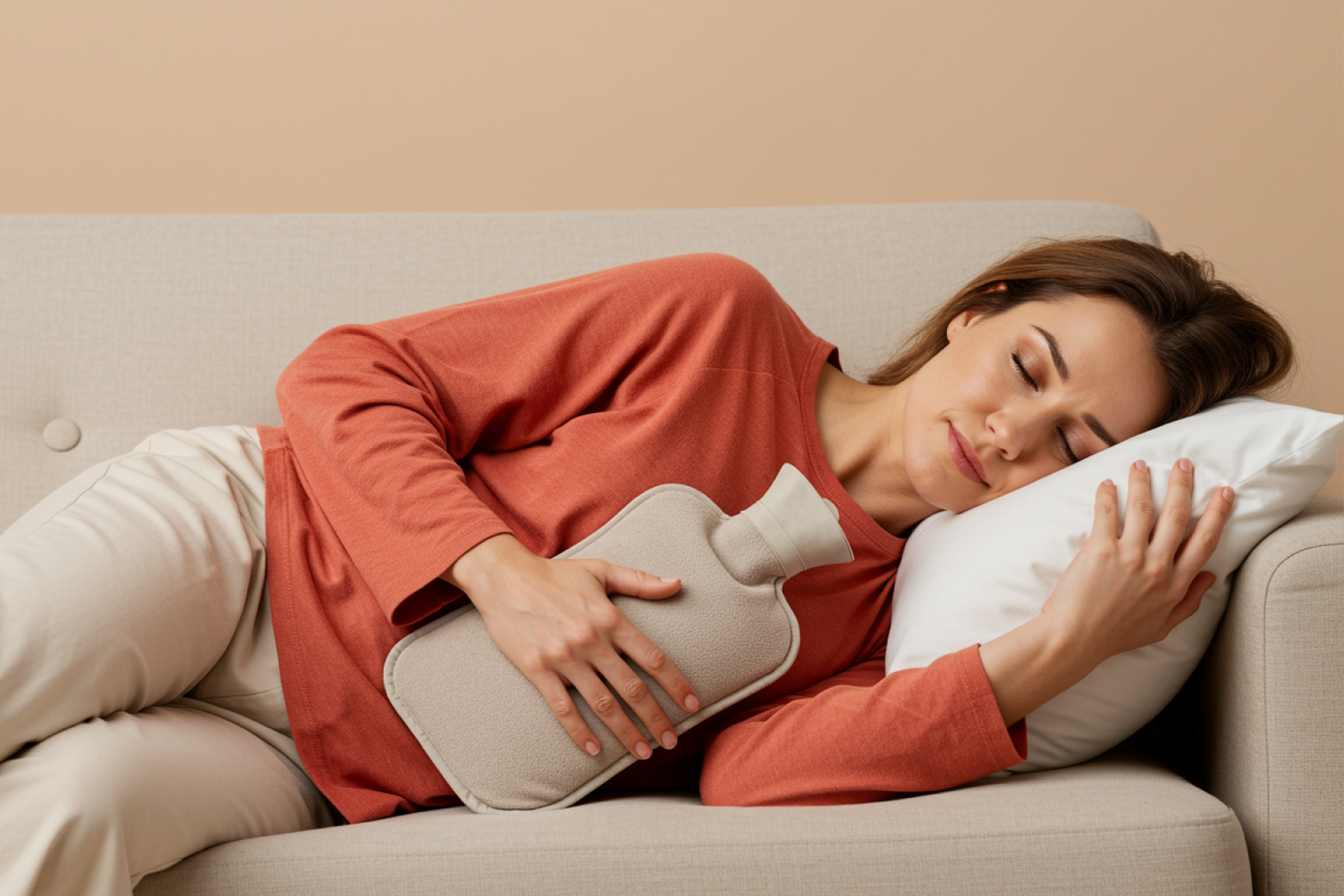
Heat is one of the most consistently helpful options for period-related lower back and pelvic pain. A warm compress, heat pad, or hot water bottle applied to the lower back or lower abdomen can help relax the muscle tension that builds around uterine contractions. Many people find it works quickly and meaningfully, even when pain feels quite intense.
Warmth works by increasing blood flow to the area and reducing muscle spasm. It does not need to be hot, comfortably warm is enough and safer for your skin over longer periods.
It can be tempting to stay still when lower back or pelvic pain flares, but gentle movement tends to help more than rest alone. Staying in one position for long periods allows muscle tension to build and can make the ache feel heavier and harder to shift.
Short, easy walks or gentle movement around the house can help keep circulation moving and reduce the sense of heaviness in the lower back and pelvis. You do not need to do anything structured or effortful. Simply not staying still tends to make a noticeable difference.
Some positions help reduce the load on the lower back and pelvis during a flare. Lying on your side with your knees gently drawn up towards your chest, sometimes called the foetal position, takes pressure off the lower back and can ease uterine cramping at the same time. A pillow between your knees adds a little more comfort if the lower back feels particularly tight.
If you are sitting for long periods, a small rolled towel or cushion at the lower back can help maintain a comfortable position without adding strain.
If you would like something gentle and active, pelvic tilts are a good option during this phase. Lying on your back with your knees bent and feet flat, gently rock your pelvis so your lower back presses lightly into the floor, then release. The movement should be small and easy. Repeat eight to ten times at a pace that feels comfortable. This can help ease tension across the lower back without requiring much effort or adding load.
If you would like a guided stretch to support your lower back during this time, your VIDA exercise library has options you can work through at your own pace.
Anti-inflammatory pain relief, such as ibuprofen, is often particularly effective for period-related lower back and pelvic pain because it works directly on prostaglandins, the chemicals driving the contractions and inflammation. Taking it at the first sign of discomfort rather than waiting until pain peaks tends to make it more effective. Always follow the guidance on the packaging.
Paracetamol can also help, particularly if anti-inflammatory options are not suitable for you. Some people find that a combination works better than either alone.
On days when pain is at its worst, the aim is to keep moving gently rather than either pushing through or stopping altogether. Shorter, easier activity is more sustainable than trying to maintain your usual routine and feeling worse for it.
As the first few days pass and prostaglandin levels drop, pain typically begins to ease and normal activity becomes more comfortable again. Working back up gradually rather than jumping straight back in gives your body a little more time to settle.
If your pain is severe enough to significantly disrupt your daily life, or is not responding to the usual options, it is worth speaking to a doctor about what else might help.