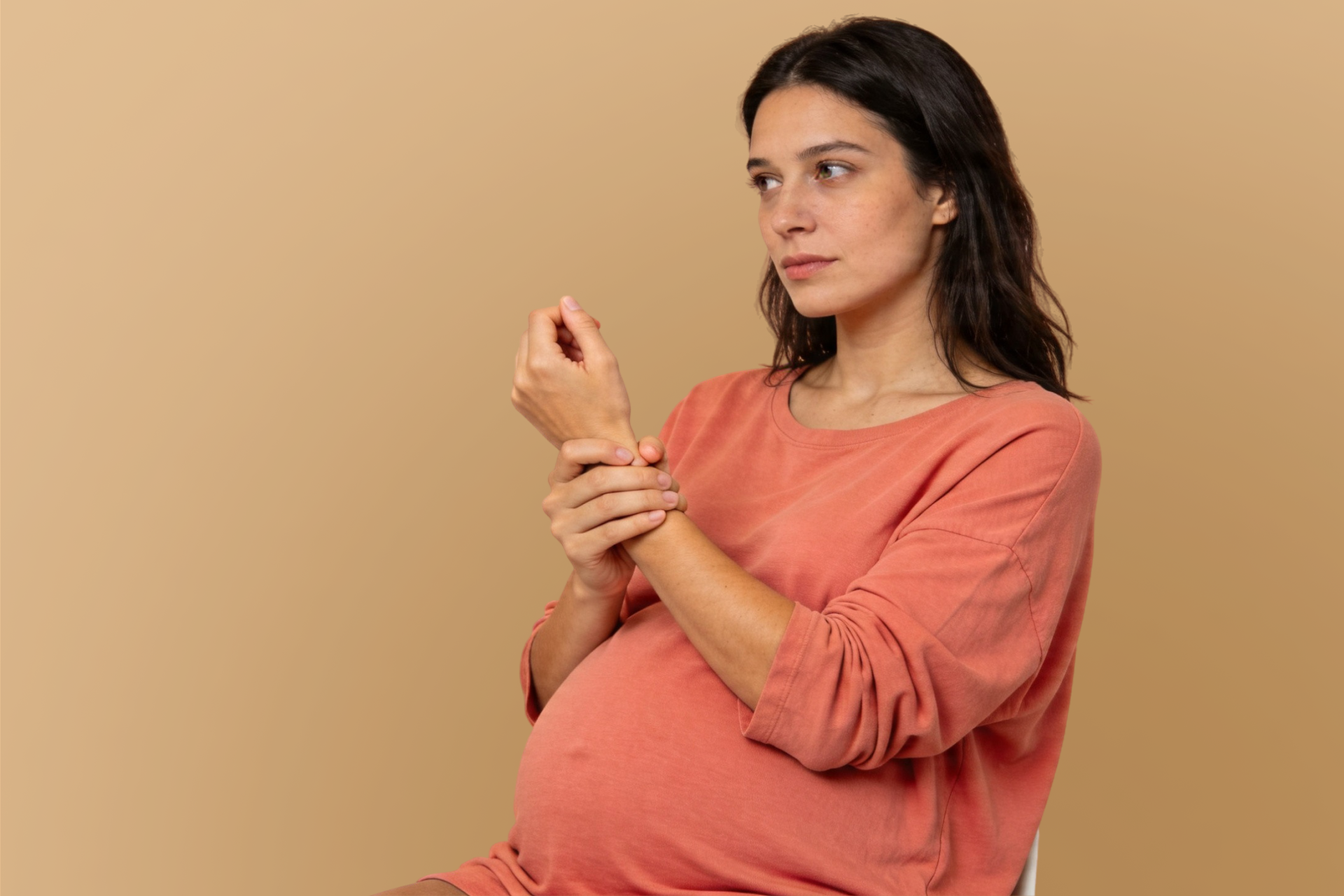
What to do when you experience wrist or hand pain during pregnancy

Nicola Tik
Wrist and hand pain during pregnancy can make everyday tasks feel more difficult, from typing and cooking to simply getting comfortable at night. There are some practical things you can do to reduce the load on your wrists and hands and help symptoms feel more manageable.
One of the most effective things you can do is avoid positions that keep your wrist bent for long periods. A bent wrist increases pressure through the carpal tunnel, which can aggravate tingling, numbness, and aching in the fingers. If you work at a desk, keeping your wrists in a relaxed, fairly neutral position rather than angled up or down can make a noticeable difference across the day.
If you use a keyboard or mouse regularly, it is worth checking that your setup allows your wrists to rest comfortably without bending. Small adjustments to desk height or keyboard position are often enough to reduce the load significantly.
The way you carry and grip things day to day contributes to how your wrists and hands feel. Carrying bags with a bent wrist or gripping handles tightly for long periods both increase pressure through the wrist. Where you can, distribute load across the forearm rather than concentrating it at the wrist, and take regular breaks from sustained gripping or fine hand movements.
The load does not only affect the wrist in isolation. How you hold your shoulders and upper back influences how load travels down through the elbow and into the wrist, so staying aware of tension higher up the arm is useful too.
Keeping the hands and wrists gently mobile helps prevent stiffness from building up. Slow, easy wrist circles and gentle finger stretches are worth doing regularly throughout the day, particularly if you spend long periods at a desk or doing repetitive hand tasks. These do not need to take long and can be done wherever you are.
At rest, elevating your hands slightly, resting them on a pillow rather than flat at your sides, can help reduce overnight fluid accumulation, which is often when symptoms feel most pronounced. Many people find this makes mornings noticeably more comfortable.
Symptoms often increase through the second and third trimesters as fluid retention peaks. Adjusting your approach as your pregnancy progresses, rather than waiting until symptoms become significant, tends to work better than managing them reactively. Most wrist and hand symptoms ease after birth as fluid levels return to normal.
If you are tracking how your symptoms are shifting, your VIDA pain check-in is a good way to keep an eye on patterns over time.
If you notice persistent numbness or tingling in your fingers that is not easing with rest or position changes, it is worth speaking to your GP or midwife.