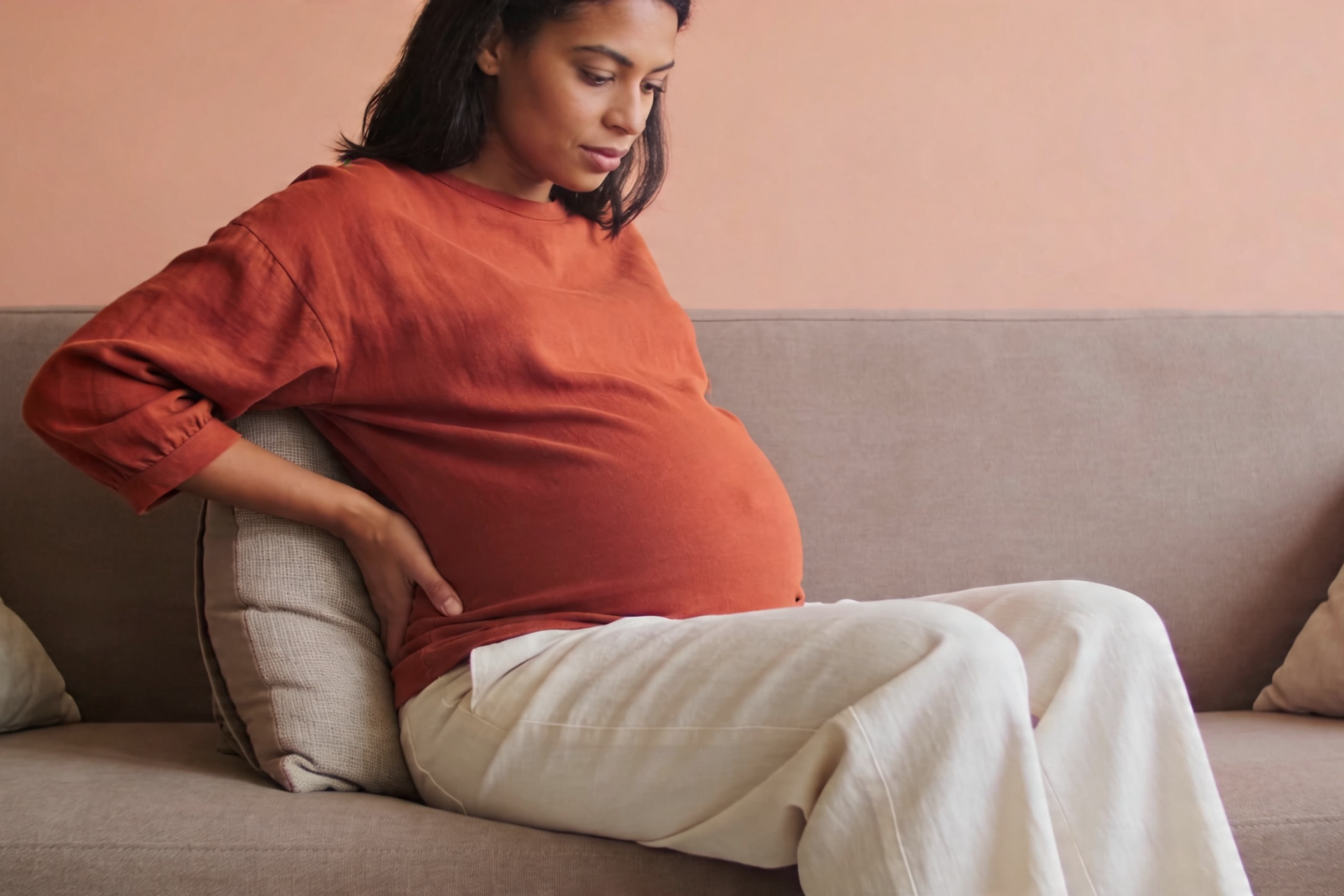
What to do when you experience lower back pain during pregnancy

Nicola Tik
Lower back pain during pregnancy can feel uncomfortable and unsettling, particularly when it comes on suddenly or interrupts your sleep. There are some straightforward things you can do to help it settle, and most lower back pain does ease with a little time and the right approach.
When your lower back is painful, the first priority is taking some of the demand off it. This does not mean stopping all movement, but it does mean being thoughtful about what you ask of it in the short term.
Avoid positions or activities that feel like they are directly aggravating it. Heavy lifting, twisting movements, and prolonged sitting or standing in one position are all worth stepping back from temporarily while things settle.
Certain positions tend to take load off the lower back. Some options worth trying:
Everyone is a little different, so it is worth experimenting to find what gives you the most relief.
Complete rest tends not to help lower back pain settle as quickly as gentle movement does. Short, comfortable walks, gentle changes of position, and slow, easy movement through a comfortable range all help keep the muscles and joints from stiffening up further.
The key is keeping movement within a range that feels manageable. If something increases the pain noticeably, ease off and try something gentler. A little discomfort with movement is common, but sharp or worsening pain is a signal to stop and rest.
Most lower back pain during pregnancy eases within a few days with reduced load and gentle movement. As things begin to settle, you can gradually return to your usual activities, building back up at a pace that feels right for you.
Warmth can help ease muscle tension around the lower back. A warm compress or heat pad on a low setting, applied for short periods, is something many people find useful.
If you are tracking how your pain is shifting day to day, your VIDA pain check-in is a good way to keep an eye on patterns over time.