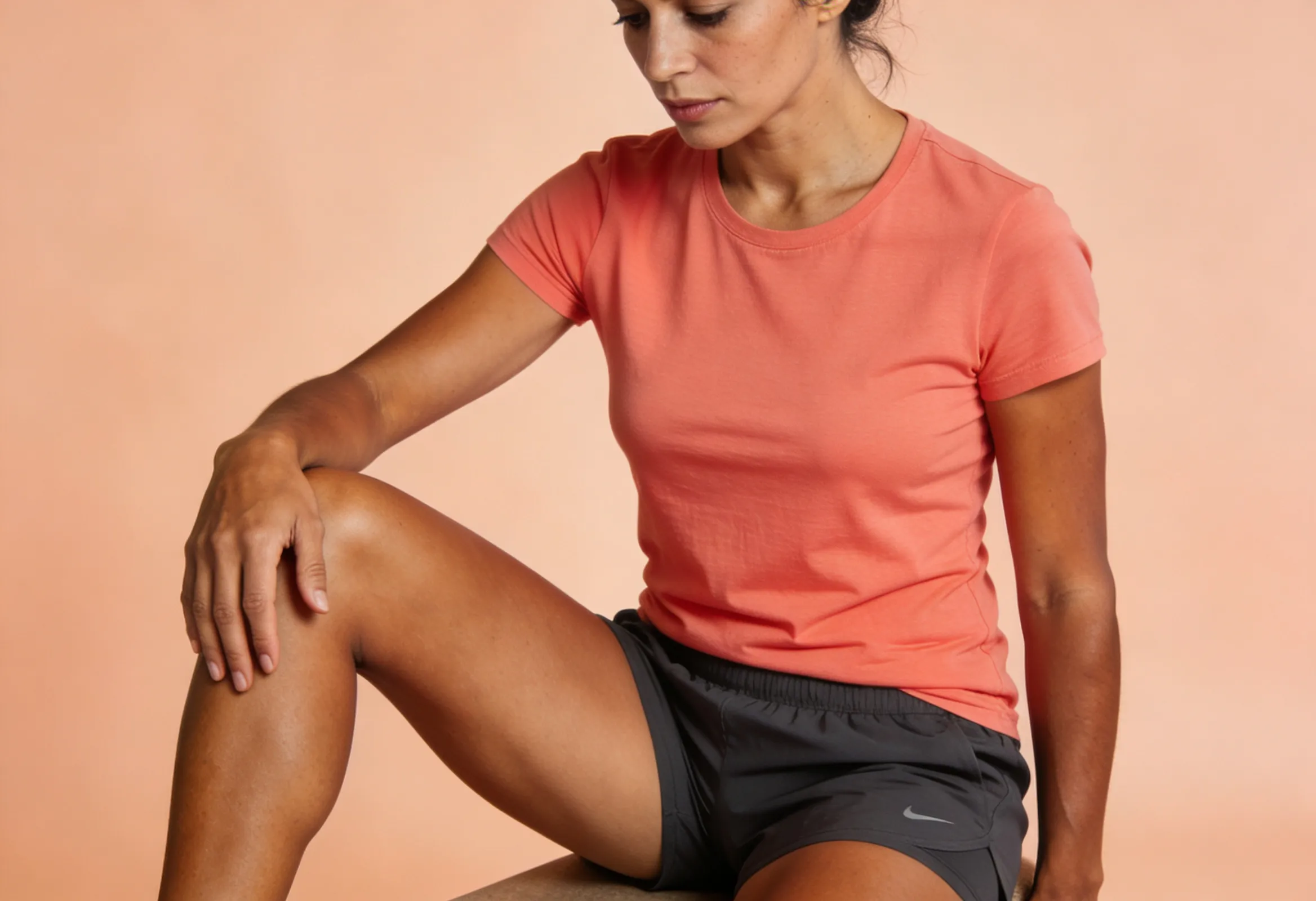
What a meniscus tear means for load and movement

Dr Nicola Tik
If you have been told you have a meniscus tear, understanding what that means for how your knee handles load and movement is a useful starting point. This article explains what the meniscus does and what to expect in terms of day to day function.
The meniscus is a C-shaped piece of cartilage that sits between the thigh bone and the shin bone in the knee. There are two in each knee, one on the inner side and one on the outer side. They act as shock absorbers, distribute load across the joint, and help with stability during movement.
When the meniscus is torn, either through a sudden injury or gradually over time, the knee's ability to distribute load evenly is affected. This can show up as pain, swelling, stiffness, or a catching or locking sensation during certain movements, depending on where and how significant the tear is.
Like ACL tears, meniscus tears are not all managed the same way. Some are treated conservatively with rehabilitation and load management, while others require surgical intervention. Your specialist or GP will have guided you on the most appropriate route for your situation.
The meniscus is most stressed during movements that combine compression and rotation, such as squatting deeply, pivoting, or twisting while the foot is planted. These are the movements most worth avoiding while the knee is reactive or recovering.
Walking on even surfaces, gentle cycling on a stationary bike, and swimming are generally well tolerated as they load the knee in a more controlled and predictable way. High impact activities and anything involving rapid changes of direction place more demand on the meniscus than is helpful during recovery.
Prolonged standing can also accumulate load through the joint over time. If your day involves a lot of standing, taking regular seated breaks and varying your position helps manage this.
Swelling after activity is one of the clearest signals that the knee has been loaded beyond what it is currently ready for. A knee that feels stiff and achy after a long day but settles overnight is responding differently to one that swells and remains swollen. Learning to read these signals helps you adjust your activity level in a practical and responsive way.
A catching or locking sensation, where the knee feels like it briefly gets stuck during movement, is worth noting and mentioning to your specialist or GP if it is new or increasing.
Keeping the muscles around the knee strong, particularly the quadriceps and the muscles around the hip, reduces the load that falls directly on the joint. Gentle exercises that do not stress the meniscus, such as straight leg raises and seated knee extensions within a comfortable range, are a useful starting point.
Avoiding deep knee bends and low seats where possible reduces the compression through the joint during daily activities.
Your VIDA pain check-in is a useful way to track how your knee responds to different activities and identify patterns over time.