Training with shoulder pain and how to keep lifting without aggravating it

Dr Nicola Tik
Shoulder pain in the gym is frustrating because the shoulder is involved in so much of what lifting requires. Pressing, pulling, and even exercises that seem unrelated can all load the area in ways that are hard to avoid. But for most people, continuing to train with shoulder pain is possible. This article looks at what tends to load the shoulder during lifting and how to adjust intelligently rather than stopping altogether.
The shoulder is one of the most mobile joints in the body, which makes it enormously useful but also means it relies heavily on the surrounding muscles for stability. During pressing movements, overhead work, and many pulling exercises, those muscles are working hard to keep the joint stable while it moves under load.
Problems tend to develop when the demand on the shoulder outpaces what the supporting structures can manage. That might happen through a sudden increase in training volume, adding overhead work too quickly, or a gradual accumulation of load over time without sufficient recovery.
Overhead pressing is typically the most demanding movement for an irritated shoulder. Reducing the range of motion, lowering the load, or switching to a neutral grip can all reduce the strain on the joint while keeping the pressing pattern in your training.
Bench pressing with a very wide grip places the shoulder in a more vulnerable position at the bottom of the movement. Bringing the grip in slightly and reducing the depth of the movement during a flare-up tends to make the exercise considerably more comfortable without eliminating it.
Behind the neck movements, extreme ranges of motion in overhead positions, and exercises that cause a sharp or pinching sensation during the movement are worth avoiding while the shoulder is sore. Pain during a movement is a useful signal that the load or the position is more than the shoulder can manage right now.
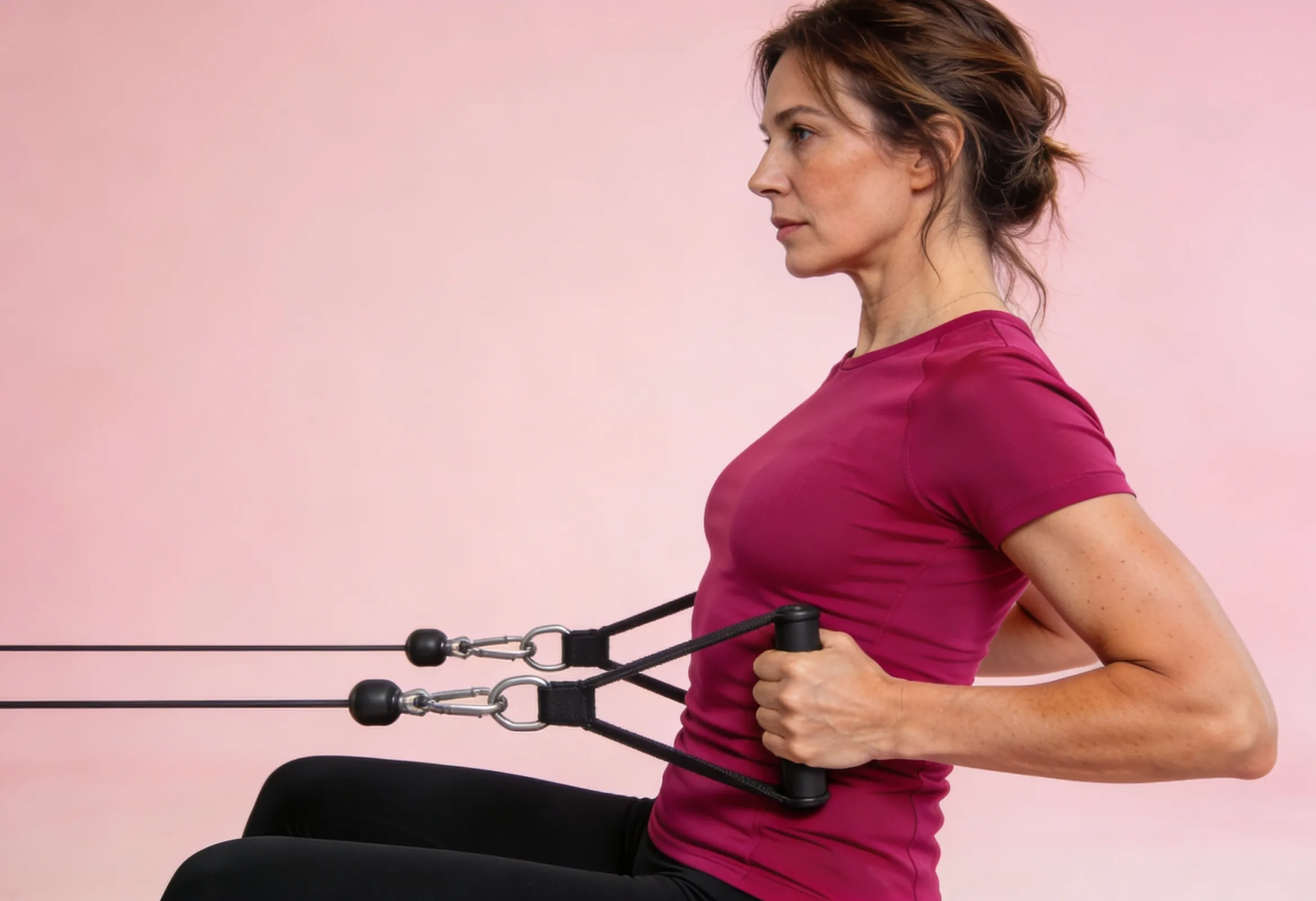
Pulling movements, rows in particular, are often better tolerated than pressing during a shoulder flare-up because they work the shoulder in a more mechanically favourable position. Keeping pulling work in your training during a period of shoulder pain maintains upper body volume and supports the muscles that stabilise the shoulder from the back.
Exercises that load the lower body and core can be maintained in full during most shoulder flare-ups, which means overall training does not need to be significantly disrupted.
The rotator cuff muscles, a group of four muscles that stabilise the shoulder joint, are central to how well the shoulder tolerates load during lifting. When these are strong and working well, the joint is better protected through pressing, pulling, and overhead movements.
Incorporating specific rotator cuff and upper back work into training consistently, rather than only when the shoulder is sore, builds the resilience the joint needs to manage heavier loading over the long term. Many lifters find that adding this kind of work prevents the shoulder problems that used to recur regularly.
If you would like to try a guided exercise for the shoulder, VIDA has a short video you can follow at your own pace.