Training with knee pain and the exercise adaptations worth knowing

Dr Nicola Tik
Knee pain in the gym does not have to mean stepping back from training. For most people, it means training differently for a period rather than training less. This article looks at what tends to load the knee during lifting and which adaptations allow you to keep making progress while the knee settles.
The knee is a load-bearing joint that sits between two long levers, the thigh and the shin. During many common gym exercises, particularly those involving squatting and lunging patterns, it absorbs significant force. That load is not inherently harmful, and over time appropriate strength training makes the knee more resilient. But when something changes, whether that is a sudden increase in volume, a new exercise, or returning from a break, the knee can become reactive before it has had time to adapt.
The structures most commonly involved in training-related knee pain are the tendons around the kneecap, the cartilage under it, and the tissue on the outside of the knee. Each responds slightly differently, but most share a common pattern: they tend to struggle with sudden increases in demand rather than with steady, well-managed loading.
Deep squatting under heavy load is typically the most demanding position for an irritated knee. Reducing the depth of the squat to a range that feels comfortable, rather than eliminating squatting altogether, keeps the pattern in your training while reducing the load on the knee at its most compressed position. Many people find that a box squat or a squat to a higher target helps them manage this practically.
Lunging, particularly forward lunging with a long stride, places high demand on the knee of the front leg. Reverse lunges are often better tolerated during a flare-up because they shift more of the load to the hip and reduce the forward travel of the knee over the foot. Split squats with a shorter stance are another option worth trying.
High-rep step-ups and plyometric movements such as jump squats tend to be poorly tolerated when the knee is sore and are worth setting aside temporarily rather than pushing through.
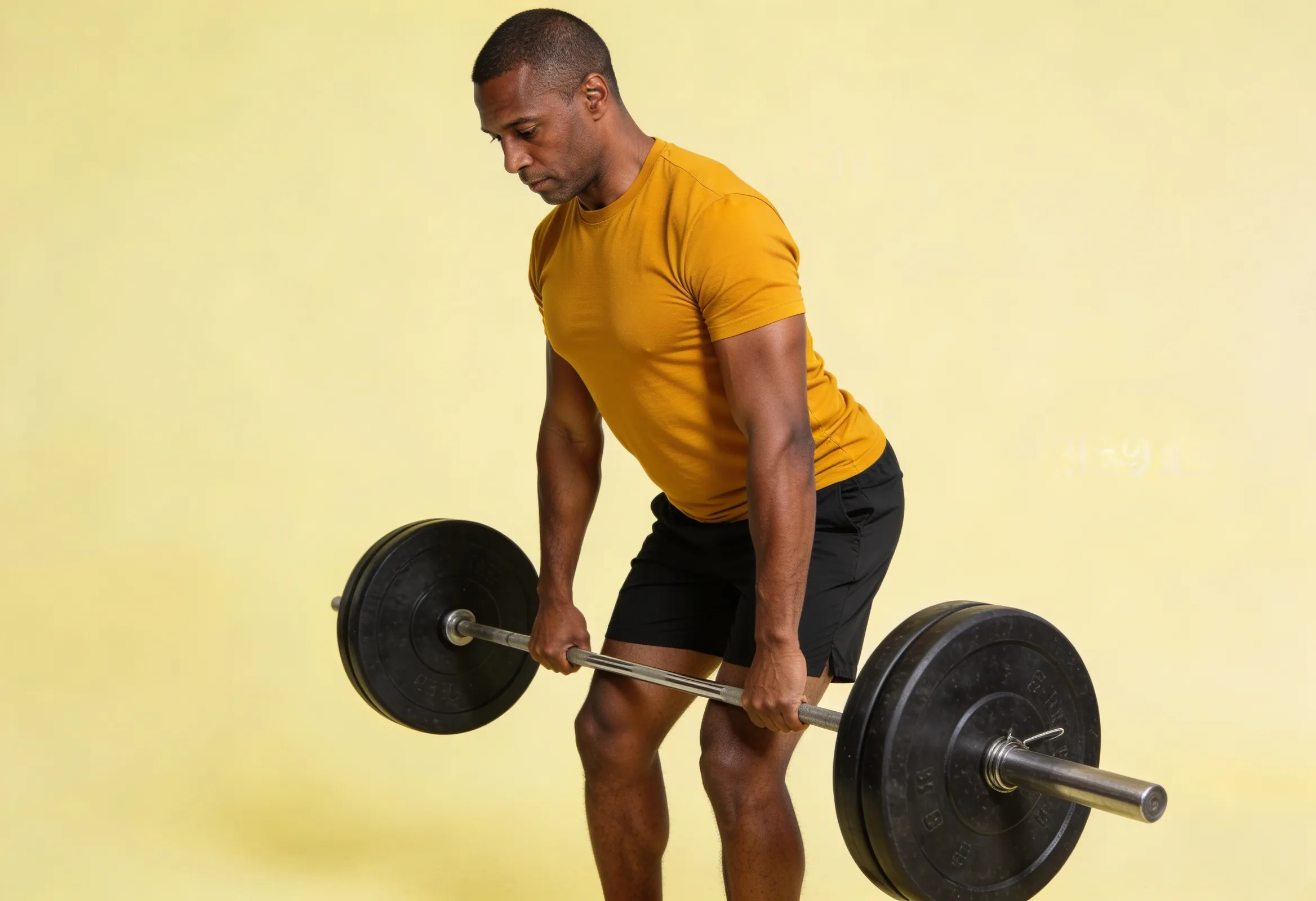
Hip-dominant movements, where the hips drive the movement rather than the knees, are generally well tolerated during a knee flare-up and are worth prioritising. Romanian deadlifts, hip thrusts, and cable pull-throughs load the glutes and hamstrings effectively with relatively low demand on the knee.
Leg press at a moderate depth is often more comfortable than squatting for people with knee pain because the back is supported and the load through the knee can be more easily controlled. Keeping the foot position higher on the plate shifts more demand to the glutes and hamstrings and away from the knee.
Upper body training can be maintained fully during most knee flare-ups, which means overall training volume does not need to drop significantly.
The glutes and hip muscles play a significant role in how much load the knee absorbs during training. When they are strong and working well, they absorb and distribute force that would otherwise travel directly through the knee. When they are weak or not contributing effectively, the knee tends to take more than its share.
Many people who train regularly with recurring knee pain find that consistent hip and glute strengthening makes a more meaningful difference than modifying knee exercises alone. Building this work into training as a regular feature rather than only during a flare-up supports the knee over the long term.
If you would like to try a guided exercise for the knee and hip, VIDA has a short video you can follow at your own pace.