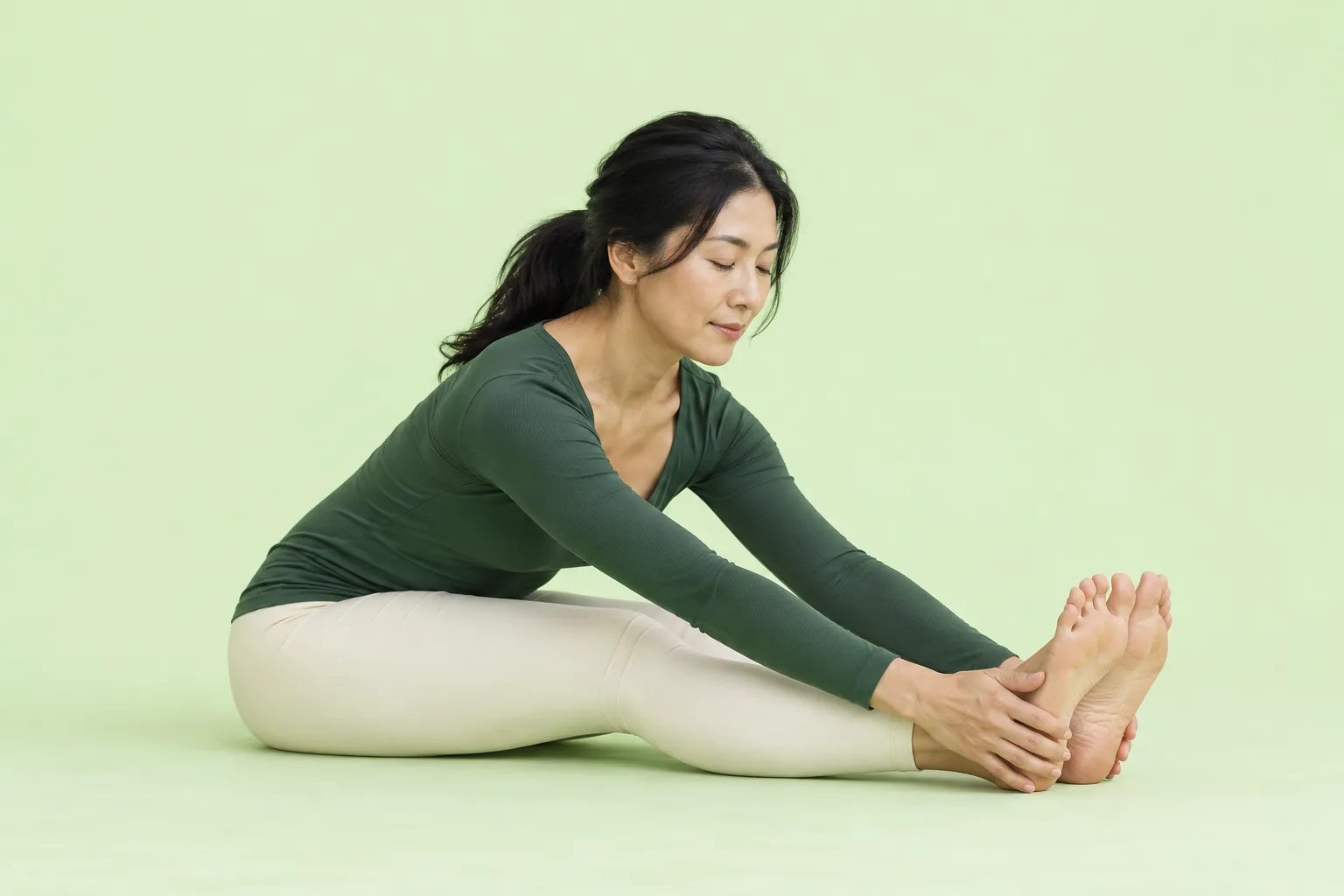
Goal: Touch your toes
The science behind effective stretching

Dr Nicola Tik
After a few stretches, it’s natural to wonder whether you’re doing it right. The most useful part of a stretching session isn’t how far you reach. It’s how you hold the stretch and how relaxed you stay while you’re in it.
A good session feels unhurried, with each stretch held in a comfortable range. You don’t need to match the instructor’s range, because everyone starts from a different place.
Three things matter most:
Research suggests that the total time you spend stretching across the week is what drives change, with steady gains seen at around 10 minutes a week. Five minutes a day adds up to over half an hour a week, so you’re well covered.
You don’t need a formal warm-up first. One study found that warming up before hamstring stretches added no real benefit to the gains people made. Your sessions already start gently, which gives your body time to ease in. A warm room, loose clothes and enough floor space to lie down comfortably are all you need.
Most people are a little stiffer first thing in the morning. Overnight, the discs between the bones of your spine take on water, so bending forward can feel tighter early on. If mornings suit you best, you could give yourself an hour or so after getting up before your session. Later in the day, many people find they move more freely.
Where you can, try to stretch at roughly the same time each day. A regular slot, like after work or before your evening meal, makes the habit easier to keep. It also makes your weekly check-ins fairer, because flexibility naturally shifts a little across the day.
Much of your early progress comes from your nervous system feeling safe in the stretch. If you push hard or hold your breath, your body tends to tighten up to protect itself. When you stay calm, it’s more willing to let go.
That’s why your breath is such a useful tool. Many people find that a long, slow breath out helps them relax into a stretch. Here’s what that can look like. You fold forward and feel the pull. Breathe in. As you breathe out, let your upper body sink a fraction lower. Over three or four breaths, you may find you’ve eased a little further without forcing anything.
This is the most common difficulty early on. Tight hamstrings make you lock your knees and curl your back to get closer to your toes, and you end up feeling the stretch in your lower back instead of your legs.
The video shows the fix. Bend your knees as much as you need, rest your hands on your shins, and fold from your hips with your chest long. The stretch moves back into the backs of your thighs, where it belongs. Straighter knees will come as your range builds over the coming weeks.
In each stretch, take three long breaths out and let yourself soften a little more on each one.