Pain Coach
The hidden link between ganglion cysts and workplace comfort

Dr Nicola Tik
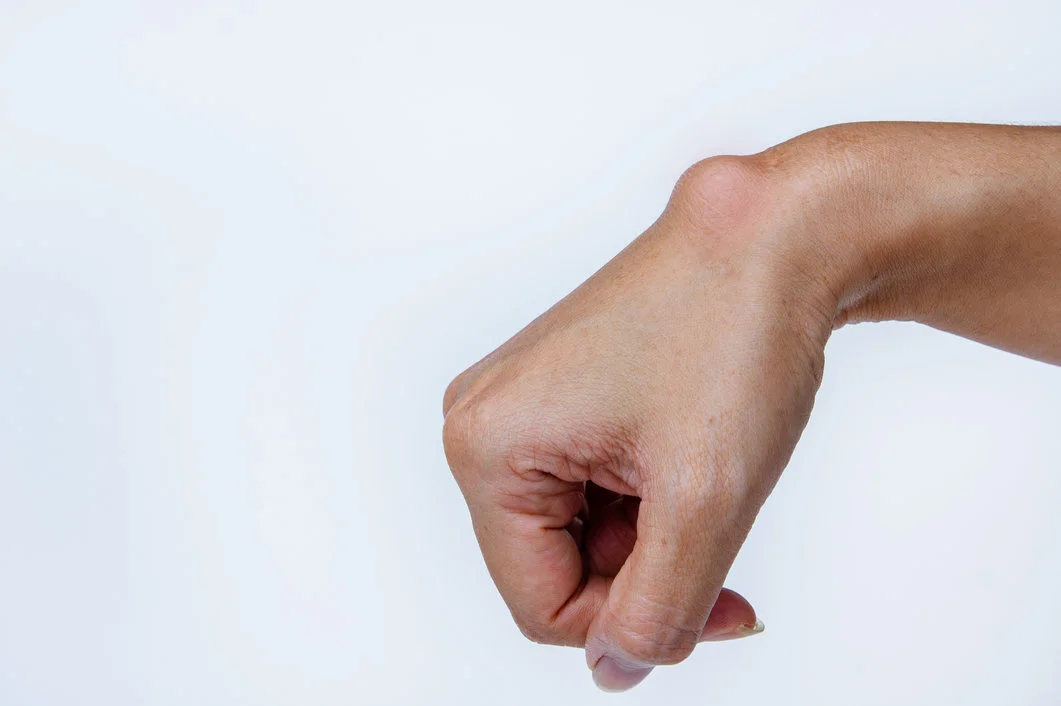
A ganglion cyst is a fluid-filled lump that commonly appears around the wrist or hand, though it can also develop near other joints or tendons. While often harmless, ganglion cysts can cause aching, stiffness or a feeling of pressure — particularly during repetitive tasks such as typing, mouse use or gripping.
At work, everyday hand and wrist positions can influence how noticeable or uncomfortable a ganglion cyst feels throughout the day. Understanding these patterns helps reduce irritation and maintain better comfort.
Ganglion cysts can become more sensitive when surrounding tissues are repeatedly loaded or held in certain positions.
Common workplace contributors include:
• Sustained wrist positions
Typing or mouse use with the wrist held in extension or flexion can increase pressure around the cyst.
• Repetitive hand and finger movements
Frequent clicking, scrolling or gripping can make aching or stiffness more noticeable.
• Working with unsupported wrists or forearms
Hovering the hands increases strain through the wrist and surrounding tissues.
• Direct pressure over the cyst
Resting the wrist on hard desk edges or surfaces can irritate the area.
These factors can make the cyst feel more uncomfortable as the day goes on.
Ganglion cysts often respond well to reduced local pressure, neutral wrist positioning, and gentle movement.
1. Keep the wrist in a neutral position
Adjust keyboard and mouse height so the wrist stays relatively straight rather than bent up or down.
Avoid resting the wrist directly on hard surfaces.
2. Support the forearm rather than the wrist
Resting part of the forearm on the desk or armrest reduces load through the wrist joint.
This helps limit pressure around the cyst.
3. Reduce repetitive strain
Use light grip pressure when typing or using the mouse.
Where possible, vary tasks or alternate hands to reduce continuous loading.
4. Use gentle, comfortable movement
Light movement helps reduce stiffness without irritating the area, such as:
Movements should feel easy and non-provocative.
5. Break up prolonged positions
Change posture every 20–30 minutes by standing briefly, relaxing the hands or repositioning the wrists.
Short, frequent changes are often more effective than longer breaks.
Ganglion cysts are common and often benign, but workplace habits can influence how noticeable they feel. Reducing pressure, supporting the forearms and keeping the wrists in neutral positions can significantly improve comfort during the working day. Small, practical adjustments often make a meaningful difference.