Staying active with long-term foot or ankle pain

Dr Nicola Tik
When your foot or ankle has been sore for months, it can quietly shape your training. You choose shorter routes, skip the sessions with jumping and wonder whether a run is worth the ache afterwards. Paying attention to footwear and surfaces, and building calf and foot strength, can help you keep doing more.
Long-term pain around the heel, arch or back of the ankle often involves tissues that act like springs when you move, like the Achilles tendon and the plantar fascia, the strong band of tissue along the sole of your foot. These tissues get stronger with gradual load, but can become sensitive when load rises faster than they can adapt.
When pain lasts a while, it is natural to do less. But tissues that are rested lose some of their ability to cope, so the pain returns as soon as you do more. Building strength gradually helps break that cycle.
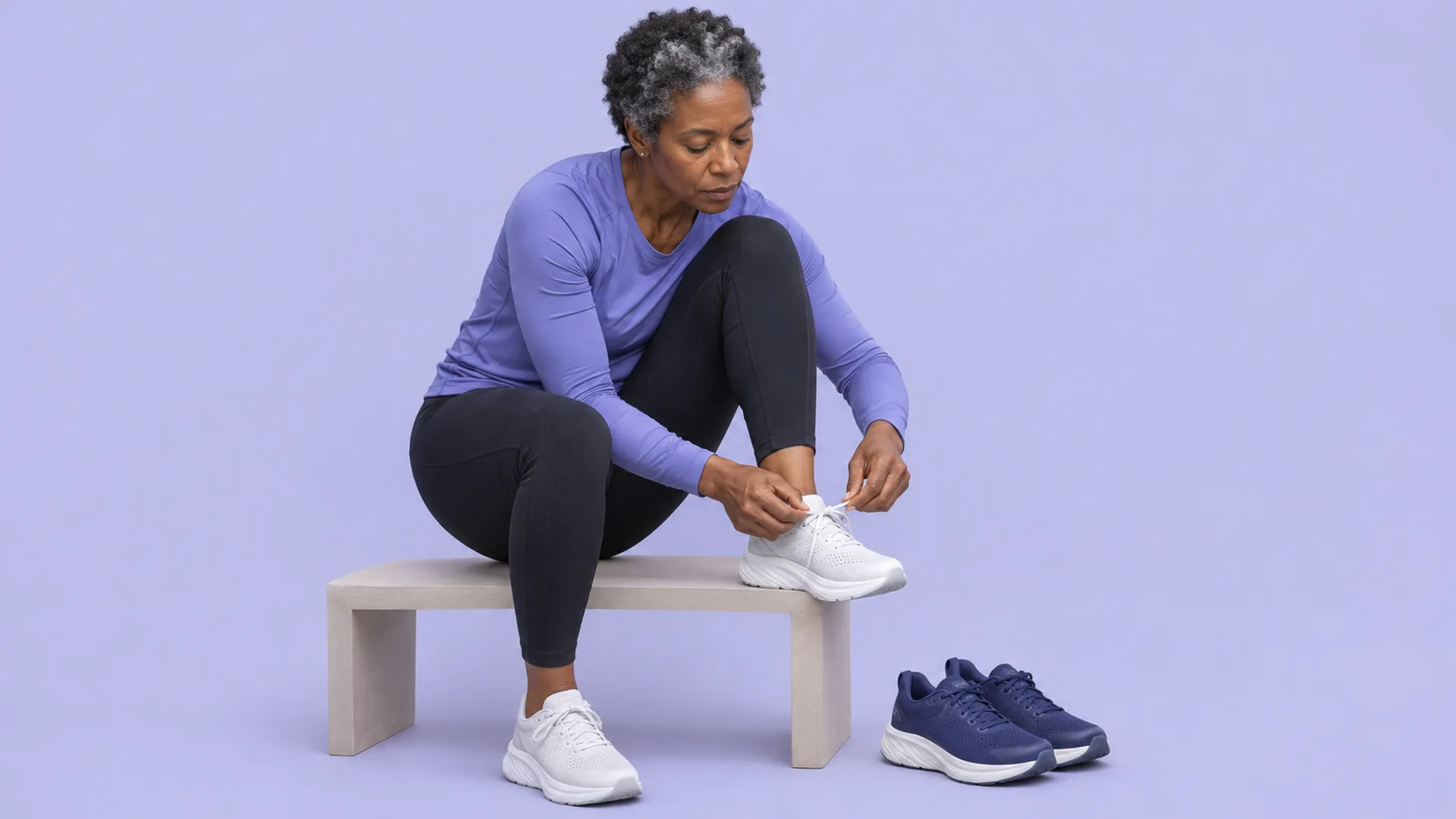
Shoes can make a real difference to a sore foot. Some things to look for:
If you run, rotating between two pairs of running shoes may help. One large study of recreational runners found those who used more than one pair had a lower risk of injury. Shoes also lose their cushioning over time, so a pair that has done many miles may be worth replacing.
Big changes in footwear, like switching to minimal or very different shoes, are best made gradually.
Different surfaces load your feet in different ways. Flat, even paths and tracks tend to be most predictable. Grass and trails are softer but less even, which asks more of your ankle. Hard concrete can feel harsher on a sore heel.
Mixing surfaces throughout the week can spread the load. If one surface reliably brings on your pain, you could swap it for a while.
Your calf muscles absorb a large share of the force each time your foot hits the ground. Stronger calves can take some of the load off the tissues in your foot and ankle. Something to try three or four times a week:
Start with a number you can do comfortably and build up over weeks. If you would like to follow along, VIDA has a short video of heel raises you can use at your own pace.
The small muscles in your feet help support your arch. Something to try a few times a week:
Check how your foot feels later that day and the following morning. A mild ache that settles by the next day is usually fine. If it is sorer the next morning, ease back a little rather than stopping.
Once a level of training feels comfortable for a week or two, you could add one thing at a time, like a few more minutes of running or one extra session. Spreading harder sessions across the week, with lower-impact options like cycling or swimming between, gives your feet time to recover.
Progress with long-term foot pain tends to come from steady weeks rather than quick changes. Your VIDA pain check-in is a good way to notice patterns, like whether particular shoes, surfaces or sessions make a difference.