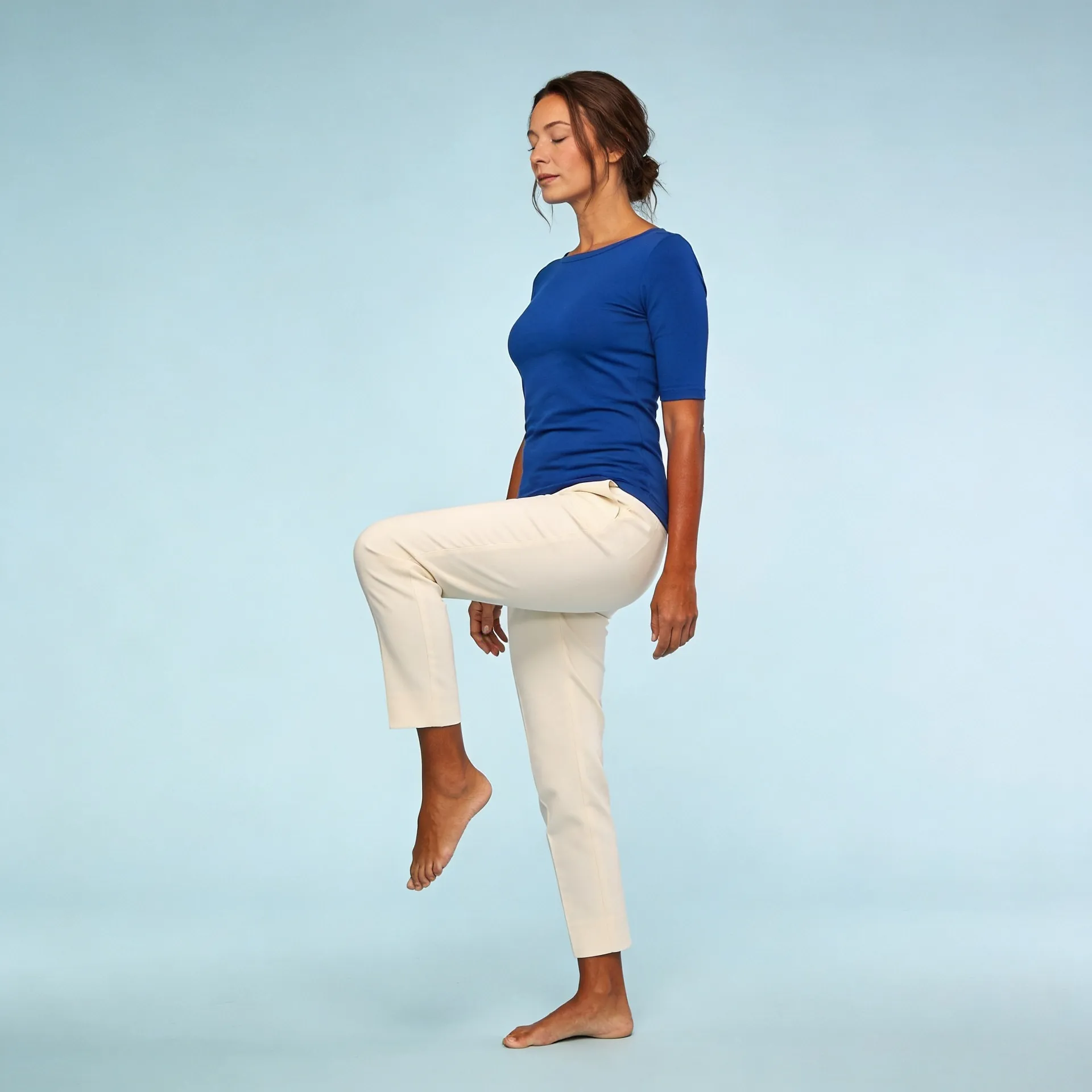
Standing on one leg and what it reveals

Dr Nicola Tik
Balance is one of those physical qualities that tends to be taken for granted until it becomes noticeably reduced. The ability to stand steadily on one leg draws on a connected system of muscle strength, joint awareness, and neurological control that underpins far more of everyday movement than most people realise. This article explains what single-leg balance is actually testing, why it matters, and how to improve it effectively.
Standing on one leg requires the ankle, knee, hip, and trunk to work together to maintain a stable position. The muscles of the lower leg, particularly around the ankle, make continuous small adjustments to keep the body over its base of support. The hip and glute muscles stabilise the pelvis to prevent it from dropping to one side. The trunk engages to keep the upper body centred over the standing leg.
That coordinated effort draws on proprioception, the body's sense of where it is in space, as much as on strength alone. Proprioception is the feedback system that tells the brain where each joint is positioned and how it is moving, allowing the body to make the rapid adjustments that balance requires. When proprioception is well developed and the supporting muscles are strong, single-leg balance is steady and controlled. When either is reduced, balance becomes effortful or unstable.
The qualities that single-leg balance tests are not just relevant to standing on one leg. Every step in walking involves a brief single-leg phase where the body's weight is entirely supported by one foot. Climbing stairs, stepping over obstacles, changing direction, and most recreational activities all draw on the same balance and stability system.
Research consistently links better balance with lower rates of MSK injury, particularly ankle and knee problems, better functional movement quality, and greater confidence and ease with everyday physical tasks. The relationship between balance and longer-term physical independence is also well established, making it one of the more clinically meaningful things to address.
Balance tends to reduce gradually with age and reduced activity, both of which affect the sensitivity of the proprioceptive system and the strength of the muscles that support it. Sedentary lifestyles that involve limited varied and unpredictable movement give the balance system relatively little to respond to, and like most physical qualities it adapts to the demands placed on it. Less challenge over time tends to mean less capacity over time.
Previous ankle sprains are a particularly common contributor to reduced single-leg balance, because sprains can affect the proprioceptive sensors in the ankle ligaments even after the pain has fully resolved. Many people are not aware that an old ankle injury is contributing to current balance limitations.
Balance responds well to specific and progressive practice. The body's proprioceptive system is highly adaptable, and consistent balance training tends to produce meaningful improvement relatively quickly compared to some other physical qualities.
Starting with single-leg standing on a firm surface, holding for as long as is comfortable and building the duration over time, is a straightforward and effective starting point. Progressing to a slightly less stable surface, such as a folded towel or cushion, adds challenge as the basic balance improves. Introducing gentle upper body movement while balancing, such as slow arm raises, adds further demand on the stabilising system without requiring any equipment.
Strengthening the ankle, hip, and glute muscles alongside balance practice builds the muscular support that the proprioceptive system relies on. Many people find that combining balance practice with lower body strength work produces faster improvement than either alone.
Staying active and including varied movement in everyday life, walking on uneven ground, taking the stairs, and moving through a range of positions, provides the kind of unpredictable proprioceptive challenge that supports balance development alongside more targeted practice.
If you would like to try a guided balance and stability exercise, VIDA has a short video you can follow at your own pace.