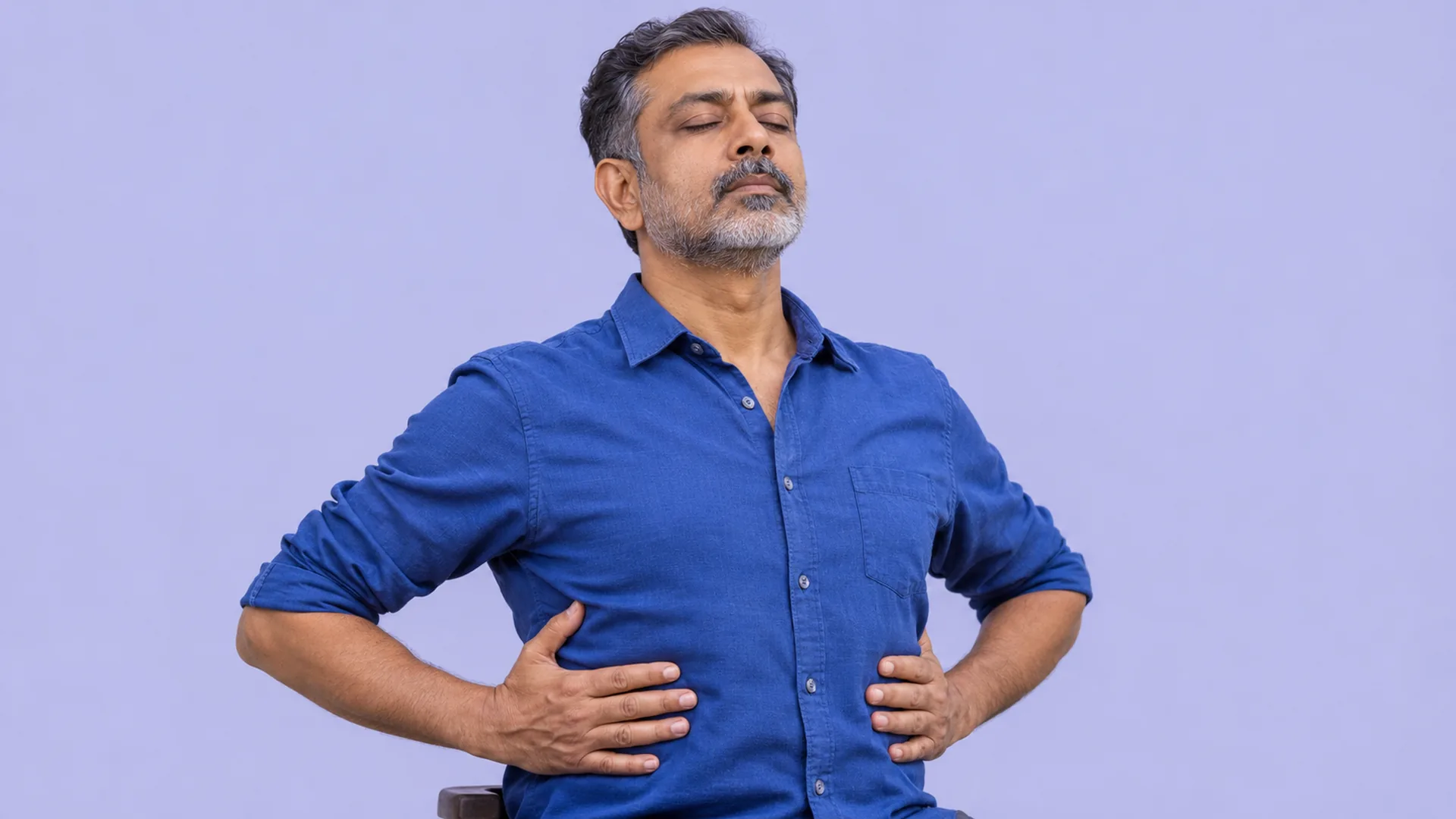
Smoking, breathing and mid back stiffness

Dr Nicola Tik
The space between your shoulder blades feels tight, taking a deep breath does not come as easily as it used to, and a morning cough leaves your upper back aching. If you smoke, these things can be more connected than they first appear. Helping your ribs and upper back move more freely can make breathing and your back feel more comfortable.
Your ribs attach to the bones of your mid back. Every time you breathe in, your ribs lift and widen, and the joints in your upper back move a little with them. Over the course of a day, that is thousands of small movements.
When breathing becomes shallower, those joints move less. The muscles between your ribs and around your shoulder blades can tighten, and your upper back can start to feel stiff.
Smoking can affect your breathing in a few ways. Over time, it can narrow the airways and make breathing feel harder work. Some people find they breathe more from the top of the chest, using the muscles in the neck and shoulders, rather than letting the ribs and belly move freely.
A regular cough adds to this. Each cough is a strong squeeze of the muscles around your trunk, and a frequent cough can leave those muscles tired and sore.
Smoking also reduces the oxygen carried in your blood and may make tissues slower to recover, which can make an achy back feel slower to settle.
Breathing exercises can help your ribs and upper back move more freely. Something to try a few times a day:
You could also try placing your hands on your back ribs, as far round as you can reach, and breathing into them.
Your upper back is built to turn and gently arch back. Something to try once or twice a day:
If you would like a guided stretch, VIDA has short videos you can follow at your own pace.
Strong upper back muscles help you sit and move more comfortably. Something to try two or three times a week:
If you would like to follow along, VIDA has short videos of back lifts and shoulder squeezes you can use at your own pace.
Regular activity, like walking, helps your breathing as well as your back. Starting at a comfortable pace and building gradually tends to work well. If you get breathless, slowing down and using the pursed-lip breathing above can help you recover.
Stopping smoking gives your lungs and back the best chance to recover. Many people find their breathing feels easier within a few months of stopping, and coughing often eases too, though it can sometimes increase for a short time at first as the lungs clear. If you are thinking about it, support from stop smoking services, pharmacists or nicotine replacement products makes you more likely to succeed.
Your VIDA pain check-in can help you notice how your back changes as you build these habits.