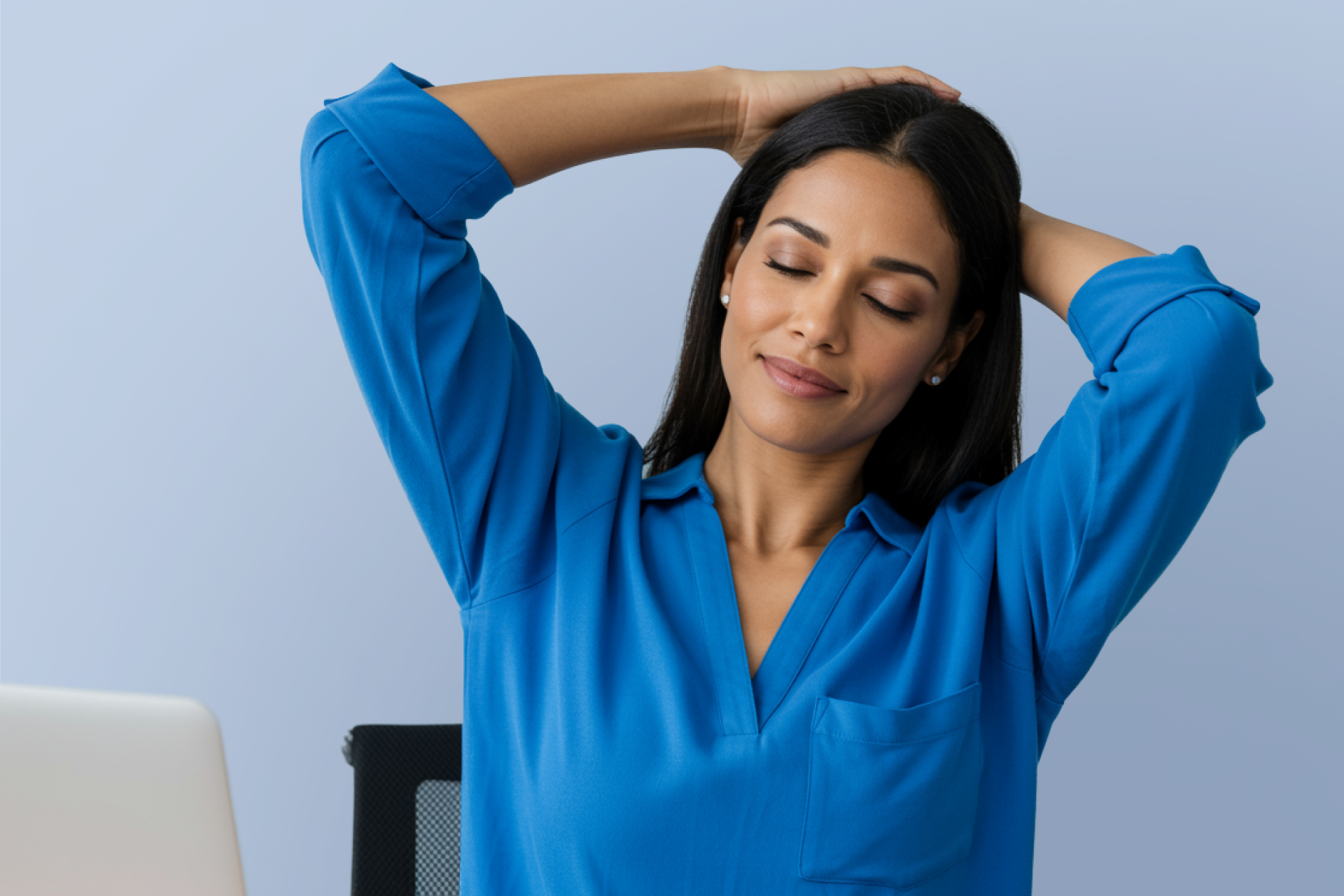
Small movement habits that keep your body comfortable all day

Nicola Tik
The idea that looking after the body requires long dedicated sessions of exercise or stretching is one of the most common reasons people do not do it consistently. The reality is that the body responds just as well, and in some ways better, to small frequent doses of movement distributed through the day than to occasional larger efforts. These small doses, sometimes called movement snacks, are short enough to fit into any day, require no equipment or preparation, and produce a cumulative effect on comfort and resilience that is genuinely significant over time.
The body's preference for movement variety over sustained static positions is well established. Muscles that are held in one position for extended periods fatigue and tighten. Joints that are loaded consistently in the same way stiffen and lose their comfortable range. Circulation in the lower limbs slows during prolonged sitting. None of these processes require hours to begin. They start within minutes of settling into a fixed position and accumulate progressively from there.
Small frequent movement interrupts these processes before they accumulate significantly. A minute of movement every thirty to forty minutes produces a fundamentally different physical experience across a day than the same total volume of movement concentrated into a single session, because it prevents the accumulation rather than addressing it after the fact. The body never gets far enough into any sustained position for the consequences to become significant.
The desk is where most people spend the largest continuous block of time in a fixed position, and where movement snacks produce the most immediate and noticeable benefit.
Shoulder rolls taken a few times through the morning and afternoon, slow and deliberate circles in both directions, release the tension that accumulates in the upper back and neck during sustained screen use. They take less than a minute and can be done without leaving the desk or interrupting work significantly.
Chin tucks, gently drawing the head back over the shoulders rather than allowing it to drift forward towards the screen, counteract the forward head position that desk work encourages. A few repetitions taken once or twice through the day help maintain the neck's natural position and reduce the load on the muscles at the back of the neck.
Standing up and shifting weight from foot to foot, doing a few calf raises, or simply walking to another part of the office or home reactivates the leg muscles and supports circulation in the lower limbs after a prolonged sitting stretch. Even thirty seconds of standing movement produces a meaningful shift in how the lower body feels.
A brief hip flexor stretch, standing and gently pressing one hip forward while keeping the body upright, counteracts the shortening that prolonged sitting produces in the front of the hips and reduces the lower back tension that tight hip flexors contribute to. Thirty seconds on each side, taken once or twice through the day, is enough to maintain the hip mobility that sitting tends to gradually reduce.
Your VIDA posture breaks include all stretches above, short enough to do consistently and effective enough to make a noticeable difference.
The evening is where movement snacks are most often neglected because the day is over and the instinct is to rest rather than move. As covered in the previous article, gentle movement in the evening produces better overnight recovery than extended stillness, and the evening is one of the most valuable windows in the day for movement snacks precisely because of what it does for the following morning.
Standing during part of a television programme or phone call rather than remaining seated throughout introduces variation into what is otherwise an extended static period. A brief walk around the house or outside during a natural break in the evening gives the body the movement variety that the working day has not provided enough of.
A few minutes of gentle stretching before bed, targeting the hip flexors, neck, upper back, and any area that has felt tense through the day, helps the body release the accumulated load of the day before sleep rather than carrying it into the night. Your VIDA programme includes evening stretches with guided videos designed for exactly this purpose, short enough to do consistently and effective enough to make a noticeable difference to morning comfort.
The most reliable movement snacks are the ones attached to existing events in the day rather than the ones that require a separate decision to initiate. Standing up when a phone call comes in. Doing shoulder rolls before opening email. Taking a brief walk when making a drink. Stretching during the natural pause between tasks. Each of these uses an existing moment as a trigger that removes the need for motivation or planning.
Over time these small habits become the default rather than the exception, and the body they produce, one that has been regularly moving through the day rather than sitting for long stretches and then trying to compensate, is noticeably more comfortable and resilient than one maintained by occasional larger efforts alone.