Small movement habits that help settle persistent hip pain

Dr Nicola Tik
When hip pain has been around for a while, it can feel as though the options are limited to either pushing through or holding back. In practice, the most useful approach tends to sit somewhere between the two. Small, regular movements woven into everyday life, rather than structured exercise sessions, are often what make the biggest difference to how a persistently sore hip feels over time. This article covers some simple habits that are worth building in.
The hip responds well to consistent, manageable load. When movement is irregular, such as mostly sedentary through the week with a more active day at the weekend, the hip does not get the steady input it needs to gradually reduce its sensitivity. Conversely, a short burst of intense activity after a period of rest can tip a sensitised hip into a flare-up that sets things back.
Small, regular movement keeps the joint and surrounding muscles gently loaded throughout the day without asking too much at any one time. Over weeks and months, this consistent input helps the nervous system recalibrate and the muscles rebuild their tolerance. It is not a dramatic process, but it is a reliable one.
The single most impactful habit for persistent hip pain is simply getting up and moving more often. Sitting for long, unbroken periods keeps the hip flexors and the muscles around the joint shortened and under sustained load. Breaking this up every 30 to 45 minutes, even for just a minute or two, makes a meaningful difference to how the hip feels across the day and over time.
If it helps to have a prompt, setting a quiet reminder on your phone or pairing the habit with something you already do regularly, such as getting up every time you make a drink or take a call, makes it easier to build into the day without it feeling like an effort.
Walking is one of the most consistently supported activities for persistent hip pain. It loads the hip in a functional, varied way, keeps the surrounding muscles engaged, and helps reduce the nervous system sensitivity that contributes to ongoing pain.
The aim is not to walk as much as possible, but to walk consistently. A 10 to 15 minute walk at a comfortable pace once a day, done most days, tends to produce more benefit over time than occasional longer walks. If 10 minutes feels like too much on harder days, five minutes is still useful. The consistency matters more than the duration.
A few minutes of gentle movement done daily, ideally at the same time each day so it becomes a habit, can help maintain the hip's range of movement and gradually reduce stiffness. Here are three simple options to try:
Standing hip circles: hold onto a surface for support and slowly draw small circles with your knee, five in each direction on each side. Keep the movement slow and comfortable.
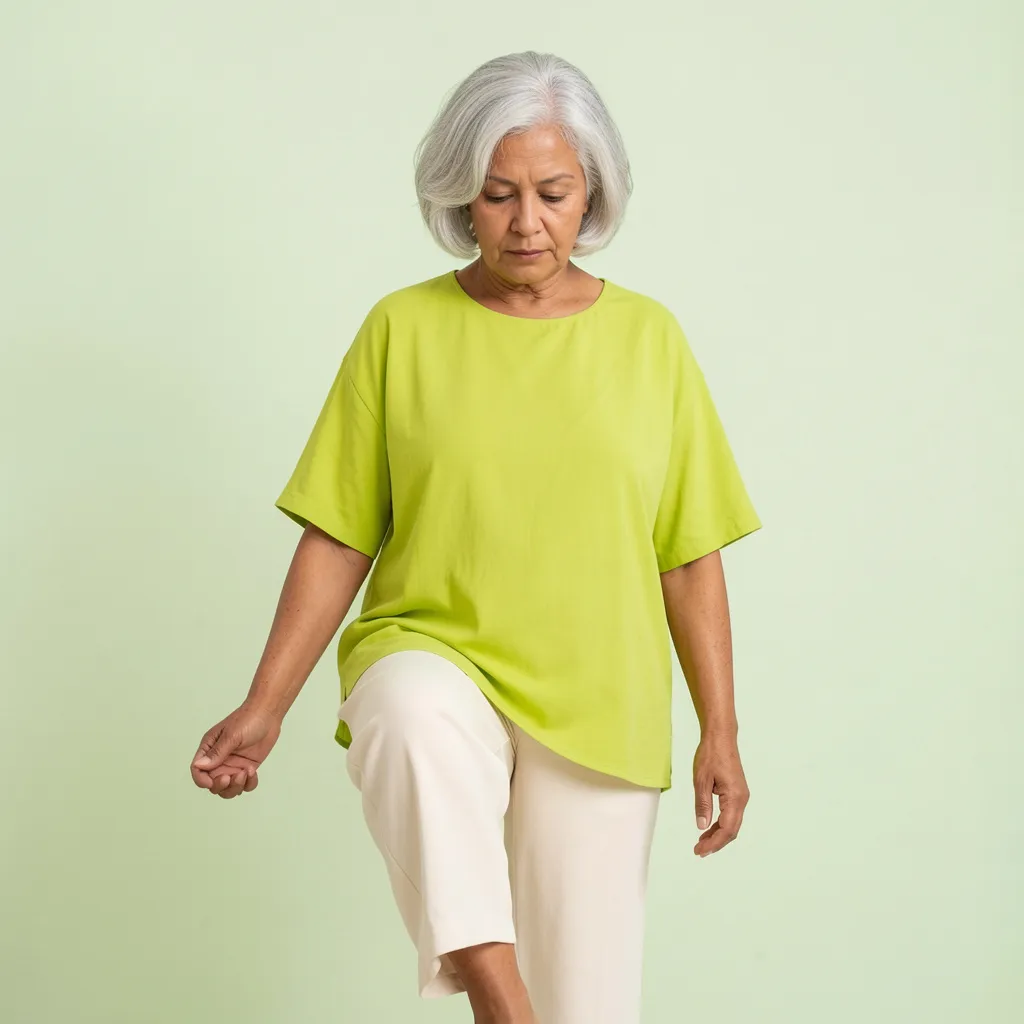
Seated knee lifts: sitting upright in a chair, slowly lift one knee a few inches, hold for two to three seconds, then lower. Repeat eight to ten times on each side. This gently activates the hip flexors without loading the joint heavily.
Standing side steps: standing with feet together, take a slow step to the side, bring the feet back together, and repeat five times in each direction. This engages the outer hip muscles in a gentle, functional way.
If you would like a guided version of these movements, VIDA has a short video you can follow at your own pace.
Beyond getting up regularly, varying your position while seated and standing adds useful movement input to the hip without requiring dedicated exercise time. Crossing your legs less consistently, alternating which side you carry a bag on, and shifting your weight when standing rather than holding a fixed position all reduce the build-up of asymmetric load that can contribute to persistent sensitivity.
None of these changes is transformative on its own. Together, over time, they reduce the cumulative strain on the hip and give it more opportunity to settle.
Because persistent hip pain can vary from day to day, it is useful to notice which habits seem to correlate with better days and which with harder ones. Your VIDA pain check-in is a good way to keep track of how things are shifting as you build these habits in over time.