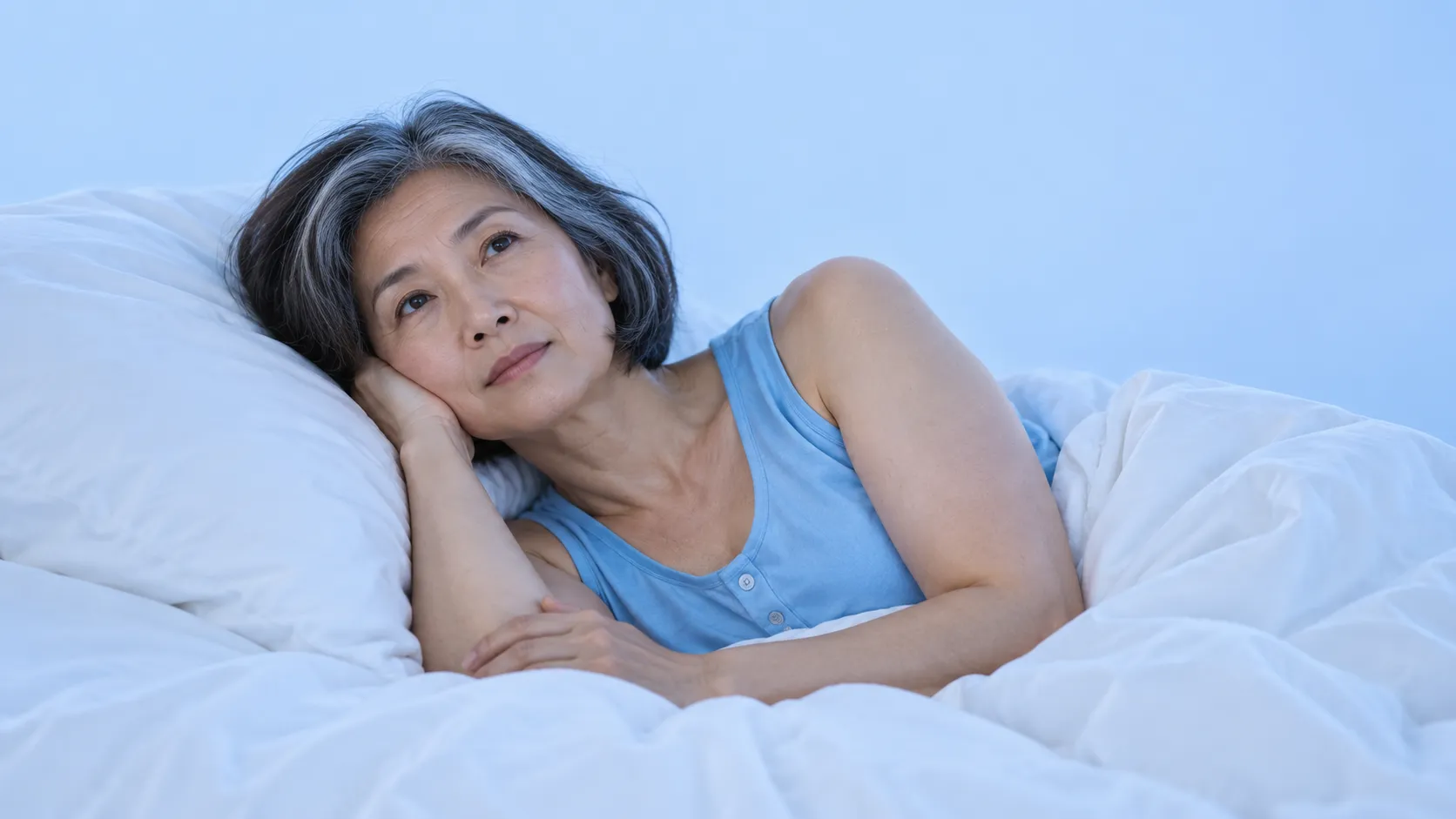
Goal: Sleep without ache
Sleeping with aches through menopause

Dr Nicola Tik
You fall asleep easily enough, then wake at 3am too hot, your hips aching and your mind already running. Many people find sleep becomes harder during menopause, and aches are often part of the picture. Understanding what’s going on can help you find what works for you.
Sleep problems are common during menopause, with many people reporting more waking at night. Night sweats and hot flushes can wake you up, and changing hormone levels can affect how deeply you sleep.
At the same time, many people notice more aches and stiffness. Musculoskeletal pain is reported by around 7 in 10 women in perimenopause.
Poor sleep can make you more sensitive to discomfort, and aches can make it harder to get comfortable. This two-way link means improving one can often help the other.
Night sweats are one of the most common reasons for waking. A cooler bedroom, lighter layers of bedding you can easily push off, and breathable nightwear may help you stay comfortable.
Waking during the night is common in menopause. If you can’t get back to sleep after a while, getting up and doing something calm in dim light, then returning to bed when you feel sleepy, can help your bed stay linked with sleep.
Research has found that structured approaches to sleep, like cognitive behavioural therapy for insomnia (a talking-based programme for sleep), can improve sleep for people going through menopause. Many of the habits in your Sleep without aches goal come from this approach.
Set your bedroom a little cooler than usual and use layers you can easily push off, and notice whether you wake less.