Shoulder impingement and reaching overhead comfortably

Dr Nicola Tik
You lift your arm to reach a high shelf, put on a coat or wash your hair, and there is a sharp catch or ache at the top or side of your shoulder. Shoulder impingement can make everyday overhead movements surprisingly uncomfortable. The good news is that it usually responds well to the right changes and exercises.
Impingement is a term used to describe pain when you lift your arm, usually felt at the top or side of the shoulder. It was traditionally thought to happen because tendons were being pinched in a narrow space at the top of the shoulder.
Research now suggests the picture is a bit different. Most of the time, the pain comes from the rotator cuff tendons and the small cushion above them, called a bursa, becoming sensitive. This often happens after a change in what your shoulder has been doing, like more lifting, reaching or a new activity.
Thinking about it as sensitive tendons, rather than something being pinched, is helpful, because sensitive tendons respond well to the right kind of exercise.
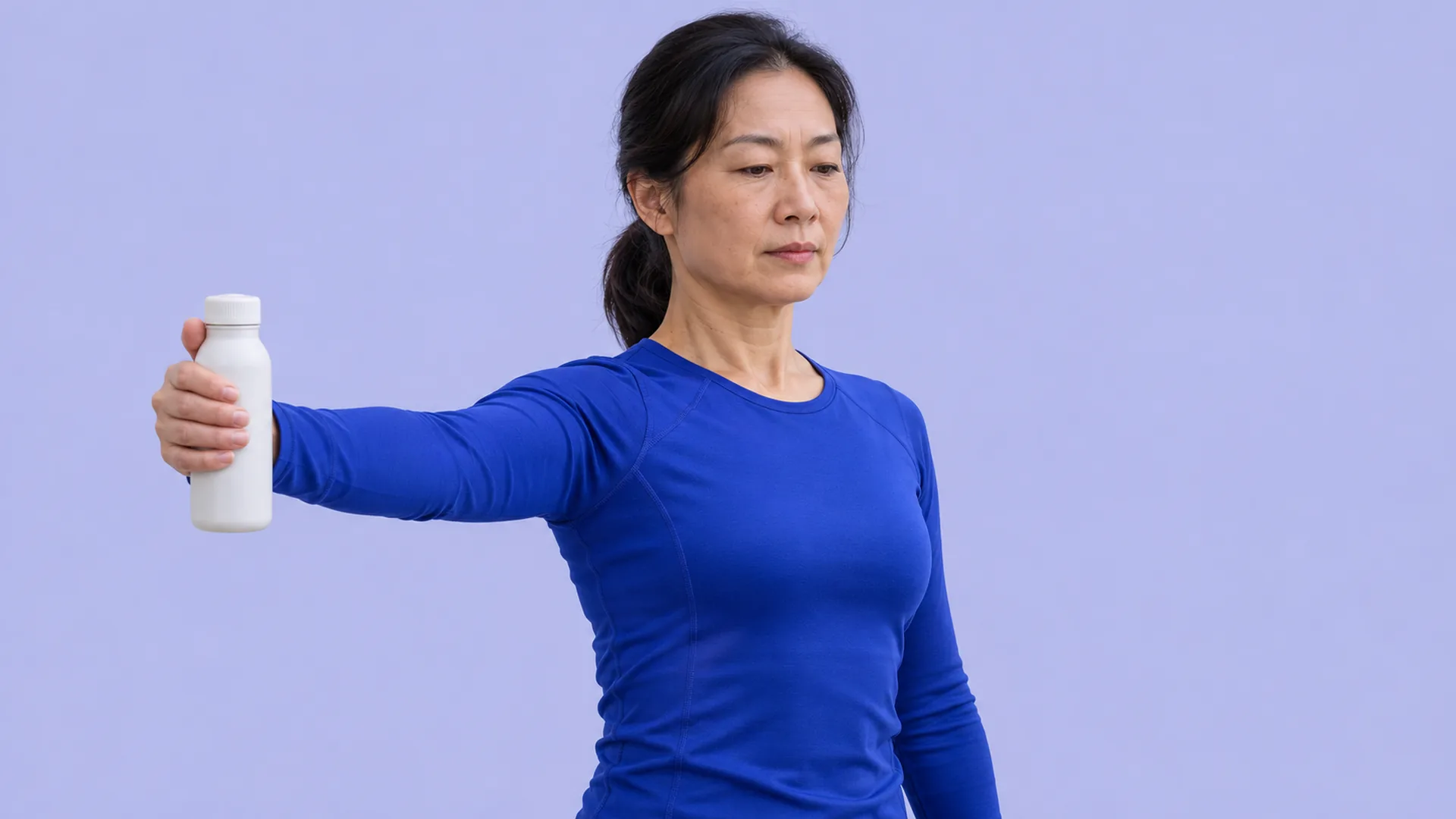
When you lift your arm, especially out to the side and overhead, the rotator cuff tendons work hard to keep the ball of your shoulder centred while your bigger muscles move your arm. If those tendons are sensitive, this movement can be painful, often in a particular part of the range, like between shoulder and head height.
Many people find the pain eases once their arm passes this range or comes back down.
Exercise is one of the most effective treatments for shoulder impingement. Research suggests that for many people, a gradual exercise programme works as well as surgery. Strengthening helps the tendons cope with load and helps the muscles around your shoulder work together more smoothly.
If you have been given exercises by a physiotherapist, or have had surgery and have a plan from your surgical team, keep following that. The ideas below can sit alongside that advice.
Some everyday changes can ease the load while your shoulder settles:
Gentle movement within a comfortable range helps your shoulder stay supple. Something to try a few times a day:
If a movement brings on a sharp catch, make it smaller. If you would like a guided stretch, VIDA has short videos you can follow at your own pace.
Strength work is at the heart of easing impingement. Something to try two or three times a week:
If you would like to follow along, VIDA has short videos you can use at your own pace. Start light and build up gradually over weeks. As your shoulder gets stronger, you can gradually work higher.
A mild ache during exercise that settles by the next day is usually fine. If your shoulder is sorer the following morning, ease back a little rather than stopping.
Shoulder pain often feels worse at night. Lying on your back with a pillow under your sore arm, or on your other side hugging a pillow, can help. Avoid sleeping with your arm above your head.
If your pain is not easing after several weeks of these changes, your GP or a physiotherapist can talk through other options with you.
Your VIDA pain check-in can help you notice how your shoulder responds as you build strength.