Shoes, technique and poles for more comfortable walks

Dr Nicola Tik
Walking is one of the simplest and most enjoyable ways to stay active, whether it is a lunchtime loop around the office or a longer walk at the weekend. But on longer walks, your feet, knees or hips might start to feel it, especially on hills. The right shoes, a few small changes to how you walk, and sometimes a pair of poles can help you walk further, more comfortably.
Each step sends some force through your feet, ankles, knees and hips. On a short walk, your body handles this easily. On a longer walk, or on hills and uneven ground, it adds up.
Walking downhill is often the hardest part for your knees. Your thigh muscles work hard to slow you down with each step, and your knees take more load. That is why many people feel downhill sections more than uphill ones.
Good shoes make longer walks more comfortable. Something to look for:
It is worth checking the soles of your shoes now and then. Worn-down soles offer less cushioning and grip.
How you walk can make a difference too. Some things to try:
A natural arm swing helps you keep your balance and rhythm, especially as you speed up.
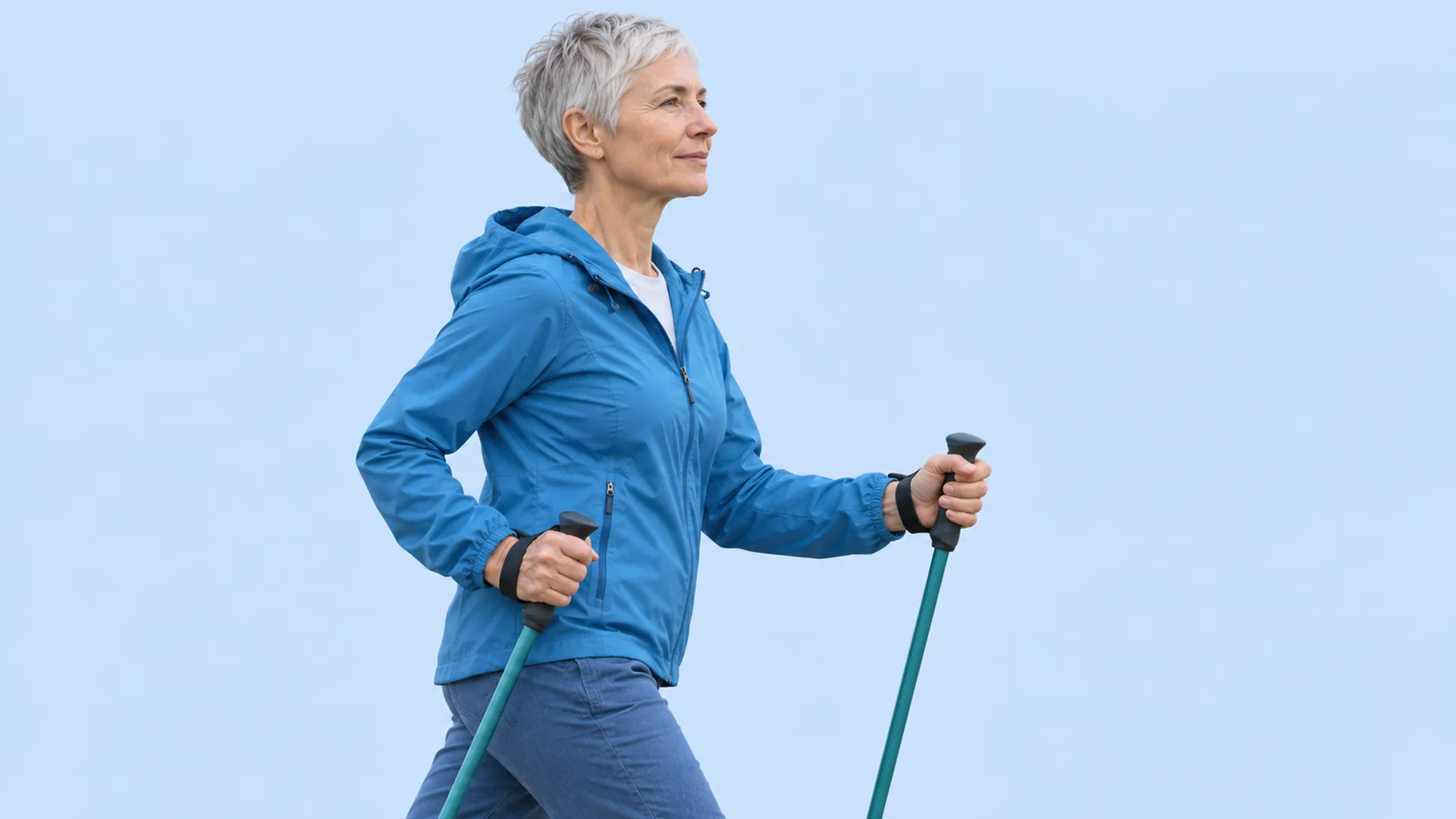
Walking poles can be really useful, but the research shows they help most in specific situations. One study found that using poles while walking downhill reduced the load on the knees by between 12% and 25%. That is because some of the effort is shared with your arms, and you tend to lean slightly forward.
On flat ground, though, the evidence is more mixed. Studies of Nordic walking on the flat have found little reduction in knee load compared with walking without poles. Poles still add stability on uneven ground and help work your upper body, so they are worth trying if you enjoy them.
If you use poles, setting them to a height where your elbows are bent at roughly a right angle on flat ground is a good starting point. Shortening them slightly for uphill sections and lengthening them for downhill sections can help too.
Hills are where small changes make the biggest difference. Something to try:
Strong calf and thigh muscles make hills easier. If you would like to build strength for hillier walks, VIDA has short videos of heel raises and lunges you can follow at your own pace.
If you are planning a longer walk than usual, building up gradually helps your body adapt. You could add a little extra distance or a small hill to your regular walks over a few weeks. Over time, longer walks start to feel more comfortable, and you get to enjoy more of the view.