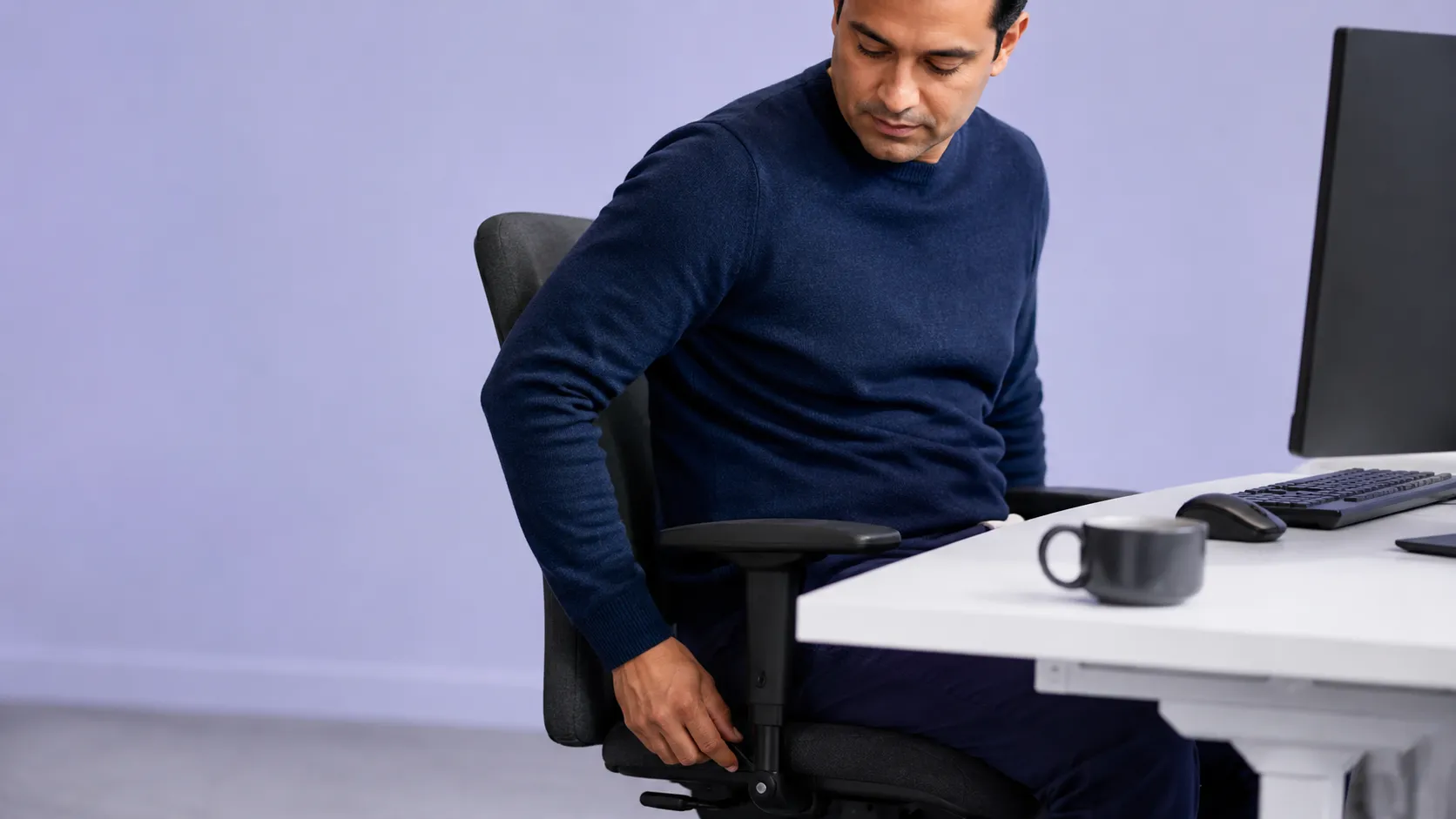
Seat support for your hips and back at desk and in the car

Dr Nicola Tik
Support is not only about what your back leans against. It is also about what you are sitting on. If the seat base is worn, hard or the wrong shape, both at your desk and in the car, your hips and lower back take the pressure all day with no let-up between the two. That combination, a firm commute followed by a firm chair, or the other way round, is often why the ache sits deep in the hips and low back by evening. Sorting the seat itself in both places makes a real difference.
Where the backrest supports your spine, the seat base decides how your weight is spread through your hips and bottom. A dished, hard or worn base concentrates pressure onto the sit bones and the muscles around the hips, and tips your pelvis into a slumped position that pulls on the lower back too. When both your chair and your car seat do this, there is no spot in your day where your hips get relief. Getting the base right in both is what breaks that pattern.
Both settings share the same goal, letting your pelvis sit level rather than rolled back. A seat base that tips too far back rolls your hips under and rounds the lower back, while a level or very slightly forward base lets you sit tall more easily. Where the car seat or chair lets you tilt the base, setting both the same way keeps your pelvis in a good position wherever you are. From there, back support does its job far better, because your pelvis is not fighting it.
If either seat is hard or worn, a supportive cushion evens things out, and using one you can carry between the car and your chair keeps it simple. A firm cushion that holds its shape spreads your weight and takes the pressure off the hips, far better than a soft one that sinks and drops you back into the same dip. A wedge-shaped cushion can also gently tilt your pelvis forward if a seat rolls you back. One good cushion moved between the two gives your hips consistent support all day.
Because the hips and low back are being loaded across both settings, changing position matters as much as cushioning. No seat, however well set up, is comfortable for hours on end. Getting up to move at the end of a drive, and regularly through the working day, shifts the pressure off the same spots and lets the hips open out. Even small shifts in the seat, easing your weight from side to side, help. The aim is to keep the hips from being parked in one position all day.
If your hips or lower back feel it after a day between the car and the desk, gentle movement usually helps more than sitting straight down again. A short walk, some easy hip circles, or easing your back through a comfortable range often take the edge off. A little warmth can be soothing too. What works varies from person to person, so it is worth seeing what settles yours.
If you would like to try a guided hip and back stretch, VIDA has a short video you can follow at your own pace.