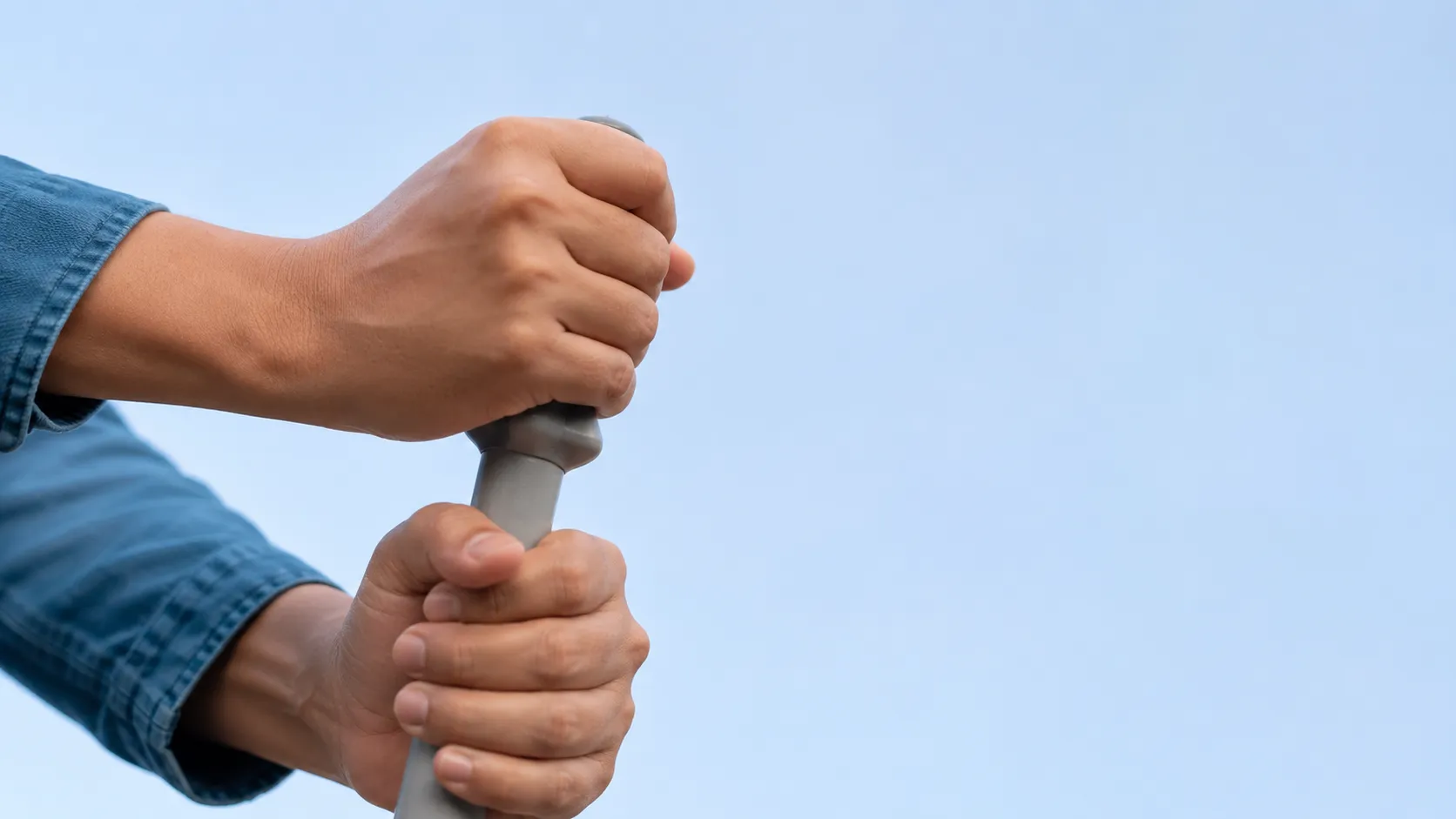
Reducing wrist strain from gripping and tools

Dr Nicola Tik
If your job means gripping tools tightly for long stretches, your wrists carry a hidden workload. Every hard squeeze runs through the tendons that cross the wrist, and hours of it leaves them sore, stiff or weak. It is easy to assume it is just part of the job, but a lot of that strain comes down to gripping harder than you need, and tools that fight your hand rather than fit it. Small changes to both can give your wrists a much easier time.
Most of us grip far tighter than the task actually needs, often out of habit or when we are rushing. Every extra bit of squeeze loads the wrist tendons harder. Using just enough force to control the tool, and easing off between efforts, gives those tendons regular breaks instead of a constant pull. It is worth checking in with your hands now and then, if your knuckles are white or your forearm is rock hard, you are probably gripping harder than the job requires.
Your wrist copes with force best when it is straight, lined up with your forearm. Working with it bent forward, back or off to the side while gripping hard is what tends to irritate it most. Positioning yourself, or the work, so your wrist stays roughly straight as you grip takes a lot of strain off. Sometimes turning the job, moving your feet, or changing how you hold the tool is all it takes to bring the wrist back into that stronger, straighter line.
A tool that suits your hand does some of the work for you. Handles that are neither too fat nor too thin, with a bit of cushioning and a shape that lets your wrist stay straight, cut down how hard you have to grip. Tools that are sharp, well maintained and right for the job need far less force than blunt or worn ones. Where a task is heavy or repetitive, a powered or spring-loaded tool can take the strain off your hand entirely. It is worth trying a few to find what feels right.
Your wrist is the end of a chain that runs up through your elbow and shoulder. When your grip is strong and your wrist straight, the bigger muscles of your forearm and upper arm can share the effort rather than leaving it all at the wrist. Bracing forceful tasks closer to your body, and using both hands where you can, spreads the work up the arm. The more the whole arm helps, the less any one spot has to take.
If your wrists are sore after a day of gripping, gentle movement and a little rest usually help. Slow wrist circles, opening and closing your hands, or a little warmth often take the edge off. Going easy on other heavy gripping tasks that evening gives the tendons a chance to recover. What helps varies from person to person, so it is worth finding what settles yours.
If you would like to try a guided wrist and forearm stretch, VIDA has a short video you can follow at your own pace.