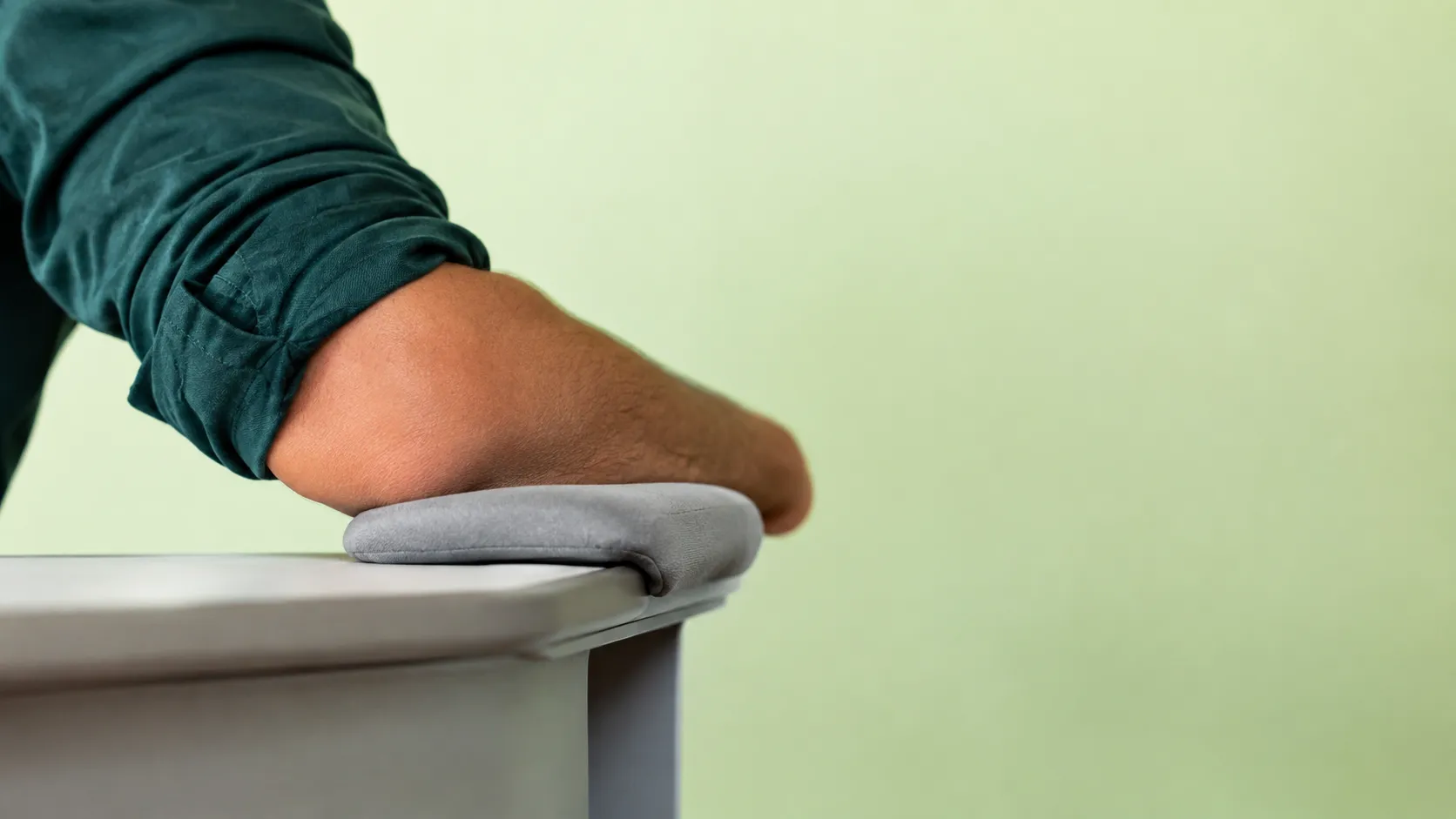
Protecting your body from pressure and hard edges

Dr Nicola Tik
Some aches do not come from lifting or reaching at all. They come from pressing part of your body against something hard for long enough that it starts to hurt, kneeling on a concrete floor, a bench edge against a forearm, a tool handle digging into your palm. A bit of padding and a few habits usually sort it.
Contact pressure is simply the strain of pressing part of your body against a hard or sharp surface. Just under your skin sit nerves, blood vessels and soft tissue, and squashing them against something firm for a long time is what causes the soreness, tenderness or pins and needles. It is not a deep injury, it is the tissue in that spot being pressed too hard for too long. Once you spot where it is happening, it is usually very fixable.
Hard floors and sharp edges are the usual culprits, and the simplest fix is to put something soft between you and them. Kneeling pads or knee protection make a big difference for floor work, and a folded cloth or mat can soften a bench edge you lean on. Rounding off or padding sharp corners you catch often, where that is possible, takes the bite out of them. The aim is to spread the pressure over a wider, softer area rather than one hard line.
A handle that digs into your palm or fingers concentrates all the force onto a small patch of your hand. Tools with broader, cushioned handles spread that load out and are much kinder over a long task. Padded gloves can help where the tool itself cannot be changed. Checking that a handle is not pressing into the base of your palm, where important nerves and vessels run, is worth doing for anything you hold for hours. Comfortable handles mean comfortable hands at the end of the day.
Even with padding, staying pressed on the same spot for hours will tell eventually. Changing position regularly, shifting your weight, standing up from kneeling now and then, or swapping which arm you lean on, gives each spot a break. Building small movements into the task means no single patch takes the pressure the whole time. Little and often, just like with so much of this, keeps the sore spots from developing in the first place.
If a spot is sore or tender after pressing on it, taking the pressure off it and gentle movement usually help it settle. A little warmth and keeping the area moving can ease it. If it has gone numb or tingly, it often settles once the pressure is relieved and the blood flows back. What helps varies from person to person, so it is worth noticing what eases yours and adding a bit more padding next time.