Protecting your back from sudden or high-force efforts

Dr Nicola Tik
It is often not the steady, heavy jobs that catch a back out, but the sudden ones, yanking a stuck pallet free, catching a load that slips, wrenching a stubborn bolt. In that split second, the back goes from relaxed to full effort with no warning, and that jolt is where it can get overloaded. A few habits make those moments much safer when they come.
Your back copes well with force it is ready for, and less well with force that arrives suddenly. When you brace and prepare, the muscles around your spine switch on to support it. When a load jerks unexpectedly, or you throw everything into a sudden heave, that support has not had a chance to kick in. It is the surprise and the sharpness, as much as the weight, that tends to cause the problem. Knowing that, the aim is to take the surprise out where you can.
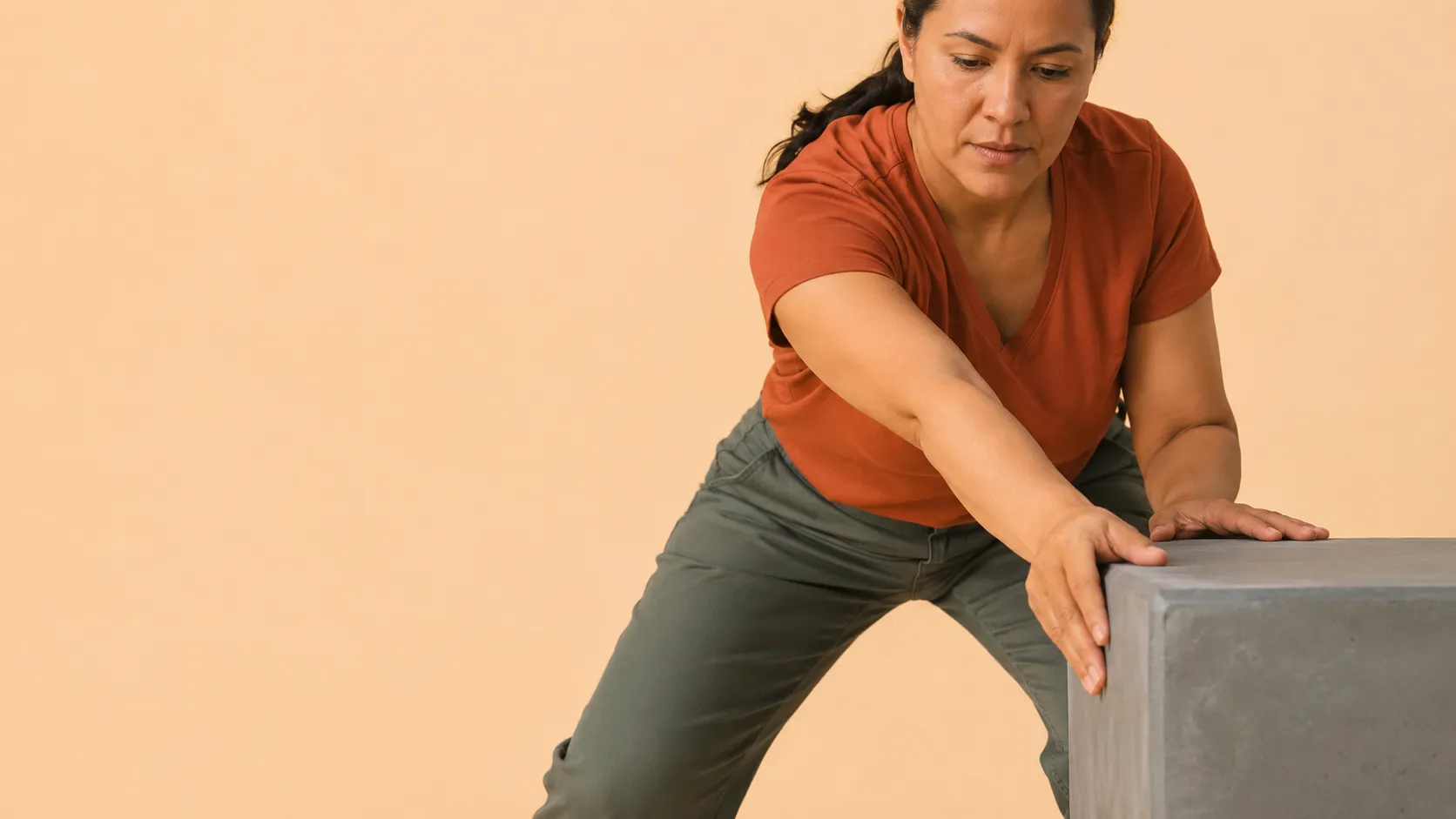
A moment of readiness makes a real difference. Before a big effort, setting your feet, getting close, and gently tightening the muscles around your middle, as if bracing for a nudge, gives your spine support before the load arrives. Taking a breath and applying the force steadily, rather than exploding into it, keeps everything in control. It only takes a second, and it turns a risky sudden heave into a prepared, supported effort.
A lot of sudden strains happen because a load was heavier or more stuck than expected. Giving something a gentle test first, a small pull or push to feel how it moves, tells you what you are dealing with before you commit everything to it. If it is stuck fast, working out why, freeing it, or getting help or a tool beats yanking harder and hoping. Never fully committing your back to a load you have not sized up is a good rule of thumb.
The way force is applied matters as much as how much. A steady, building effort lets your body adjust and share the load, while a sharp jerk dumps it all at once. Keeping movements smooth, whether pulling, pushing or lifting, keeps the back in control throughout. If something suddenly gives way, letting it go rather than fighting to hold it is usually safer for your back than trying to save it. A load is replaceable in a way your back is not.
If your back feels it after a big or sudden effort, gentle movement usually helps it settle more than resting up completely. A short walk, easing your back through a comfortable range, or a little warmth often take the edge off. Staying gently active over the next day or two tends to help more than stiffening up. What works varies from person to person, so it is worth seeing what settles yours.
If you would like to try a guided back stretch, VIDA has a short video you can follow at your own pace.