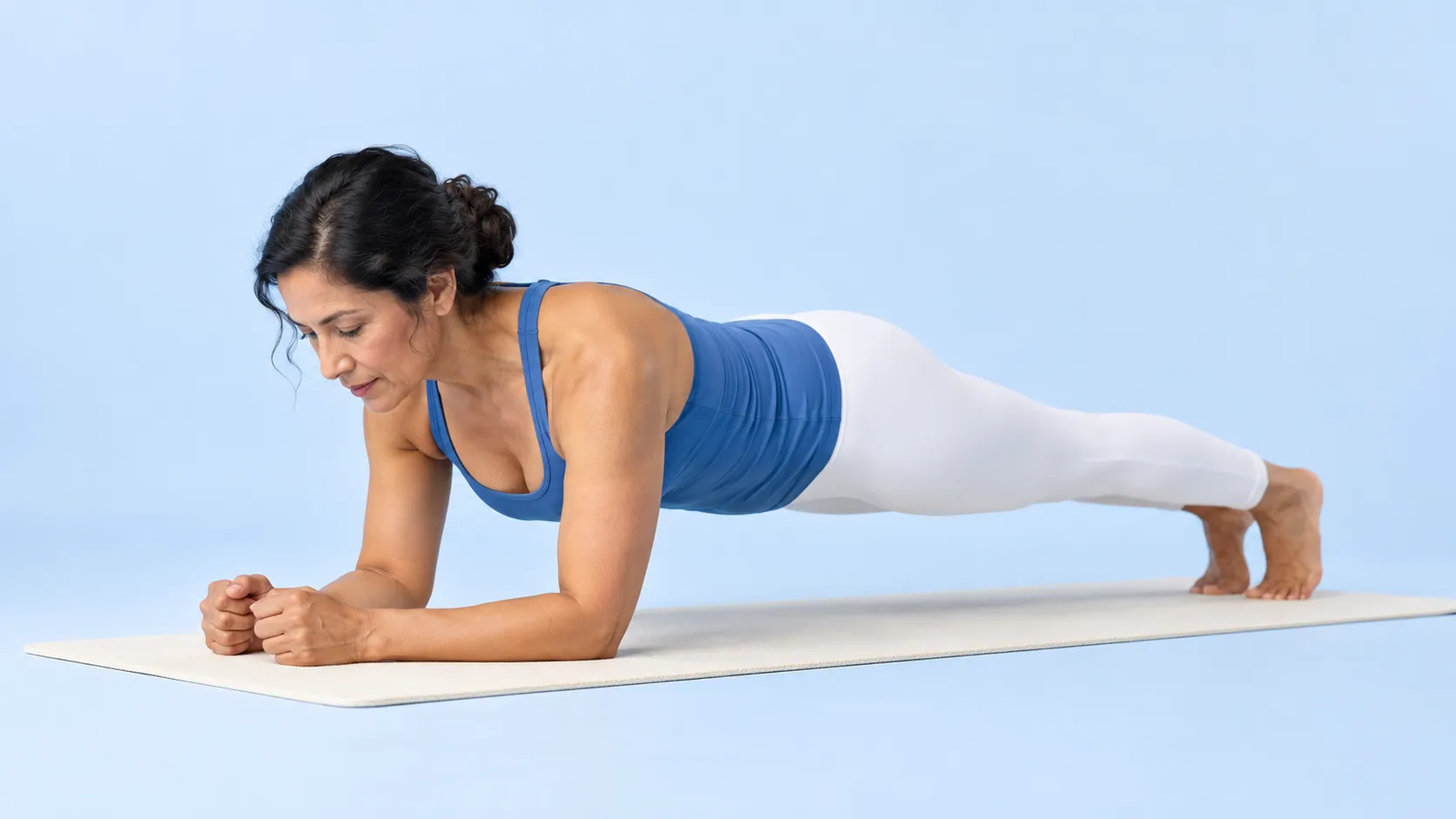
Goal: Hold a steady plank
Planking without straining your neck

Dr Nicola Tik
Halfway through a forearm plank, you notice your neck is tense, and you’re either craning to look ahead or letting your head drop towards the floor. When your neck already aches, this can make the hold feel harder than it needs to be. Your neck has a simple job in a plank: staying in line.
In a forearm plank, your head is part of the straight line from your head to your heels. If you look ahead, your neck bends back. If your head drops, your neck bends forward. Both can add tension when your neck is sore.
You could try:
It’s natural to want to look up at the screen. You could watch the video through once first, or place your screen on the floor in front of you so you can glance at it without lifting your head.
Many people hold their breath during a plank, which can tense the neck and shoulders. Breathing slowly and steadily can help your neck feel more relaxed.
The forearm plank on your knees is a good option on days your neck feels sore. It’s easier to hold, so your neck and shoulders are less likely to tense up.
Stopping when you notice your neck tensing keeps your plank comfortable. A good plank comes before a long one.
During your goal video, check where you’re looking. Try keeping your gaze on the floor just in front of your hands for each hold.