Goal: Hold a steady plank
Planking when your shoulders ache

Dr Nicola Tik
In a forearm plank, a lot of your weight rests on your shoulders. When they already ache, holding that position can feel like the hardest part. A few small changes can make planking feel kinder on your shoulders while you keep building strength.
Your shoulders support your upper body as you hold the plank. The muscles around your shoulder blades help keep your shoulders steady and your chest from sinking towards the floor.
When those muscles are tired or your shoulders are sore, you may feel your chest dropping and your shoulders creeping up towards your ears.
Pressing your forearms gently into the floor, as if pushing it away, helps your shoulder blades do their job. Your upper back stays slightly lifted, and the load spreads more evenly. You could also try:
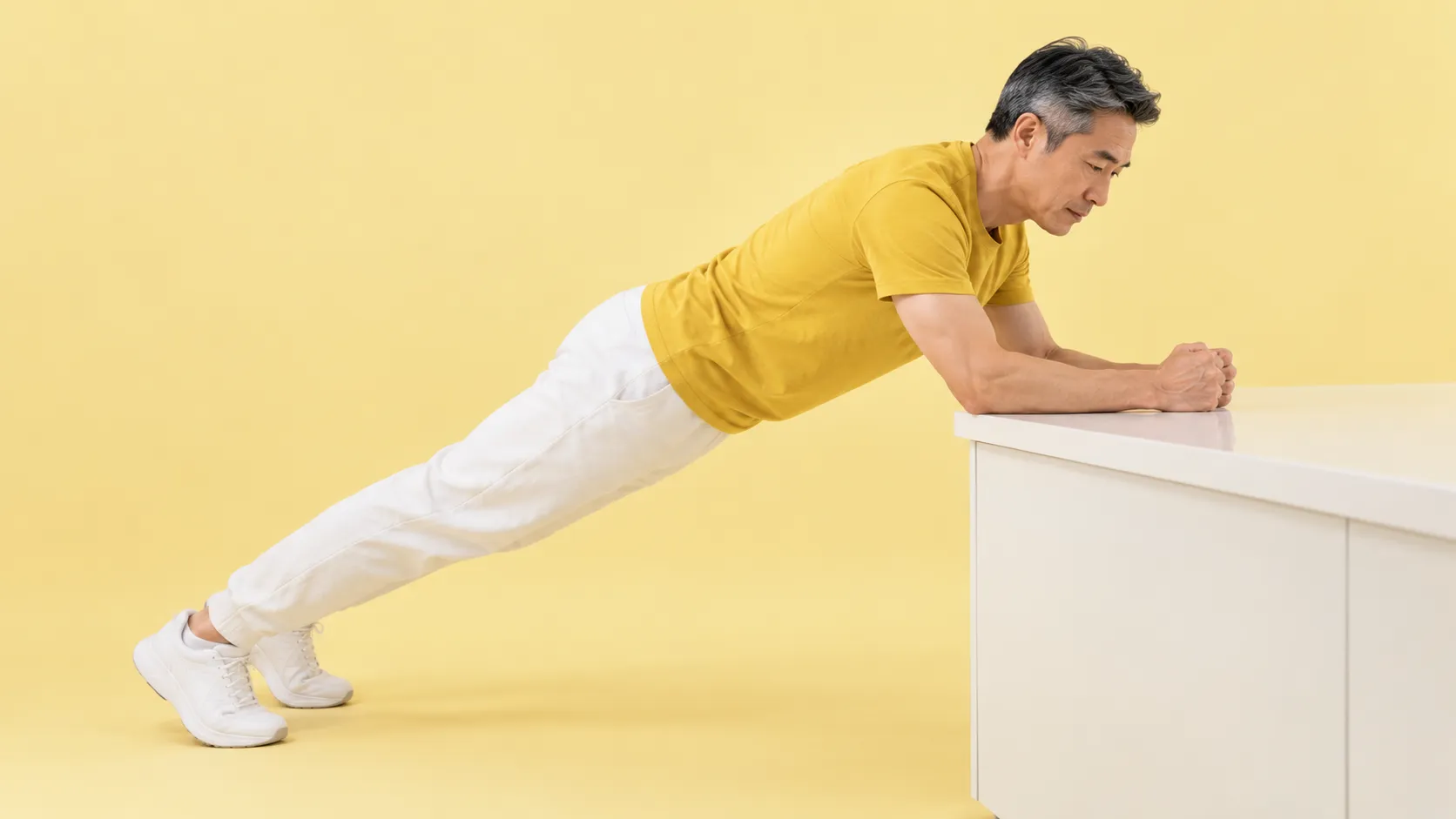
If the floor plank feels too much, an elevated forearm plank takes some weight off your shoulders. Rest your forearms on a sturdy table, kitchen worktop or the seat of a solid chair, and walk your feet back until your body forms a straight line. The higher the surface, the lighter it feels.
The forearm plank on your knees is another option. It reduces the load on your shoulders while still working your trunk.
Shoulders often respond well to gradual increases in load. You could start with shorter holds on a higher surface, then lower the surface or lengthen the hold as your shoulders feel more comfortable. A mild ache that settles within a day is usually fine.
Stronger shoulder muscles can make planks feel steadier over time. Exercise is a key part of managing shoulder pain for many people.
Try an elevated forearm plank on a kitchen worktop, pressing it away gently, for three short holds.