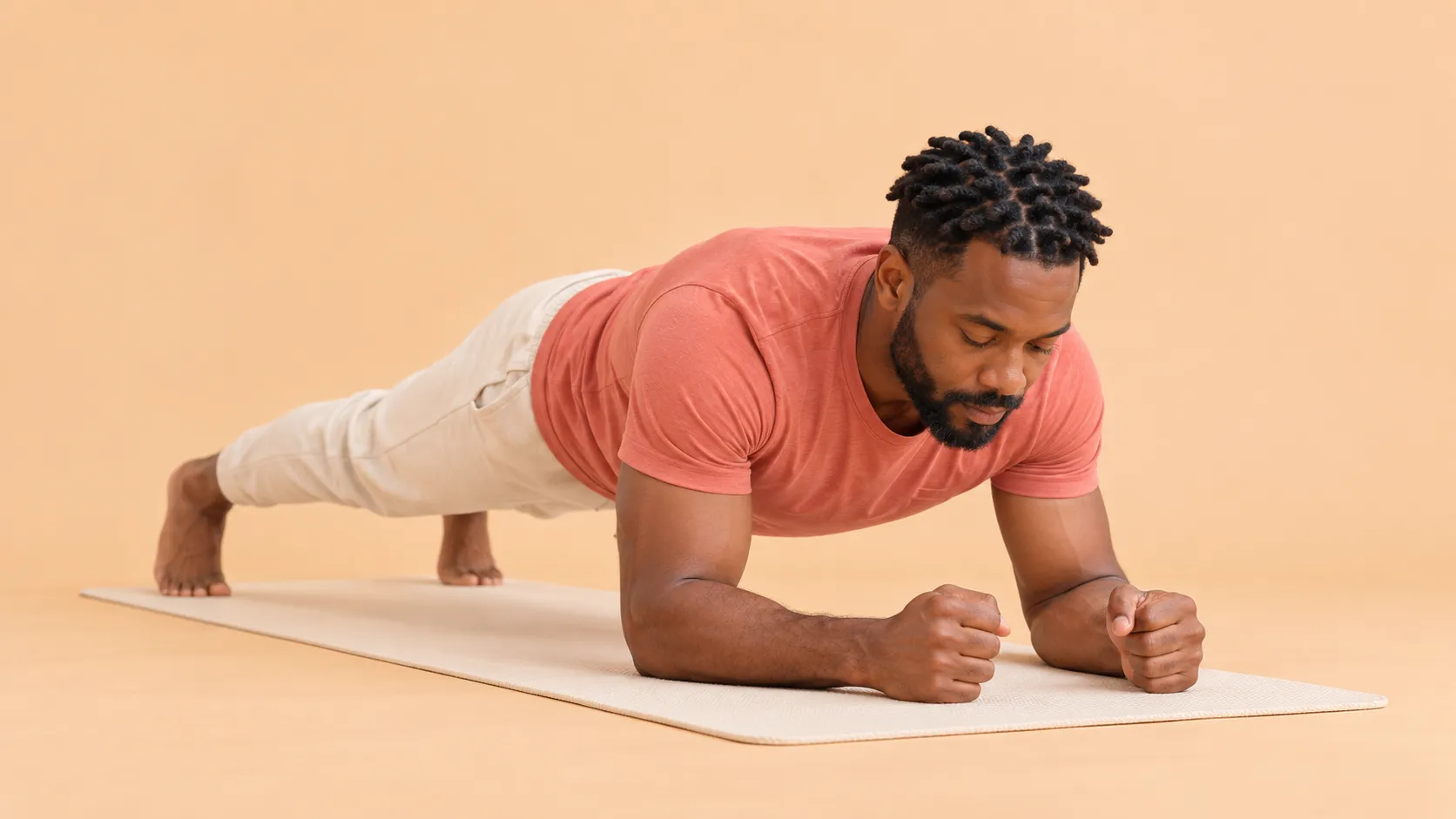
Goal: Hold a steady plank
Planking when your hips ache

Dr Nicola Tik
When your hips ache, holding them steady in a forearm plank can feel harder than it looks. Your hips sit right in the middle of the straight line a plank asks for. A few changes can help you hold that line more comfortably.
In a forearm plank, the muscles at the front of your hips and your bottom muscles work together to keep your hips level. If your hips drop, your lower back takes more load. If they lift too high, the front of your hips works harder.
You could try:
The forearm plank on your knees shortens the lever, so it’s less work for your hips. When the knee version feels steady, you can move onto your toes.
An elevated forearm plank, with your forearms on a sturdy table or worktop, reduces the load overall. This may help if the floor version feels too much on your hips.
Exercise is commonly recommended for long-standing hip pain. Building strength in your bottom and hip muscles can help your hips feel steadier in everyday life and during your plank.
A few shorter holds with rests in between are often kinder to sore hips than one long hold. Stop when your hips start to drop or lift.
Try your forearm plank with your feet a little wider than usual, gently squeezing your bottom, and notice if your hips feel steadier.