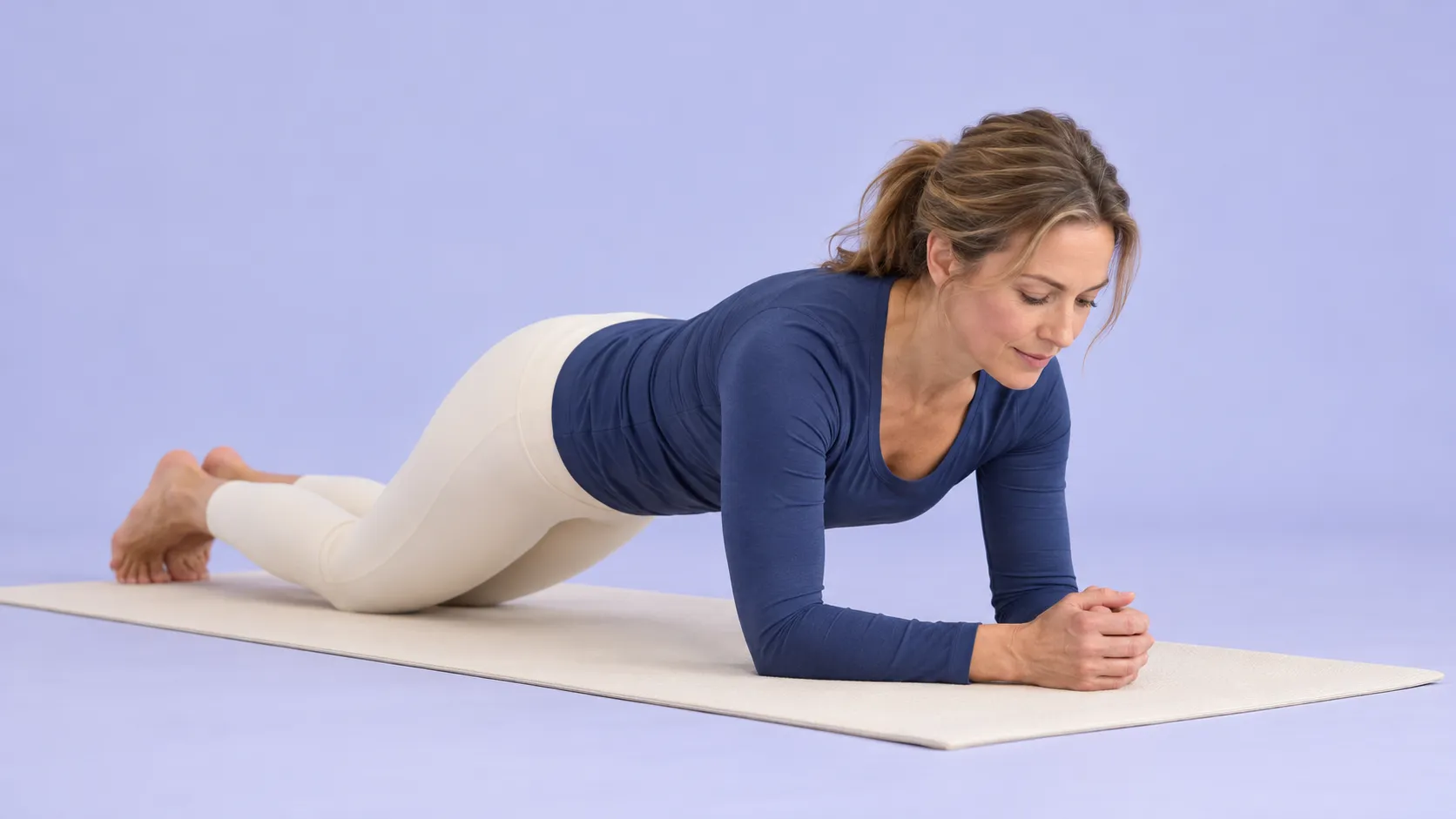
Goal: Hold a steady plank
Planking comfortably when your lower back aches

Dr Nicola Tik
You lower onto your forearms, lift up, and within a few seconds your lower back starts to complain. When your back already aches, it’s easy to decide planks aren’t for you. With a few changes to your position and how long you hold, many people find the forearm plank becomes a comfortable way to build strength around their back.
In a forearm plank, your trunk muscles work together to hold your body in a straight line. If your hips start to sag, your lower back arches and takes more of the load. That’s often when people feel it.
The aim isn’t to avoid the feeling completely, but to hold a position where your trunk muscles do the work rather than your lower back.
You could try:
Squeezing your bottom is one of the most useful cues for a sore back. Many people notice their lower back feels easier straight away.
The forearm plank on your knees is a good place to start when your back aches. It takes some of the load off while your trunk muscles still work. You can move onto your toes when the knee version feels steady and comfortable.
A few shorter holds with rests in between are often kinder to a sore back than one long hold. Stopping as soon as your hips start to drop keeps the work in the right place. A good plank comes before a long one.
Exercise is recommended for lower back pain, and trunk strengthening is one of several types that can help. Research suggests no single type of exercise is clearly better than the others, so the best one is the one you enjoy and keep doing. Planks can be part of that mix.
Holding your breath can make your trunk feel more rigid and your back more tense. Breathing slowly and steadily through the hold can help your back feel more comfortable.
Before each goal video, try three short forearm planks on your knees, gently squeezing your bottom and stopping as soon as your hips start to drop.