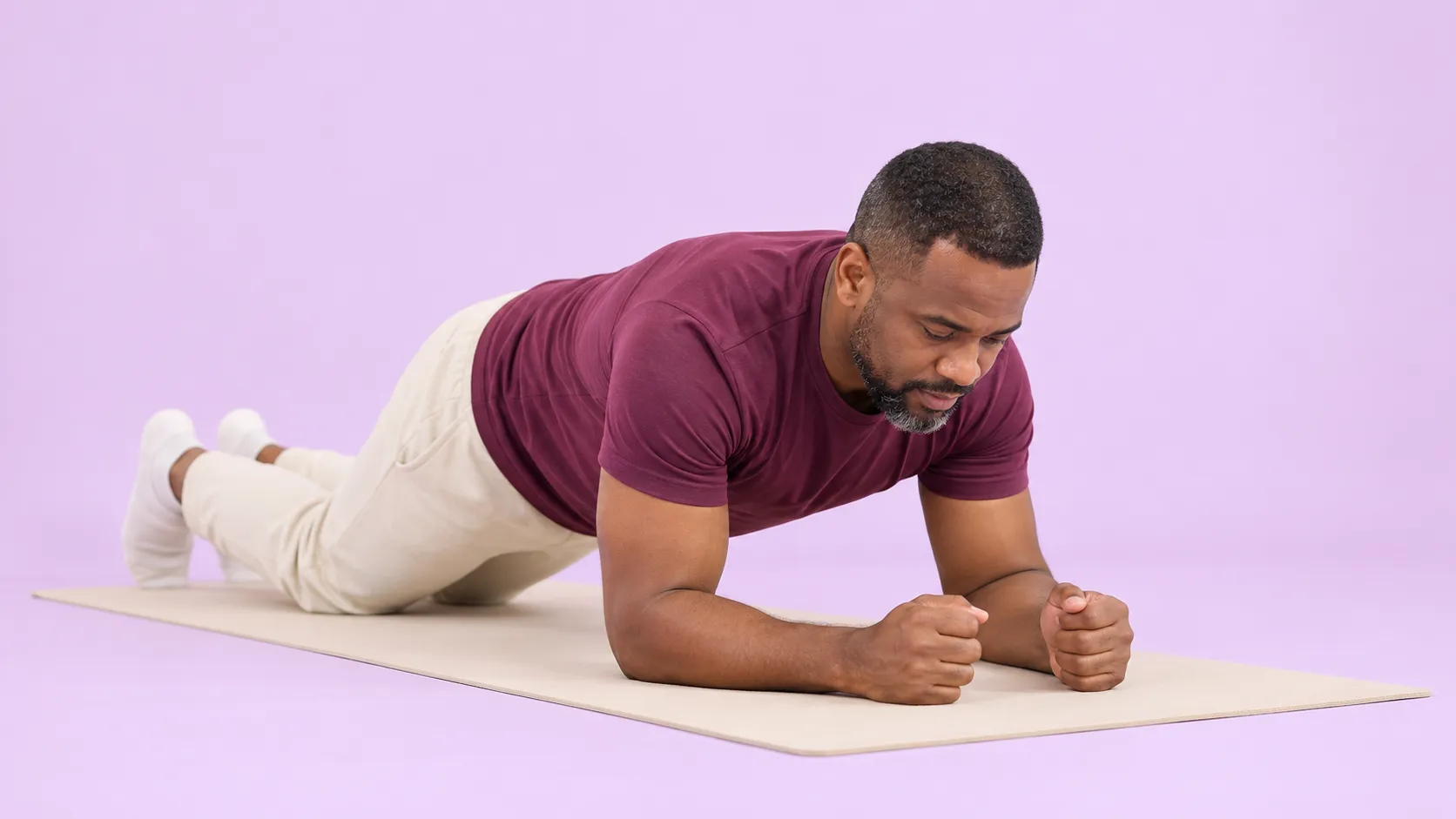
Goal: Hold a steady plank
Planking after a short night

Dr Nicola Tik
After a short night, everything can feel like more effort, and your plank might not last as long as usual. This is common, and it doesn’t mean you’ve lost strength.
Research suggests that losing sleep can reduce how long people can keep going during exercise and make effort feel harder. Your muscles haven’t changed overnight, but your body and brain may feel more tired.
On days after poor sleep, you could try:
Keeping your routine going, even at a lighter level, helps your strength keep building.
When you’re tired, your form is more likely to slip. Stopping as soon as your hips drop or lift keeps your plank working well. A good plank comes before a long one.
If you can, doing your weekly check-in on a day you feel rested gives a fairer picture of your progress.
Regular exercise is linked with better sleep. Planking earlier in the day, rather than right before bed, may suit some people better.
Elbows under your shoulders, forearms flat. Press the floor away, gently squeeze your bottom, keep a straight line and breathe steadily.
After a short night, try your goal video using the knee version, focusing on form rather than time.