Outer hip pain and sleeping on your side

Dr Nicola Tik
Rolling onto your side at night and feeling a sharp ache on the outside of your hip. Getting up from a chair, climbing stairs or standing for a while and feeling the same. Outer hip pain, often called trochanteric bursitis, can disrupt your sleep and your day. Understanding it can help you find more comfortable positions and ease the load.
The bony point on the outside of your hip is called the greater trochanter. Several tendons from your buttock muscles attach here, and there is a small cushion, called a bursa, that helps them glide.
The term trochanteric bursitis is often used for pain in this area. Research now suggests that most of the time, the pain mainly comes from the tendons rather than the bursa. That is why it is sometimes also called gluteal tendon pain or greater trochanteric pain.
It is very common, especially in women over 40. It often develops after a change in activity, like more walking or stairs, or with long spells of standing or sitting in certain positions.
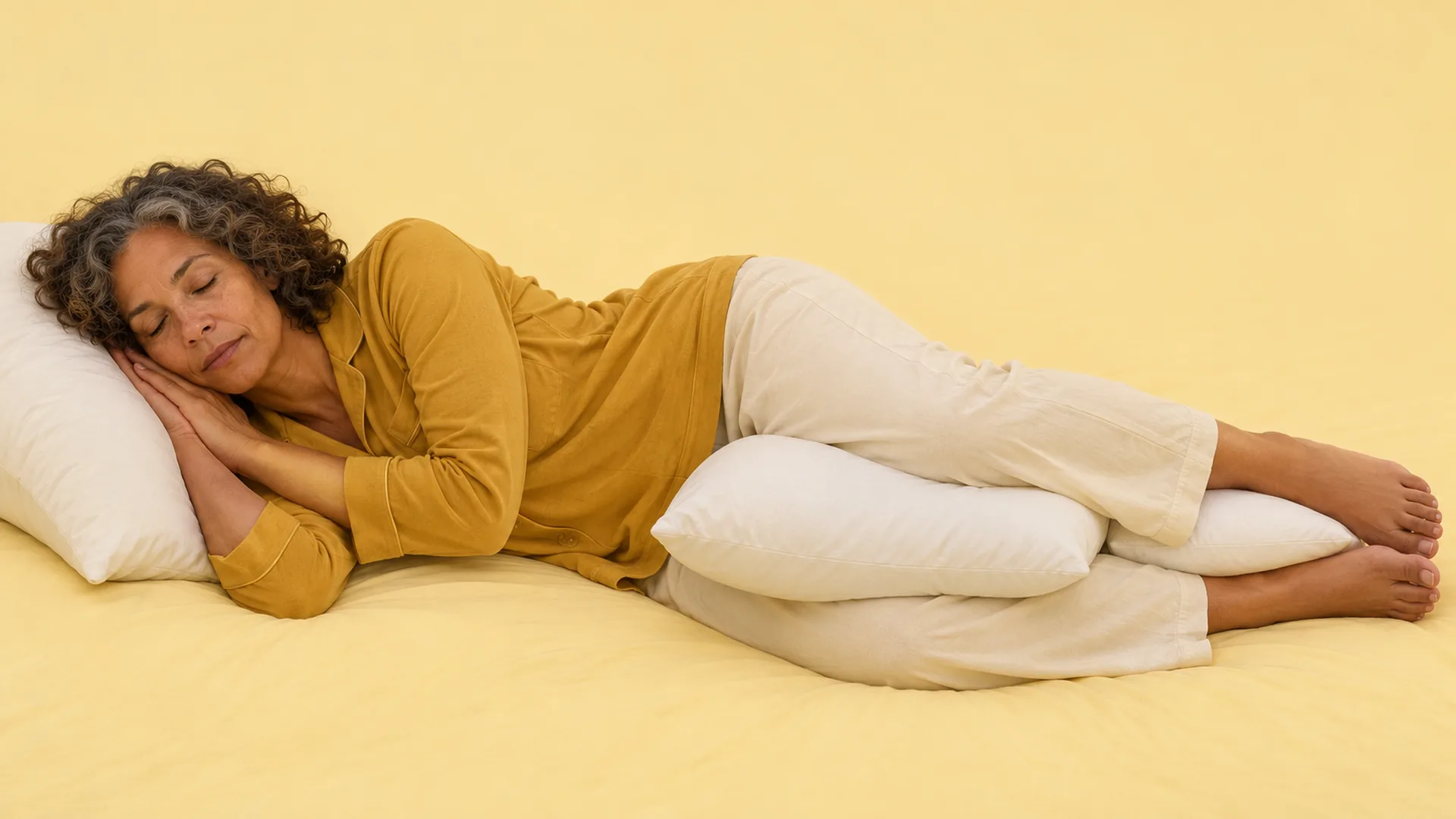
The tendons on the outside of your hip are sensitive to being squashed. Lying on the sore side presses directly on them. Lying on your other side can also hurt if your top leg drops across your body, as this stretches and squeezes the tendons against the bone.
Some changes that can help at night:
Some everyday positions can squash the tendons. Easing them for a while can help them settle:
Feeling tight on the outside of your hip does not mean the tendons need stretching. Gentle strength tends to help more.
Some changes to your daily activity can help:
Strengthening the muscles around your hip helps the tendons cope with more. In a large trial of people with this kind of outer hip pain, those who had education about daily habits plus a gradual strength programme did better than those who had a steroid injection or waited to see.
Something to try three or four times a week:
If you would like to follow along, VIDA has short videos of bridges and sit to stands you can use at your own pace. If you have been given exercises by a physiotherapist, keep following those.
A mild ache that settles by the next day is usually fine. If your hip is sorer the following morning, ease back a little.
If your pain is not easing after several weeks of these changes, your GP or a physiotherapist can talk through other options with you.
Your VIDA pain check-in can help you notice how your hip and sleep improve over time.