Night-time calf discomfort that keeps coming back

Dr Nicola Tik
Some nights it is a tight, nagging ache. Other nights it is a sudden cramp that jolts you awake. When calf discomfort at night keeps coming back, it can start to feel like part of your routine, and you might even go to bed bracing for it. This guide explains why persistent calf pain at night happens, and what can help.
Night-time calf discomfort is very common. Calf cramps alone affect around half of adults at some point. For many people, there is no single clear cause, which can make them feel unpredictable.
A few things seem to make night-time calf discomfort more likely. Your calf often spends the night in a shortened position, with your toes pointed. Long days of sitting mean your calf muscles get little movement. And tired or deconditioned muscles may be more prone to tightness and cramping.
When discomfort keeps coming back, your nervous system can become more sensitive to it, a bit like an alarm that goes off more easily. Poor sleep adds to this sensitivity. Worrying about the next cramp can also make it harder to relax and drift off, which can keep the cycle going.
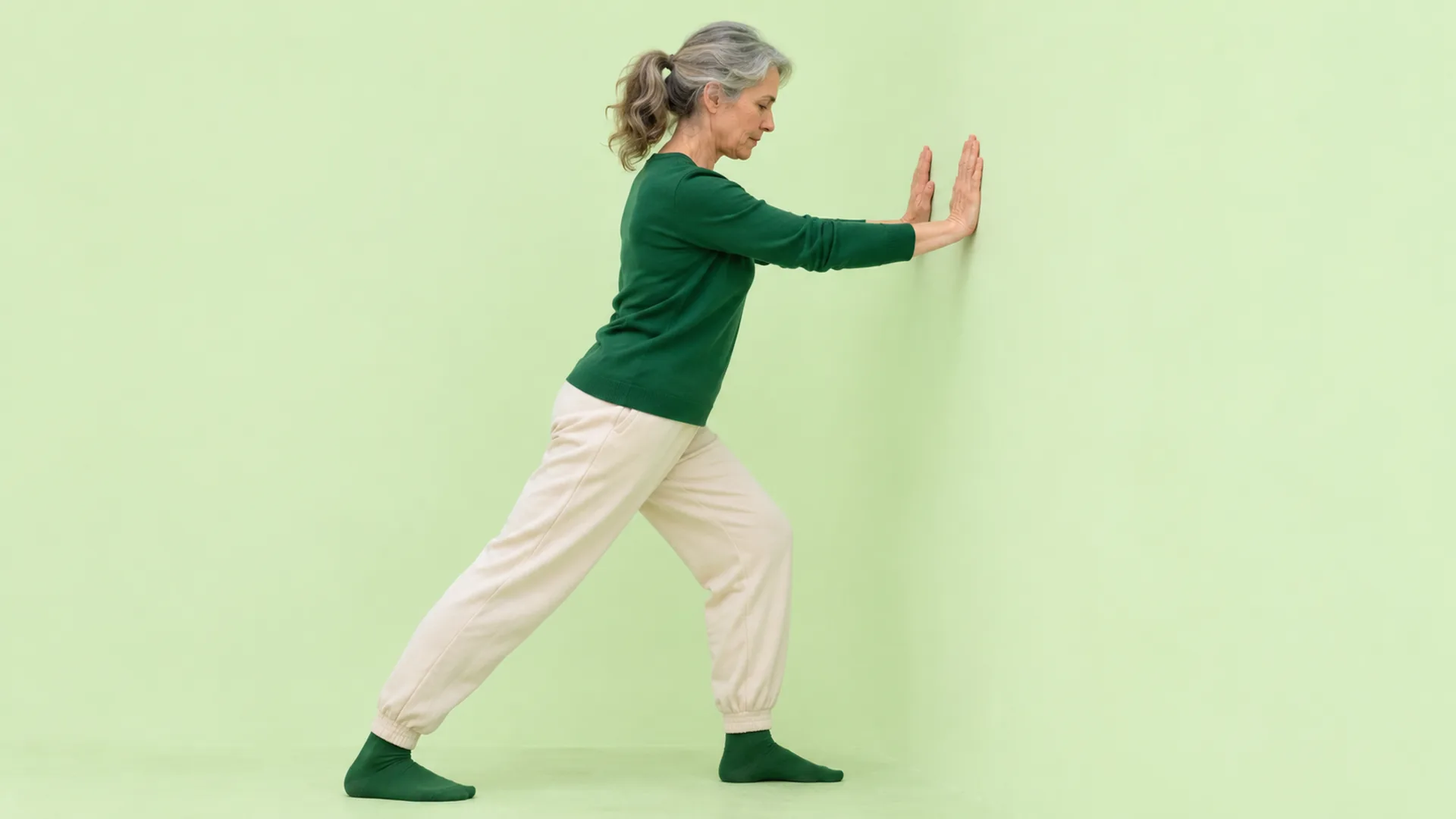
A calf stretch before bed is one of the simplest things to try. In a trial of adults over 55 with night cramps, stretching the calves and the backs of the thighs each night before bed for six weeks reduced how often cramps happened and how strong they felt. Another study didn’t find the same effect, so the evidence is mixed, but it is a simple and low-risk thing to try.
Something to try before bed:
If you would like a guided calf stretch, VIDA has a short video you can follow at your own pace.
Stronger calves may cope better with the demands of the day. Heel raises are a simple way to build calf strength. Rise slowly onto your toes, pause, then lower back down with control. If you would like to follow along, VIDA has short videos of heel raises you can work through at your own pace.
If you sit for long periods at work, getting up regularly to walk around, or doing gentle ankle pumps at your desk, keeps your calves moving through the day.
Some people find a few simple habits reduce how often night-time calf discomfort happens:
If a cramp wakes you, gently stretching the muscle is usually the quickest way to ease it. You could pull your toes up towards your shin, or stand up and put your weight through your leg with your heel down. Walking around for a minute can help too. Once it settles, a gentle rub or a warm shower can ease any lingering tightness.
Because night-time calf discomfort can feel unpredictable, it can help to notice what tends to come before it. For example, you might notice it after long days of sitting, after more exercise than usual, or after a late coffee. Your VIDA pain check-in is a good way to keep track of how things are shifting over time.