New lower back pain around menopause

Dr Nicola Tik
Your lower back has started to ache, perhaps after a long day at your desk, a bit of gardening or for no clear reason at all. Around menopause, it can be easy to wonder whether this is just how things are now. The encouraging news is that new back pain usually settles well, and gentle movement and strength can help it on its way.
Aches and pains often become more noticeable around menopause. A large review of research found that muscle and joint aches were reported by around four in ten women before menopause, rising to nearly six in ten during and after it. A long-term study of women in midlife also found back pain became more common through the menopause transition.
So if your back has started to complain in your 40s or 50s, you are in very good company.
Oestrogen supports muscle, tendon and ligament health, and helps keep inflammation in check. As levels fall, the muscles that support your spine may lose some strength more easily, and tissues can feel stiffer. Broken sleep from night sweats can also make your nervous system more sensitive to pain, so the same back can feel sorer after a rough night.
None of this means your back is fragile. Your spine is strong, and it responds well to being used.
Most new lower back pain improves well. A large review found that people with recent back pain improved markedly within the first six weeks, with the biggest changes early on. Staying gently active tends to help this process more than resting in bed.
It is natural to want to protect a sore back by keeping still, but your back usually feels better for being used. Moving within a comfortable range, and doing a little more each day, helps it settle.
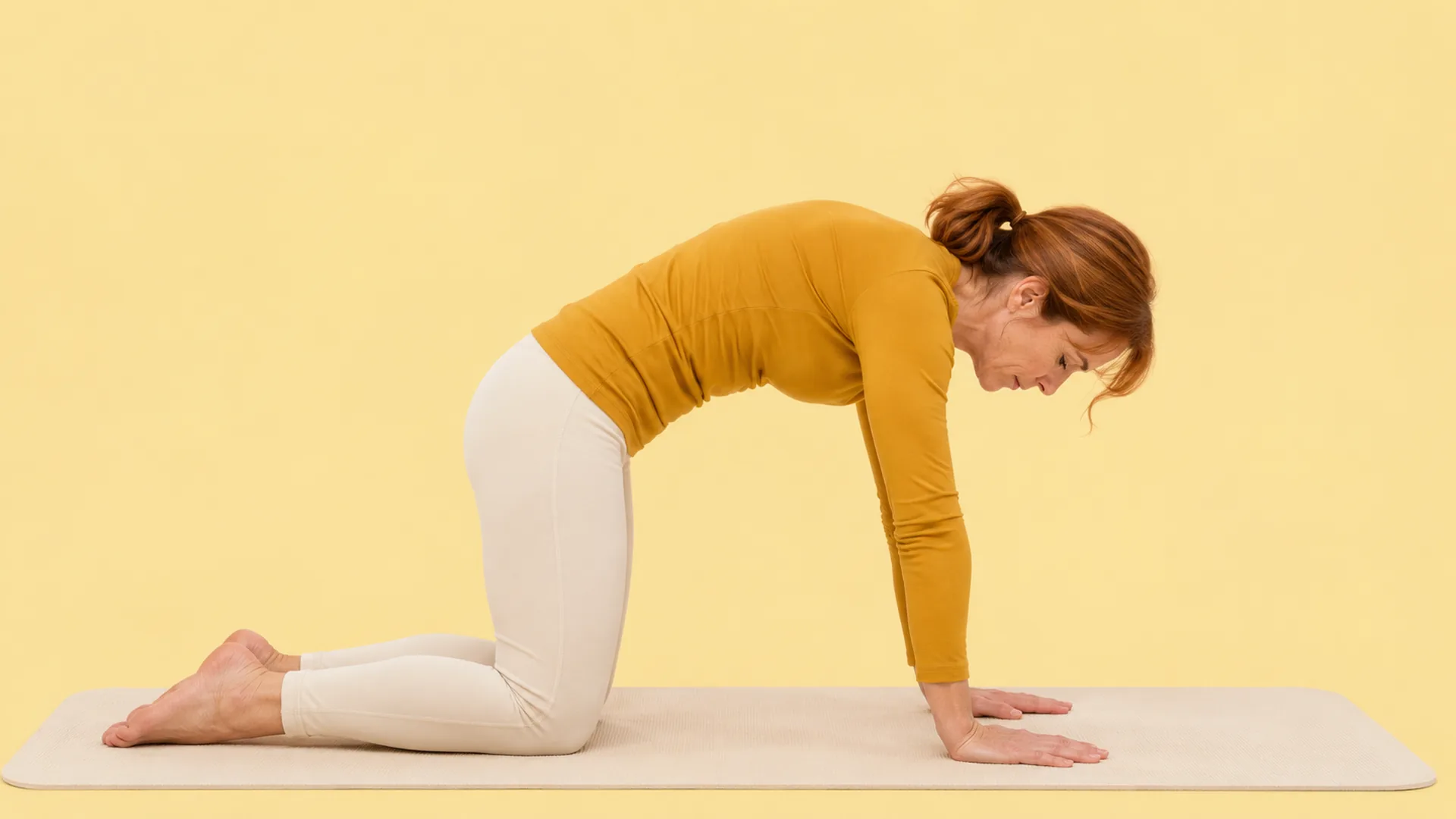
Movement helps your back muscles relax and keeps the joints of your spine moving. Some options to try, within a comfortable range:
If you would like a guided stretch, VIDA has short videos you can follow at your own pace.
As your back starts to feel easier, gentle strength work can help it feel more supported. This matters more in midlife, as muscle tends to decline more quickly and stronger muscles help share the load on your spine.
Something to try two or three times a week:
If you would like to follow along, VIDA has short videos of bridges and sit to stands you can work through at your own pace. A few repetitions of each is a good start.
A few small habits can make your back more comfortable while it settles:
Your VIDA pain check-in is a good way to keep track of how your back is shifting over time.