Neck pain in pregnancy and getting comfortable again

Dr Nicola Tik
The pillow that used to feel right suddenly does not, and a morning at the laptop leaves your neck aching. Pregnancy changes how you sleep, sit and carry yourself, often before you have had time to find a new routine. A few small adjustments can help your neck feel better supported.
As your bump grows and your breasts change, the way your body is balanced shifts. Your upper back and shoulders may round forward a little more, and your neck works harder to hold your head up. Broken sleep, finding a comfortable position at night and tiredness can all make your muscles feel tighter, too.
None of this means anything is wrong. It usually means your set-up and routine need to catch up with the changes in your body.
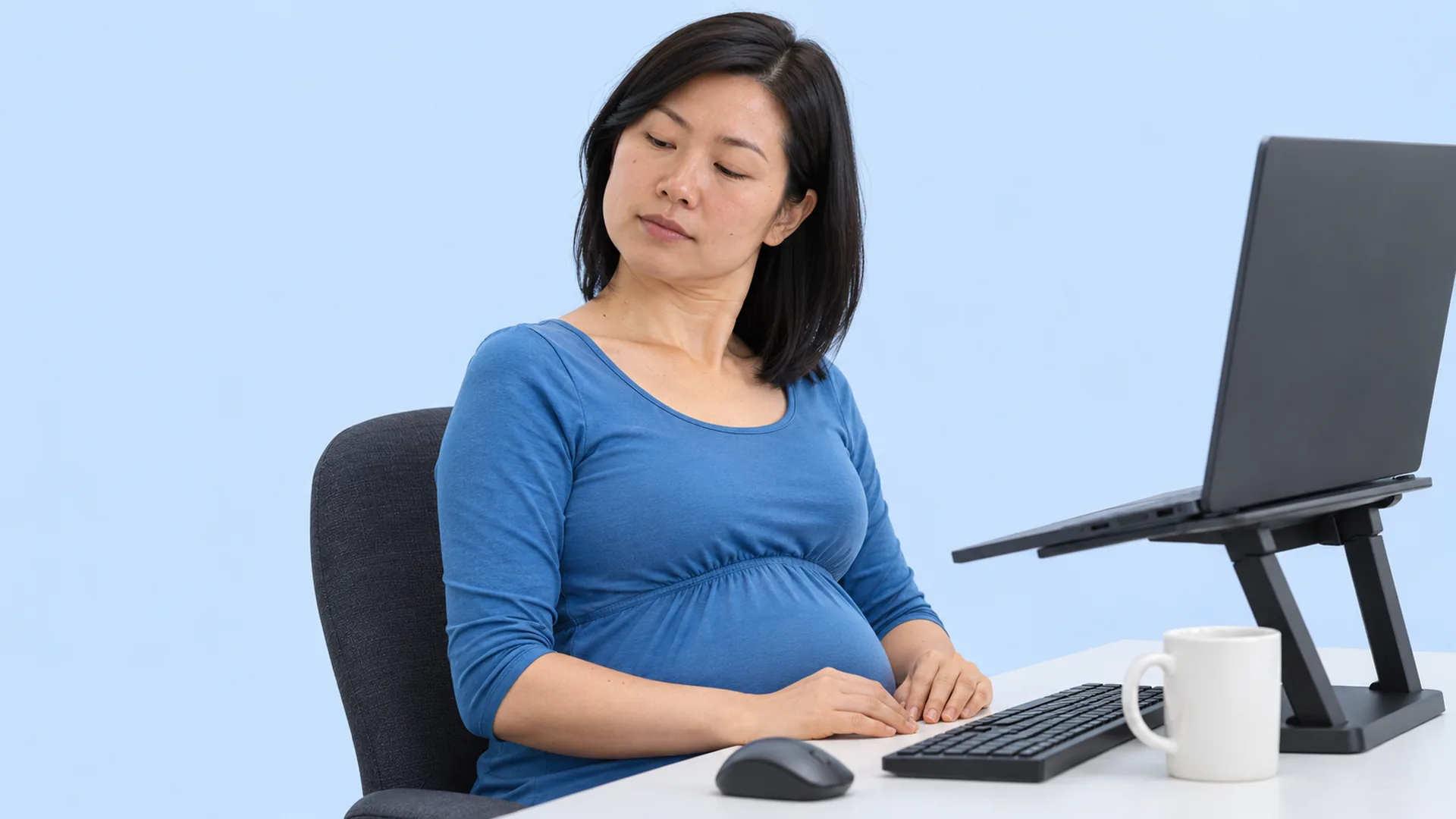
Start with the task you spend most time on. If you work at a laptop, raising the screen so the top is around eye level means you do not have to keep dropping your head to read it. Increasing the text size can also stop you leaning forward.
If you raise a laptop, a separate keyboard and mouse let your arms stay comfortable. Keep them close enough that you can rest your forearms without reaching around your bump.
As pregnancy goes on, you may want more room between your chair and desk. You could adjust your equipment to come to you, rather than stretching forward to reach it.
When lying on your side, aim for your head to rest roughly in line with your spine. A pillow that is too high pushes your head up, and one that is too low lets it dip towards the mattress. Adjusting one pillow often works better than stacking several. Hugging another pillow in front of you can support your upper arm, so your shoulders can relax.
From 28 weeks, settle to sleep on your side for nights and naps. Either side is fine, and if you wake on your back, simply turn back onto your side.
Your neck likes to move, and short breaks often help more than finding one perfect position. After a call or a spell of reading, you could try:
Keep each movement slow and comfortable. If one brings on pain, make it smaller or leave it out. If you would like a guided stretch, VIDA has short videos you can follow at your own pace. VIDA’s Pomodoro stretches, in the top right corner, can remind you to pause during focused work.
Linking a movement break to something you already do, like making a drink, can help it become a habit.
Tiredness and the mental load of pregnancy can show up as tension in your neck and jaw without you noticing. A quick check a few times a day can help. Are your shoulders creeping up? Is your jaw clenched? Let your shoulders drop, rest your teeth slightly apart and take a few slow breaths, letting your ribs widen as you breathe in.
Reading or scrolling with your phone in your lap keeps your neck bent for long spells. You could try holding the screen higher with your elbows supported on cushions, or giving yourself a break from it. A supportive bra can also make a difference as your breasts change, as it takes some of the weight off your upper back and shoulders.
Your VIDA pain check-in can help you notice whether a different pillow or screen set-up is making mornings or workdays easier. Changing one thing at a time makes it easier to tell what helps.