Neck comfort and your head restraint

Dr Nicola Tik
By the end of a long drive your neck can feel stiff at the base of the skull, as if it has been holding your head up the whole way. Often the head restraint behind you is part of it, and a minute spent adjusting it can make a real difference.
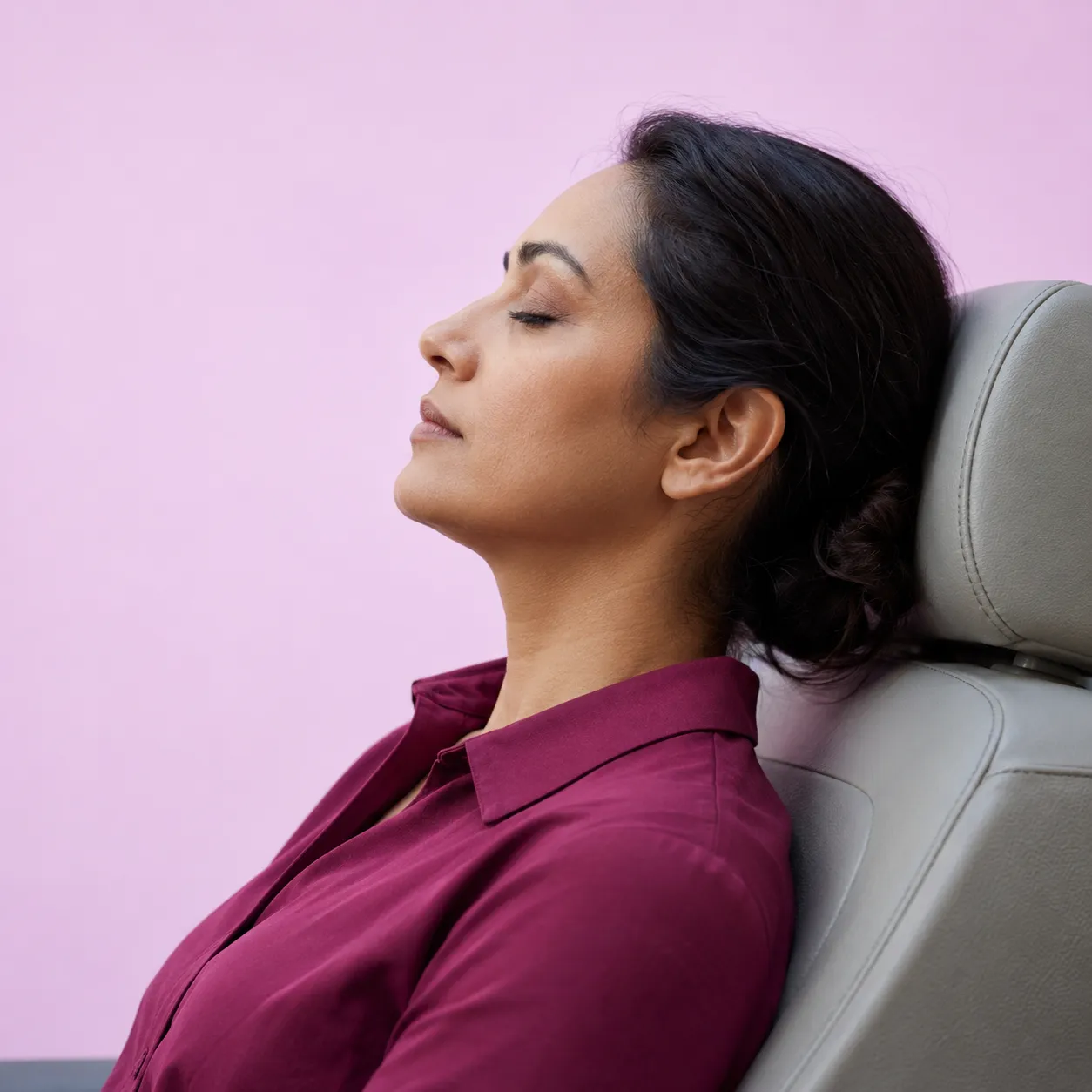
The head restraint does its best work when the top of it lines up with the top of your head, or at least with the top of your ears. Set too low, it sits behind your neck rather than your head, which gives you nothing to rest against and, in a knock, far less protection. Take a moment before you set off to raise it so the middle of it meets the back of your head. It is a quick change that most people never make, and your neck feels the benefit.
Even at the right height, a head restraint that sits a long way back leaves your head drifting forward to fill the space. That forward-head position is one of the most common reasons the neck tires on a drive. Where your restraint adjusts for distance, bring it in so there is only a small gap, roughly a few centimetres, between it and the back of your head. Your head then has somewhere to rest, and your neck muscles can ease off instead of holding on.
Mirrors set slightly wrong nudge you into leaning and twisting your neck all journey to see around blind spots. Take a moment to set them wide enough that you catch the lanes beside you with a small glance rather than a full turn. Some people find setting the mirrors while sitting nice and tall helps, so that if you catch yourself slumping later, the mirrors gently remind you to sit up again. The less craning you do, the calmer your neck stays.
Checking junctions, reversing and glancing over your shoulder all ask a lot of the neck if you lead with your head alone. Turning from a little further down, letting your upper back and shoulders join in the twist, shares the movement out instead of loading it all on the neck. Keeping the movements smooth and unhurried helps too. Your neck is built to move, so the aim is easy, shared movement rather than sharp, head-only turns.
If your neck is stiff once you are out of the car, gentle movement usually settles it better than keeping it still. Slow turns side to side, easy shoulder rolls, or a little warmth across the neck help many people. Keeping the movements small and comfortable, rather than forcing the range, tends to work best. What helps varies from person to person, so it is worth finding what eases yours.
If you would like to try a guided neck stretch, VIDA has a short video you can follow at your own pace.