Neck and shoulder tension around your period

Dr Nicola Tik
Your neck feels tight, your shoulders are up around your ears and you seem to have a headache brewing, and then you realise your period is due. Many people notice their body feels different at certain points in their cycle, and neck and shoulder tension is a common part of that. Understanding why can help you plan ahead and ease it.
Hormone levels change throughout your menstrual cycle, and in the days before and during your period, several things shift at once.
Prostaglandins, natural chemicals released around your period, help the womb contract. They also make nerves more sensitive, which can make aches elsewhere in the body feel stronger. Changes in oestrogen and progesterone can affect how your body processes pain too, so you may feel more sensitive to discomfort than at other times.
Sleep often changes around your period, with cramps, hot flushes or simply restlessness getting in the way. Mood can shift as well, and feeling more stressed or low tends to show up as tension in the neck and shoulders. Some people also notice tension headaches or a stiff jaw around this time, which often go hand in hand with a tight neck.
It can help to notice when tension tends to build. For some people, it starts a few days before their period. For others, it peaks on the first day or two. Your VIDA pain check-in, alongside a period tracker, can help you spot your own pattern.
Knowing your pattern means you can plan, like keeping a lighter diary on harder days or making extra time for the things that help.
Small resets through the day can stop tension building:
If you would like to follow along, VIDA has short videos of shoulder squeezes and guided neck stretches you can use at your own pace. VIDA’s Pomodoro stretches, in the top right corner, can remind you to pause during focused work.
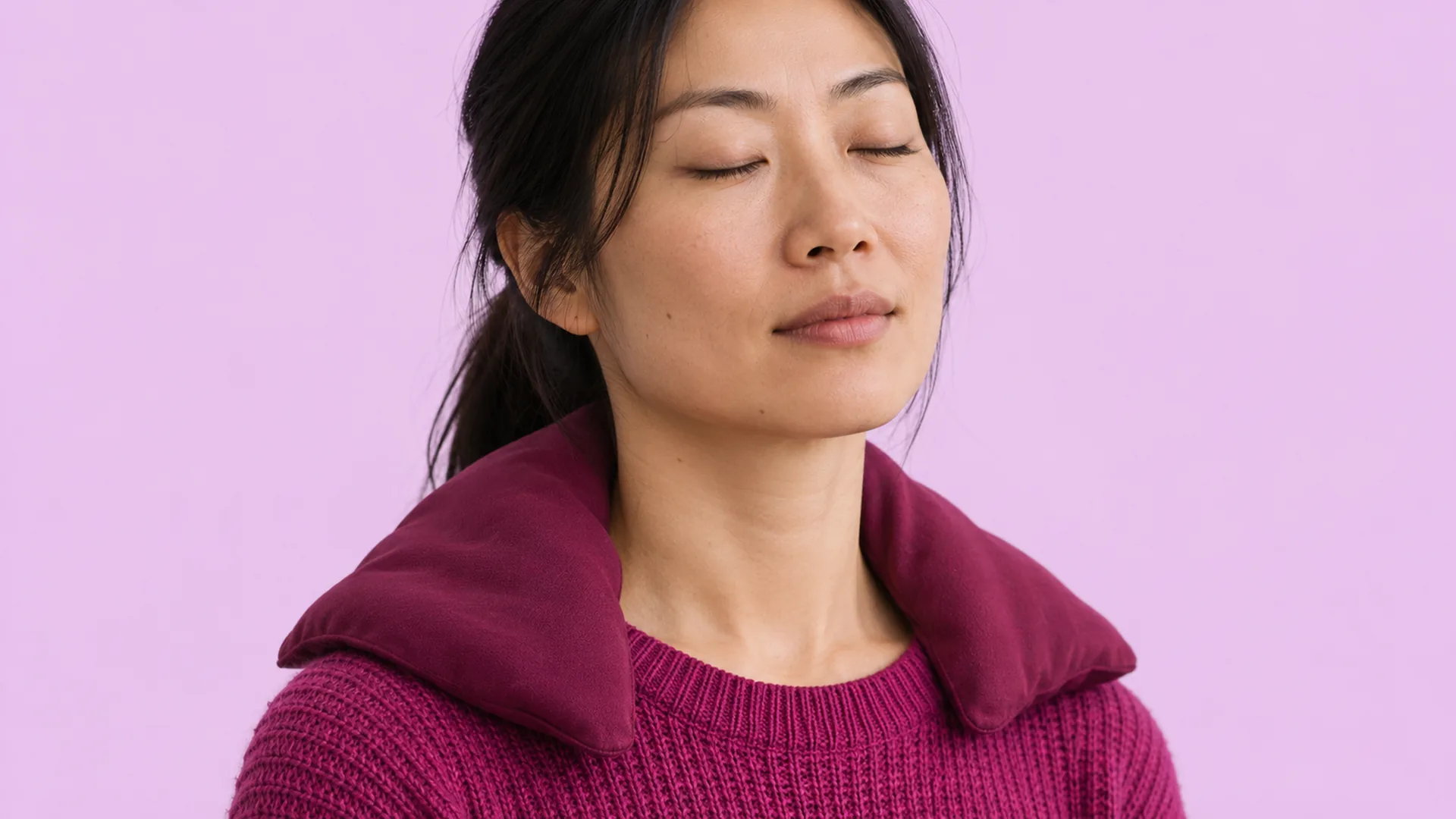
Heat is a simple, well-tested way to ease period-related pain. In one study, continuous gentle heat on the lower tummy eased period cramps about as well as a common pain relief tablet. Warmth can help tight neck and shoulder muscles too. A warm shower, a wheat bag or a heat pack across your shoulders can help them relax. A warm shower before bed can help you settle for the night as well.
When you feel achy and tired, moving may be the last thing you want to do. But research suggests regular exercise can ease period pain, and gentle activity helps loosen tight muscles. A walk, a swim or a gentle yoga or stretch session can all help. You do not need to push hard. On heavier days, something gentle still counts. Some people find yoga or Pilates especially helpful at this time, as they combine gentle movement with slow breathing.
Poor sleep makes pain feel louder. Around your period, a cool bedroom, a regular wake-up time and a pillow that keeps your head in line with your spine can help. If cramps keep you awake, a warm bath or heat pack before bed may help you settle.
If you know your neck and shoulders tend to tighten before your period, you could build in more movement and breaks in the days leading up to it. Planning a lighter day, or making time for a walk or a warm bath, can make those days easier.
If your period pain is severe enough to stop you doing everyday things, it is worth speaking to your GP, as there are effective options that can help.