Goal: Move more often
Movement breaks on stressful days

Dr Nicola Tik
On stressful days, breaks are often the first thing to go. You eat lunch at your desk, go from one meeting to the next, and only realise at the end of the day that you’ve barely moved. Yet these are the days a short break may help most.
A review of studies on microbreaks, breaks of 10 minutes or less, found they were linked with feeling more energetic and less tired. The effects on getting work done were more mixed, but there was little sign that short breaks cost people time overall.
When you’re stressed, your body gets ready for action. Muscles tense, especially in your shoulders and neck, and you may breathe faster. Sitting still in that state can leave you feeling tight and drained by the end of the day. Moving gives that built-up tension somewhere to go.
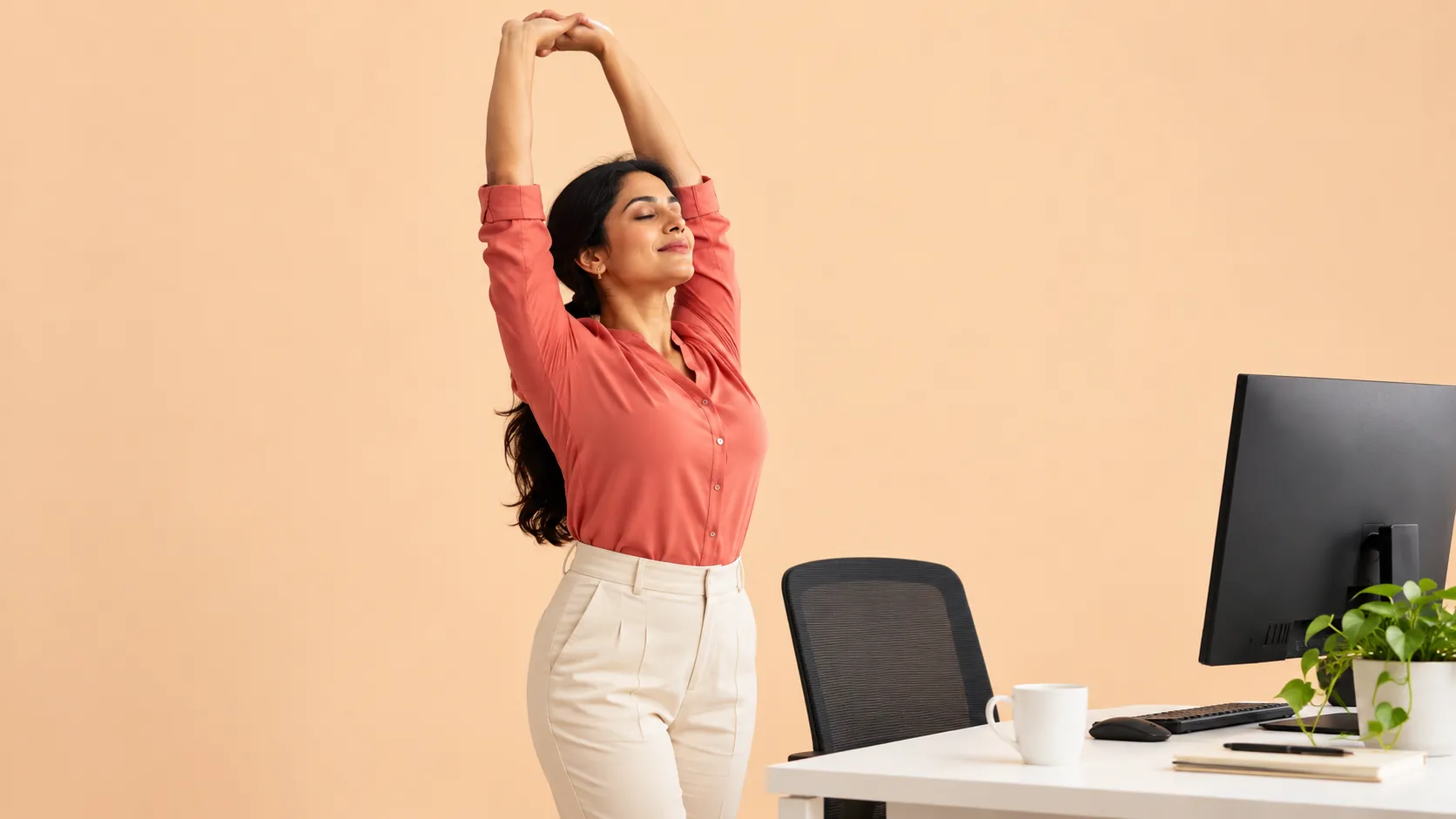
On days when you can’t leave your desk, a seated break still helps. Rolling your shoulders, stretching your arms overhead or taking a few slow breaths all change your position and give your mind a pause.
Finishing one task and starting another can be a natural moment to move. A short walk to refill your water or a stretch before opening the next email can help you feel more ready for what’s next.
Pomodoro stretches, in the top right corner of VIDA, can prompt you to move at regular intervals. On stressful days, the prompt does the remembering for you.
On your busiest day, keep Pomodoro stretches on and take a short break at every prompt, even if it’s seated.