Mid back aches around your period

Dr Nicola Tik
Around your period, you might notice an ache between your shoulder blades or a stiffness in your upper back that is not there at other times. It can be confusing, especially if you usually think of period pain as something lower down. Understanding why it happens can help you ease it and plan for the days it tends to appear.
Around your period, your body releases prostaglandins, natural chemicals that help the womb contract. They also make nerves more sensitive, which can make aches anywhere in the body feel stronger, including in your upper back.
Hormone changes can also affect how your body processes pain. Many people find they feel more sensitive to discomfort in the days before and during their period.
Other changes play a part too. Bloating and tender breasts can make it more comfortable to sit hunched, rounding the upper back. Tiredness and poor sleep around your period can leave muscles feeling tighter. Mood changes and stress often show up as tension across the shoulders and upper back.
Small resets through the day can help your mid back feel less stiff:
If you would like to follow along, VIDA has short videos of shoulder squeezes you can use at your own pace. VIDA’s Pomodoro stretches, in the top right corner, can remind you to pause during focused work.
When you feel bloated or tender, it is natural to slump. Changing position often, rather than holding one posture for a long time, tends to help. You could swap between sitting upright, leaning back with your arms supported and standing for a few minutes.
A supportive, comfortable bra can make a difference if your breasts feel tender, as it takes some of the load off your upper back.
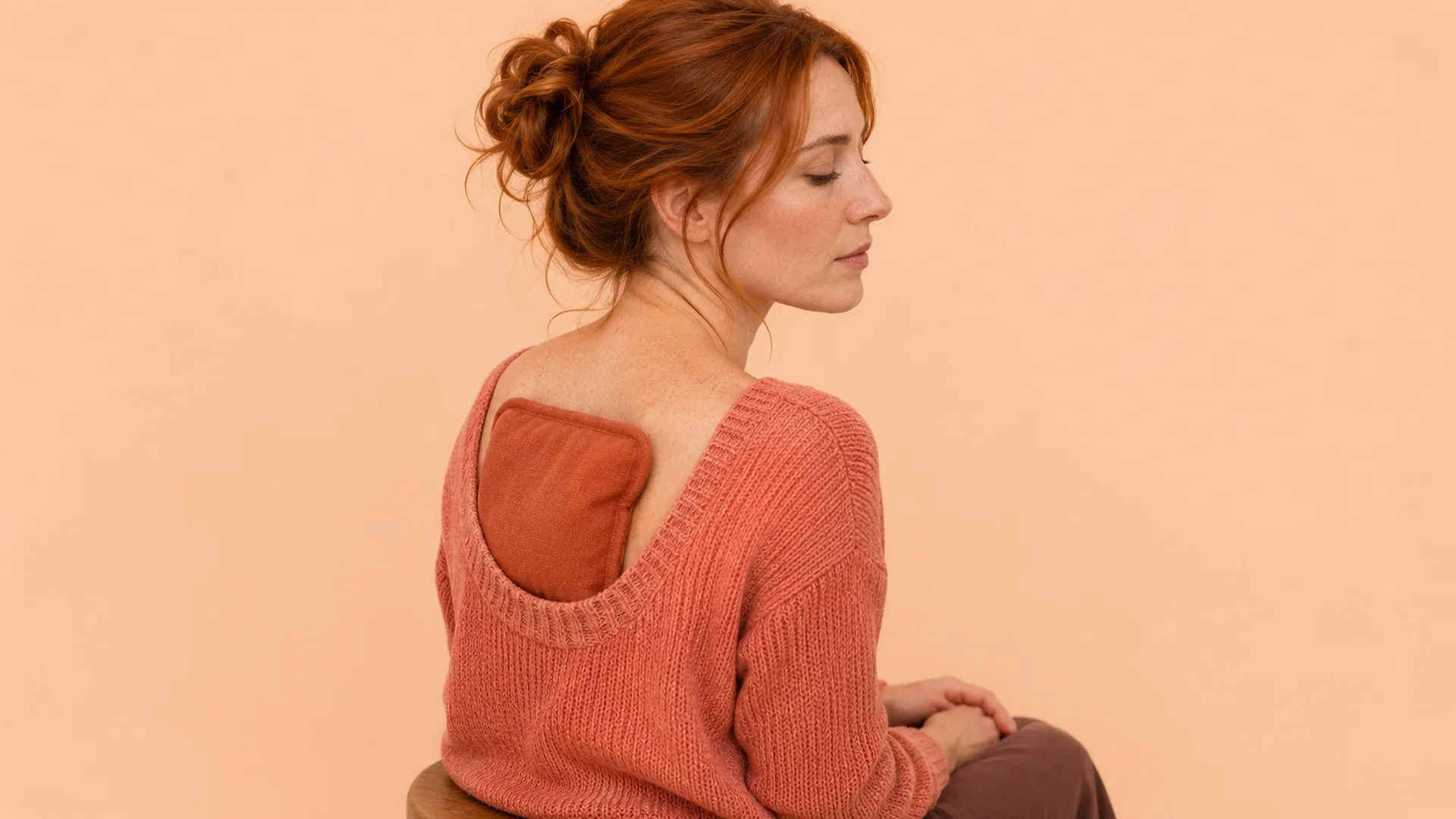
Heat is a simple, well-tested way to ease period-related pain. In one study, continuous gentle heat on the lower tummy eased period cramps about as well as a common pain relief tablet. Warmth can help an achy upper back too. A warm shower or a heat pack between your shoulder blades can help tight muscles relax.
Your upper back is built to turn and gently arch back. Something to try once or twice a day:
Building strength in your upper back helps it feel more comfortable through the month. Back lifts, lying on your front on the floor and gently lifting your head and chest, are a good place to start two or three times a week. If you would like to follow along, VIDA has short videos of back lifts you can use at your own pace.
Research suggests regular exercise can ease period pain. Walking, swimming and yoga can all help, and gentle activity on harder days still counts. Letting your arms swing as you walk helps your upper back turn and loosen.
Sleep often gets disrupted around your period, and tiredness can make aches feel louder. A cool bedroom, a regular wake-up time and a pillow that keeps your head level can help your upper back rest.
Your VIDA pain check-in, alongside a period tracker, can help you see whether your mid back aches follow a pattern through your cycle. Knowing when they tend to appear means you can plan more movement, warmth and rest for those days.