Managing stiffness and keeping moving with ankylosing spondylitis

Dr Nicola Tik
You already know what AS is and how it affects the spine. This article is about the practical side, specifically how to manage stiffness through the day and keep your body moving well even on the harder days.
Morning stiffness is one of the most consistent features of AS, and having a short routine to work through it can make a meaningful difference to how the rest of the day feels. Before getting out of bed, gentle movements while still lying down can help ease things along. Slow knee rolls from side to side, gentle pelvic tilts, and a few deep breaths that expand the rib cage are all worth trying before you stand up.
Give yourself more time in the morning than you think you need. Rushing through stiffness tends to make it worse rather than better. Most people find that once they are moving, things ease considerably within 20 to 30 minutes.
Prolonged sitting is one of the most reliable triggers for stiffness in AS. If your day involves a lot of desk work or sedentary time, building in regular movement breaks is one of the most useful habits you can develop. Standing up and walking briefly every 30 to 40 minutes, even just to make a drink or walk to a colleague, keeps the spine from stiffening in a fixed position.
If getting up frequently is not always practical, gentle seated movements help. Slow upper body rotations, sitting tall and turning gently from side to side, and a few deep breaths that lift the chest can all be done at a desk without drawing attention.
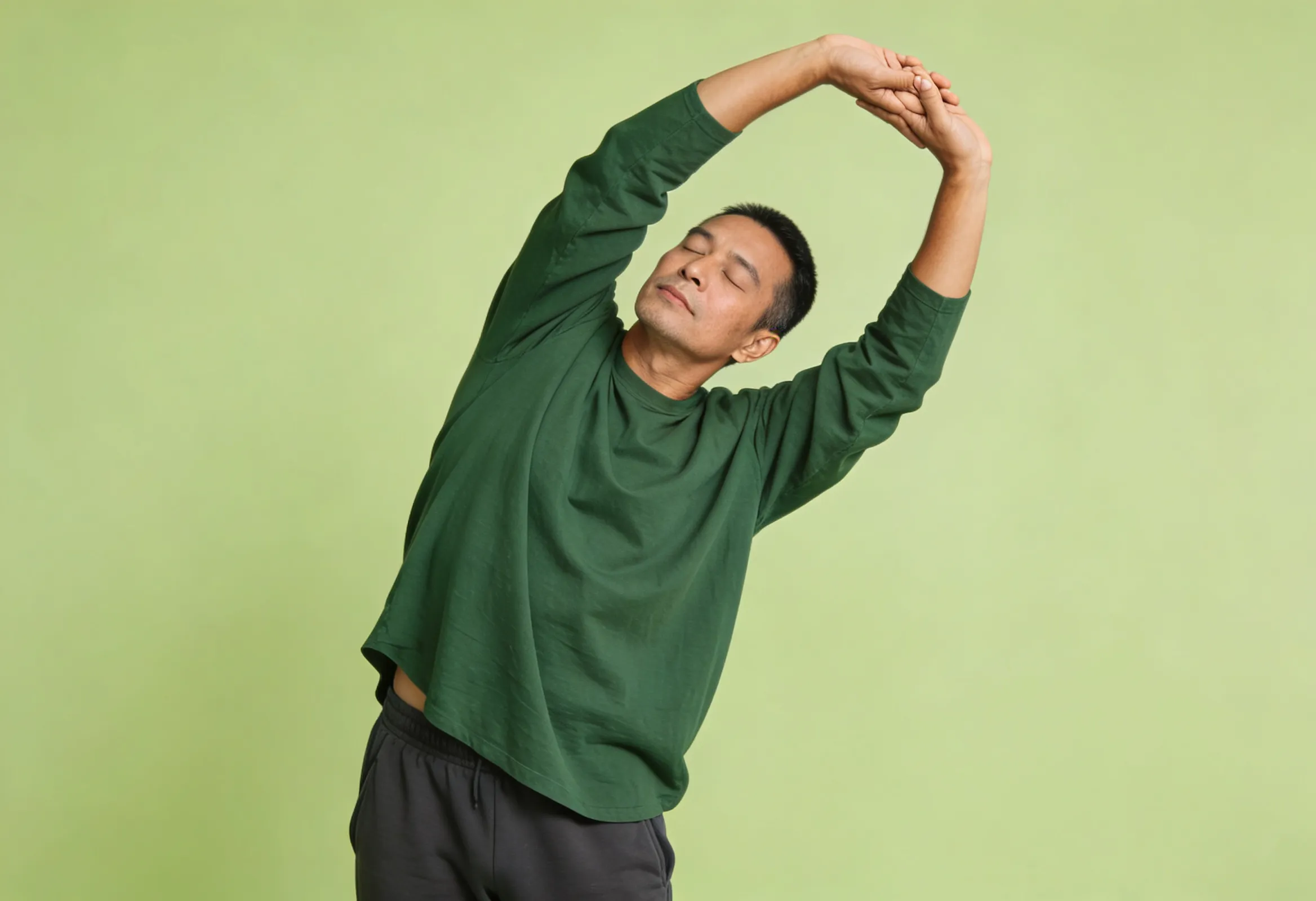
Gentle spinal mobility work done consistently is more valuable than occasional intensive exercise. Rotation, extension, and lateral flexion of the spine are the movement directions most worth maintaining. Cat-cow on all fours, gentle back extensions lying face down, and side stretches done standing or seated all address these directions in a manageable way.
Swimming is particularly well suited to AS as it encourages spinal movement in multiple directions while reducing load on the joints. Walking at a comfortable pace is another consistently useful option.
On days when inflammation is higher and things feel more reactive, shorter and gentler sessions are better than pushing through. A ten minute gentle walk on a difficult day is more useful than rest, and more useful than an ambitious session that causes a prolonged flare.
During a flare, the goal shifts from maintaining mobility to keeping things gently ticking over. Very gentle movement, warmth, and rest in a comfortable position all have a role. Lying flat on your back rather than curled on your side tends to be more helpful for the spine during a flare.
Your VIDA pain check-in is a useful way to track patterns in your symptoms over time, which can help you identify triggers and plan your activity more effectively.