Managing load and movement with an ACL tear

Dr Nicola Tik
If you have been told you have an ACL tear, you likely already have a sense of how significantly it can affect how your knee feels and functions. This article explains what the injury means for your movement and how to manage load on the knee while you recover.
The anterior cruciate ligament, or ACL, is one of the main stabilising ligaments inside the knee. It controls how much the shin bone moves forward relative to the thigh bone and plays a key role in rotational stability of the knee. When it is torn, either partially or fully, the knee can feel unstable, particularly during movements that involve changing direction, pivoting, or sudden stops.
Not all ACL tears are managed the same way. Some people have surgery to reconstruct the ligament, while others manage conservatively without surgery, depending on the extent of the tear, their activity level, and other individual factors. Your specialist or GP will have guided you on the right approach for your situation.
Load management is about finding the level of activity that keeps the knee gently working without placing more demand on it than it can currently handle. In the context of an ACL tear this means avoiding movements that stress the rotational stability of the knee, particularly pivoting, twisting, and sudden changes of direction, while maintaining as much general movement as possible.
Walking on even surfaces is generally well tolerated and keeps the surrounding muscles active. Stairs are manageable for most people, though leading with the stronger leg when going up and the injured leg when coming down reduces the demand on the affected knee.
Swelling is a useful signal. If the knee swells after an activity, that activity was likely more than the knee was ready for at that point in recovery.
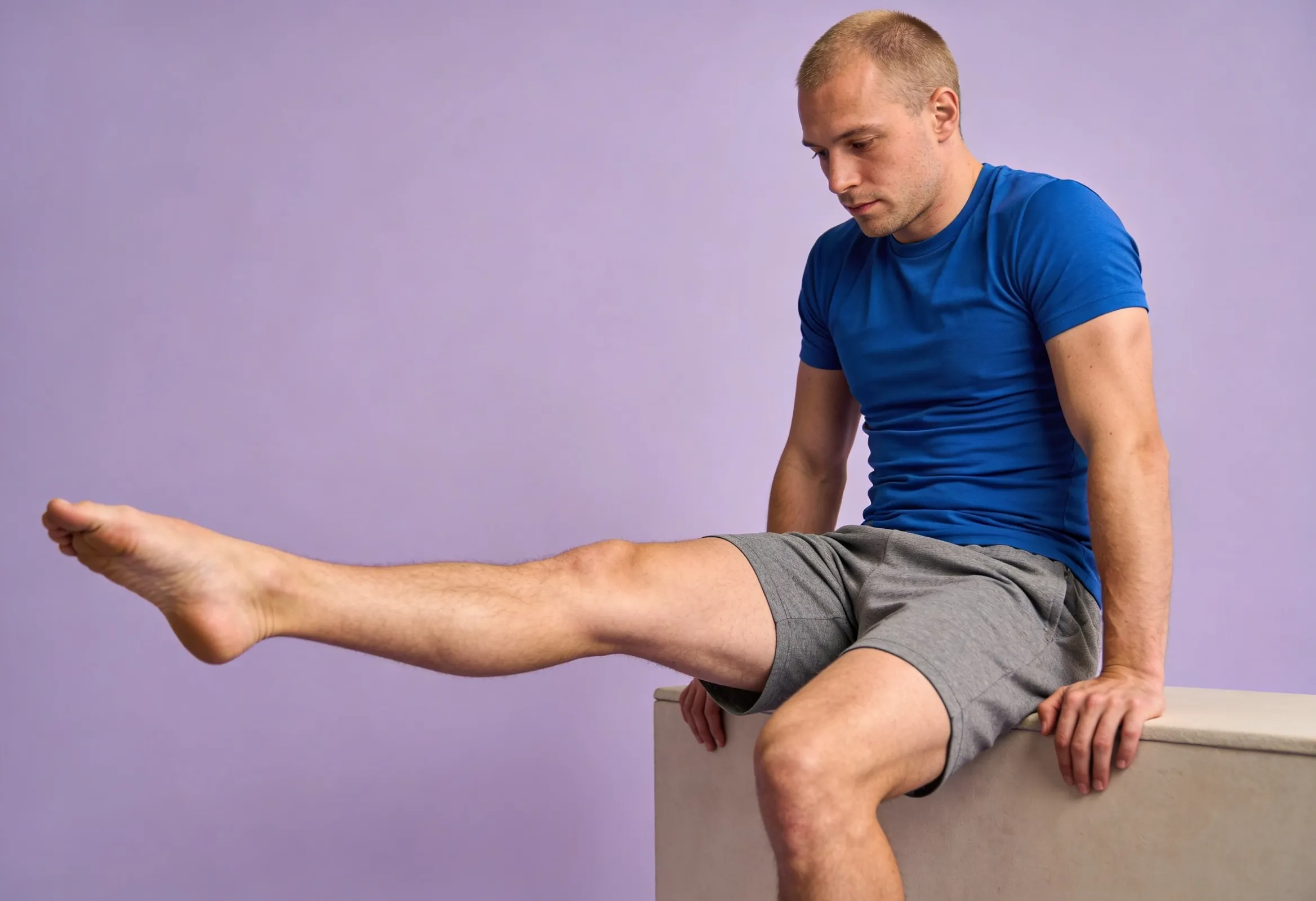
The muscles around the knee, particularly the quadriceps at the front of the thigh, play a significant role in compensating for reduced ligament stability. Keeping these muscles active is an important part of ACL recovery. Simple exercises like straight leg raises, where you lie on your back and lift one leg slowly with the knee straight, place minimal stress on the joint while maintaining muscle activation.
Avoiding prolonged sitting with the knee bent in the same position helps prevent stiffness from building. If you are at a desk for long periods, straightening the leg gently and regularly keeps the joint from becoming stiff.
ACL recovery takes time, whether surgical or conservative. Progress is not always linear and there will be days when the knee feels better and days when it feels more reactive. This is a normal part of the process rather than a sign that something has gone wrong.
Your VIDA pain check-in is a useful way to track how your knee responds to different activities over time, which can help you identify what is working and what needs adjustment.